Why the Best Brake Pad Manufacturers Are Investing in Technology and Custom Solutions
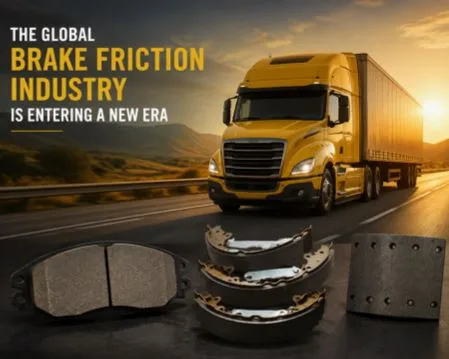
How the Global Brake Friction Industry Is Entering a New Era
The automotive braking industry is entering a new stage of development as vehicle manufacturers, fleet operators, and aftermarket suppliers demand higher levels of safety, durability, and performance. Brake pads, brake linings, and other friction components are no longer viewed as simple replacement parts. They have become highly engineered safety products that require advanced materials, precise manufacturing processes, and strict quality control.
According to MarketsandMarkets, the global automotive brake friction product market is projected to grow from USD 13.32 billion in 2025 to USD 15.52 billion by 2032, representing a steady expansion driven by increasing vehicle production, rising replacement demand, stricter safety requirements, and continuous innovation in friction materials. This market growth reflects a broader shift in the automotive industry — braking components are becoming more technology-driven, and customers are increasingly seeking reliable, high-performance solutions rather than simply low-cost replacement parts.
The growth of commercial transportation and expanding global vehicle fleets are further accelerating demand for advanced braking solutions. For commercial vehicles, brake performance directly affects operating efficiency and safety. Trucks, buses, and heavy-duty vehicles often operate under demanding conditions, including heavy loads, long-distance transportation, frequent braking, and high-temperature environments. These challenges require brake manufacturers to move beyond basic production and focus on engineering, testing, and application-specific development.
This market evolution reflects a major change in buyer expectations. In the past, many customers focused mainly on purchase price when selecting brake components. Today, distributors, vehicle manufacturers, and fleet operators are paying more attention to product consistency, service life, technical support, and the ability of manufacturers to provide solutions for specific applications.
For commercial vehicles especially, brake performance directly affects operating efficiency and safety. Trucks, buses, and heavy-duty vehicles often operate under demanding conditions, including heavy loads, long-distance transportation, frequent braking, and high-temperature environments. These challenges require brake manufacturers to move beyond basic production and focus on engineering, testing, and application-specific development.
Why Brake Pads Are Becoming More Than Replacement Parts
The role of brake pads in modern vehicles has changed significantly. While friction products were once mainly evaluated by basic factors such as wear resistance and braking force, today’s market requires a much more comprehensive approach. Modern brake components must balance multiple performance requirements, including friction stability, heat resistance, noise reduction, durability, and compatibility with different vehicle systems.
This transformation is especially important in commercial vehicle applications. A long-haul truck traveling thousands of kilometers each month faces completely different braking conditions compared with an urban delivery vehicle that stops repeatedly throughout the day. Similarly, buses, construction vehicles, and heavy-duty transport equipment each create unique demands on friction materials.
For example, a highway tractor carrying heavy cargo may require strong thermal stability because of high-energy braking events, while a city bus may require a friction material that maintains consistent performance during continuous stop-and-go operation. A construction vehicle working in harsh environments may need additional durability against heat, dust, and heavy loads.
As a result, modern brake manufacturers increasingly focus on application-based development rather than producing one standard solution for every vehicle. The ability to understand operating conditions and develop suitable friction characteristics has become a key competitive advantage in the global brake industry.
Why Commercial Vehicle Fleets Need More Advanced Brake Solutions
Commercial fleets are among the most demanding users of brake components because downtime directly affects business operations. For a private vehicle owner, premature brake replacement may be an inconvenience. For a fleet operator managing dozens or hundreds of trucks, unexpected maintenance can create significant financial losses through vehicle downtime, delayed deliveries, and increased operating costs.
This has changed how fleet operators evaluate brake suppliers. Instead of simply searching for the lowest-priced component, many companies are looking for reliable partners that can provide stable quality, technical assistance, and products matched to specific operating conditions.
Fleet requirements vary significantly depending on application. A transportation company operating long-distance trucks may prioritize durability and high-temperature performance. A regional delivery fleet may focus on frequent braking resistance and predictable maintenance intervals. A heavy-duty industrial vehicle operator may require specialized friction materials designed for extreme environments.
This trend is also influencing the aftermarket sector. As global vehicle fleets continue to expand, demand for dependable replacement components is increasing. Industry analysts, including S&P Global Mobility, have highlighted the continued importance of automotive aftermarket services as vehicle populations age and maintenance demand grows.
For brake suppliers, this means success depends not only on manufacturing capacity but also on understanding customer applications. The ability to recommend suitable products, support testing, and provide consistent supply has become increasingly important.
Behind Modern Brake Pad Manufacturing
The quality of a brake component is determined long before it reaches a vehicle. Manufacturing processes, material selection, and production control all influence final performance.
Modern commercial vehicle brake pad manufacturing process involves multiple stages, including raw material preparation, formulation development, precise mixing, pressing, curing, machining, surface treatment, and final inspection. Each step affects important characteristics such as friction stability, density, wear resistance, and thermal performance. Understanding how these manufacturing stages work together is essential for evaluating the reliability and consistency of a brake supplier.
The friction material itself is a complex combination of different components, including fibers, fillers, binders, lubricating materials, and friction modifiers. Manufacturers must carefully balance these elements because improving one performance characteristic may influence another. For example, increasing hardness may affect noise performance, while changing material composition may influence wear behavior.
Manufacturing consistency is equally important. A brake pad supplier may have an excellent formulation, but without strict process control, product performance can vary between production batches. For global buyers and fleet operators, consistency is often more valuable than a single high-performing sample because long-term reliability depends on predictable quality.
This is why professional brake manufacturers invest in production technology, laboratory testing, and quality management systems. The goal is not only to produce brake components but also to ensure that every batch delivers reliable performance in real-world applications.
Custom Friction Materials Are Becoming a Competitive Advantage
As vehicle applications become more diverse, the demand for customized friction solutions is increasing. A single brake pad formulation cannot always satisfy the requirements of every vehicle type, operating environment, and customer expectation. This is particularly true in the commercial vehicle sector, where trucks, buses, and specialty vehicles face significantly different braking challenges.
For example, a heavy-duty truck operating on long-distance routes requires friction materials that can maintain stable performance during high-energy braking events and extended temperature cycles. A city bus requires a different balance because it experiences frequent braking throughout the day. Meanwhile, vehicles operating in mining, construction, or agricultural environments may require additional durability due to heavy loads, dust, and challenging road conditions.
This is why custom brake pad manufacturers are becoming increasingly important within the global supply chain. Customization is not simply about changing product dimensions or packaging. It involves understanding the vehicle application, analyzing performance requirements, selecting suitable material combinations, and validating results through testing.
The development of advanced friction materials also reflects broader industry trends. According to MarketsandMarkets, the brake friction products market is being influenced by demand for higher-performance materials, stricter safety requirements, lightweight solutions, and environmentally focused friction technologies. Manufacturers are increasingly investing in improved formulations to meet changing vehicle requirements. (MarketsandMarkets)
For buyers, working with a manufacturer that has formulation development capability provides an advantage. Instead of searching for a standard product that may only partially meet requirements, customers can develop solutions better aligned with their vehicle applications and market conditions.
Quality Inspection Defines Reliable Brake Manufacturers
In the brake industry, production quality cannot be separated from product performance. A brake pad may look identical externally, but differences in raw material control, manufacturing processes, and inspection standards can significantly influence how it performs after installation.
Professional brake manufacturers typically implement quality control throughout the entire production process, starting from raw material inspection and formula preparation through mixing, pressing, curing, machining, and final testing. Each stage plays an important role in maintaining stable friction characteristics and ensuring that products perform consistently across different batches.
Testing is especially important for commercial vehicle applications because braking systems are exposed to demanding conditions. Heavy trucks may experience high loads, repeated braking cycles, and significant temperature changes during operation. Without proper validation, it can be difficult to determine whether a friction product will maintain stable performance under real-world conditions.
Beyond factory testing, vehicle-side inspection is equally important. Brake wear patterns can reveal valuable information about operating conditions and potential system issues. Uneven wear, overheating marks, cracks, glazing, or contamination may indicate problems that cannot be solved simply by replacing the brake pad.
For fleet operators, inspection is becoming an essential part of preventive maintenance. Identifying the reason behind abnormal wear can help reduce unnecessary replacements, improve vehicle uptime, and lower long-term operating costs.
China’s Role in the Global Brake Pad Supply Chain Is Changing
China has become an important manufacturing base for automotive components, including friction products. However, the role of Chinese brake manufacturers in the global market has changed significantly over the past decade.
Previously, many international buyers primarily evaluated suppliers based on cost advantages. Today, global customers increasingly focus on broader capabilities, including engineering support, manufacturing consistency, certification experience, customization ability, and international supply capacity.
The growth of China’s automotive supply chain has created opportunities for manufacturers that combine production efficiency with technical capability. Buyers searching for a China brake pad factory are no longer only looking for affordable products; they are looking for reliable partners capable of supporting different markets and applications.
This shift is particularly important in the commercial vehicle aftermarket. Trucks and fleet vehicles require stable supply, consistent quality, and products that can adapt to different regional operating conditions. A supplier serving North America, Europe, South America, or the Middle East may need to consider different vehicle models, regulations, climate conditions, and customer expectations.
As competition increases, manufacturers that focus only on production volume may face greater challenges. The companies that succeed internationally will likely be those that combine manufacturing capability with product development, testing expertise, and customer support.
What Separates Leading Brake Pad Manufacturers?
The global brake friction industry includes many suppliers, but leading manufacturers are usually distinguished by several key capabilities rather than by production volume alone.
First, experienced manufacturers understand that brake performance depends on application matching. They do not simply provide the same product for every customer but consider factors such as vehicle type, load conditions, driving environment, and performance requirements.
Second, strong manufacturers invest in technology and quality systems. Material development, production control, laboratory testing, and continuous improvement are essential for maintaining reliable performance. This is especially important as regulations and customer expectations continue to evolve.
Third, successful suppliers understand the importance of long-term cooperation. International buyers often require more than a product shipment. They need technical communication, documentation support, customization assistance, and reliable delivery.
For this reason, the definition of the “best brake pad manufacturers” is changing. The strongest suppliers are not necessarily those offering the lowest prices, but those capable of providing consistent quality, technical solutions, and dependable global support.
Companies with experience in friction material development and commercial vehicle applications are better positioned to support customers facing increasingly complex braking requirements.
Beyond Price: How Technology Is Shaping the Future of Brake Pad Manufacturing
The brake friction industry is entering a new stage of development as vehicle technology, environmental requirements, and customer expectations continue to change. Future competition among brake manufacturers will not only depend on production capacity but also on the ability to develop safer, cleaner, and more application-specific friction solutions.
According to MarketsandMarkets, the global brake friction products market is projected to grow from USD 13.32 billion in 2025 to USD 15.52 billion by 2032, with a CAGR of 2.2%. The growth is being driven by increasing vehicle production, rising aftermarket demand, stricter safety requirements, and continued innovation in friction materials. The market covers a wide range of products, including brake pads, brake shoes, brake linings, discs, and other friction components used across passenger vehicles, commercial vehicles, and off-highway applications. (MarketsandMarkets)
One of the major trends shaping the industry is the development of more environmentally friendly friction materials. As regulations continue to evolve, manufacturers are investing in low-copper, copper-free, ceramic-based, and other advanced formulations designed to balance braking performance with environmental considerations. At the same time, commercial vehicle operators continue to demand products that can provide reliable performance under heavy loads, high temperatures, and long operating cycles. (MarketsandMarkets)
For manufacturers, this means future success will depend on more than production volume. Companies need strong capabilities in material development, testing, quality control, and application engineering to meet increasingly diverse customer requirements.
Building Long-Term Partnerships in the Global Brake Supply Chain
The global brake supply chain is becoming more competitive as buyers look beyond simple product sourcing and search for long-term technical partners. For distributors, fleet operators, and aftermarket companies, choosing a brake supplier is increasingly connected with factors such as product consistency, customization ability, technical communication, and supply reliability.
This change is especially visible in commercial vehicle applications. A truck operating in North America, a bus fleet in Europe, and a heavy-duty vehicle working in challenging environments may all require different friction characteristics. Climate conditions, road environments, vehicle loads, and maintenance practices can significantly influence brake performance.
As a result, modern brake manufacturers are expected to provide more than standard products. They need to understand customer applications, recommend suitable friction solutions, and support customers throughout the product lifecycle. This approach helps reduce unexpected maintenance issues and improves overall vehicle operating efficiency.
Companies with experience in friction material development, commercial vehicle applications, and global supply chains are becoming increasingly valuable partners in the automotive aftermarket. Manufacturers such as Tuoba brake pad manufacturer represent this changing industry direction by combining friction product development, manufacturing capability, and application-focused solutions for passenger vehicles and commercial vehicles.
Choosing the Right Brake Manufacturer in a Changing Industry
The brake industry is moving away from a traditional price-driven competition model toward a market where technology, reliability, and engineering capability play a more important role. Brake pads and friction components are no longer simple replacement parts; they are safety-critical products that require careful material selection, precise manufacturing, and continuous quality improvement.
For global buyers searching for reliable brake pad manufacturers, the key question is no longer only about cost. The more important consideration is whether a supplier can provide stable quality, consistent performance, technical support, and solutions that match specific vehicle applications.
As commercial transportation continues to grow and vehicle requirements become more complex, manufacturers that invest in advanced materials, testing capabilities, and customer-focused development will be better positioned for future growth.
The next generation of brake suppliers will not simply manufacture components. They will help customers solve braking challenges through better technology, deeper application knowledge, and more reliable long-term partnerships.