How Temperature Recording Technology Supports Reliable Cold Chain Operations
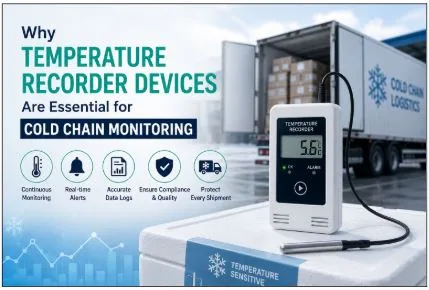
Temperature control is one of the most important aspects of storing and transporting temperature-sensitive products. Pharmaceuticals, vaccines, biological materials, fresh food, chemicals, and other sensitive products can be affected when they are exposed to unsuitable temperatures for an extended period.
A Best temperature recorder device helps businesses monitor and track temperature conditions throughout storage and transportation. Instead of relying only on manual temperature checks, companies can use electronic recording technology to maintain a continuous record of temperature conditions. This recorded information can help identify temperature excursions, support quality control, assist with investigations, and maintain appropriate documentation.
Temperature monitoring and mapping are also important components of maintaining suitable storage conditions and cold chain equipment. This makes reliable temperature recording an important part of modern cold chain operations.
What Is a Temperature Recorder Device?
A temperature recorder is an electronic monitoring device designed to measure, record, and store temperature readings at specific time intervals. Depending on the model, it can be used in warehouses, refrigerators, freezers, shipping containers, refrigerated vehicles, laboratories, and packaging systems.
One of the main differences between a temperature recorder and a standard thermometer is the ability to store historical temperature data. A thermometer generally provides a reading at a particular moment, while a recorder creates a record of temperature conditions over a specific period.
For example, a pharmaceutical shipment may remain within its required temperature range during the first part of transportation but experience a temperature excursion later. A recorder can capture this change and provide quality teams with information that may not be identified through a single manual temperature check.
Why Is Temperature Recording Important?
Products that require specific temperature conditions can be highly sensitive to environmental changes. In some situations, a short-term temperature excursion may have limited impact. However, prolonged or repeated exposure to unsuitable temperatures can create quality concerns.
Continuous temperature recording gives businesses greater visibility into environmental conditions than periodic manual checks. It can help answer important questions such as:
- Were the required temperature conditions maintained during transportation?
- When did a temperature change or excursion occur?
- How long did the excursion last?
- Did the temperature issue occur during storage or transportation?
- Can the shipment be evaluated using the recorded temperature data?
- Is additional investigation required?
Historical temperature data can provide useful evidence for quality-related decision-making and help teams understand what happened during a shipment or storage period.
Applications of Temperature Recorders in Cold Chain Logistics
Cold chain logistics involves the controlled storage and transportation of temperature-sensitive products from one location to another. This process can include manufacturing, packaging, warehousing, transportation, distribution, and final delivery.
Temperature recorders can be placed inside insulated boxes, refrigerated vehicles, containers, cold rooms, warehouses, and other controlled environments.
In pharmaceutical logistics, temperature records can help organizations evaluate whether products remained within the required temperature conditions during transportation. In food logistics, temperature monitoring can support product quality and food safety procedures.
Temperature recording can also be useful for monitoring refrigerators, freezers, storage areas, and controlled environments in laboratories.
Depending on the design of the device, modern temperature recording solutions may offer features such as USB connectivity, digital reporting, alarms, or cloud-based monitoring. Some professional recording devices can store thousands of readings, allowing users to transfer and analyze the collected information.
Key Benefits of Using Temperature Recorders
1. Continuous Temperature Monitoring
One of the main advantages of a temperature recorder is its ability to collect temperature data at regular intervals. This provides a more complete picture of environmental conditions compared with occasional manual measurements.
Continuous monitoring is particularly useful during long-distance transportation, where temperature conditions can change throughout the journey.
2. Historical Temperature Data
Recorded information creates a historical temperature profile that can be reviewed when required. If a temperature problem occurs, teams can analyze the data to understand when the issue occurred and how conditions changed.
This information can support quality assurance, shipment evaluation, supplier management, and corrective actions.
3. Early Identification of Temperature Excursions
Some temperature monitoring systems can notify users when temperatures move outside predefined limits. Early identification can allow responsible teams to investigate the issue and take appropriate action.
Connected monitoring systems may provide remote alerts, while standalone devices may use visual or audible indicators to notify users of temperature conditions.
4. Better Documentation
Temperature records can support internal quality procedures and customer requirements. Depending on the monitoring system and industry, recorded reports can be saved, reviewed, analyzed, or shared with relevant teams.
Digital temperature records can also reduce the need for manually writing down readings, which may help reduce the risk of transcription errors.
5. Improved Shipment Visibility
Placing a recorder inside a shipment can provide information about the actual temperature conditions experienced during transportation.
This information can help logistics teams identify potential weaknesses in packaging, transportation processes, refrigeration systems, or product handling.
Temperature Recorder vs. Manual Temperature Checks
Manual temperature checks can be useful for basic monitoring, but they generally provide only a snapshot of conditions at the exact time the measurement is taken.
For example, checking a refrigerator at 10:00 a.m. does not show what happened at 2:00 a.m. If the temperature increased during the night and returned to an acceptable level before the morning inspection, the temperature excursion might not be identified.
A recording device provides a broader view because it stores measurements throughout the monitoring period. This makes it easier to review temperature conditions and identify changes that may otherwise go unnoticed.
However, not every application requires the same type of recorder. The appropriate equipment depends on factors such as measurement range, accuracy, recording interval, memory capacity, battery life, protection rating, data access, calibration requirements, and intended use.
How to Choose the Right Temperature Recorder
Before selecting a monitoring device, businesses should clearly understand their temperature monitoring requirements.
Measurement Range
The device should be capable of operating within the temperature range expected during storage or transportation. Different refrigerated and frozen applications can have different temperature requirements, so the measurement range should match the specific application.
Accuracy
Accuracy is important when products must remain within a narrow temperature range. The selected device should provide performance suitable for the temperature monitoring requirements of the application.
Recording Interval
The recording interval determines how frequently the device stores temperature readings.
If temperature conditions can change rapidly, a shorter recording interval may provide more detailed information. For environments where temperature changes slowly, a longer interval may be sufficient.
Data Storage Capacity
Consider how many readings the device can store and how long the monitoring period will last. Longer shipments and extended storage periods may require devices with greater memory capacity.
Data Access
The ability to access recorded information can make temperature monitoring more convenient. Depending on the device, data may be available through USB connections, downloads, wireless communication, or cloud-based platforms.
Durability
Transportation and industrial environments can expose monitoring devices to moisture, dust, movement, and physical handling. The required level of protection depends on the application and operating environment.
Supporting Pharmaceutical and Food Supply Chains
Temperature control is important in both pharmaceutical and food supply chains because product quality can depend on maintaining suitable conditions during storage and transportation.
Temperature monitoring and mapping can help organizations maintain appropriate storage conditions in pharmaceutical operations. Monitoring may be relevant to cold rooms, refrigerators, freezers, warehouses, and other cold chain environments.
Temperature records can also support food logistics because transportation conditions may affect the freshness and quality of food products.
For businesses operating across multiple stages of the supply chain, maintaining consistent temperature records can improve traceability from dispatch through delivery.
The Role of Digital Temperature Monitoring
Temperature monitoring technology continues to develop. Traditional standalone recorders are now complemented by USB-connected, wireless, and cloud-based monitoring solutions.
Standalone recorders can be useful when the primary requirement is collecting and reviewing temperature data. Connected systems can provide additional capabilities such as real-time visibility and remote alerts.
The right solution depends on several factors, including the shipment, operating environment, monitoring requirements, budget, and overall objectives.
Temperature and humidity data logging technologies are available for applications across pharmaceuticals, food, life sciences, logistics, and other temperature-sensitive industries. Temp Note provides temperature and humidity data logging solutions for businesses looking to improve cold chain monitoring and temperature visibility.
Conclusion
Reliable temperature recording plays an important role in protecting temperature-sensitive products during storage and transportation. A suitable recorder can provide continuous measurements, historical temperature information, excursion data, and useful documentation for quality teams.
Temperature recording can support a wide range of applications, including pharmaceutical shipments, vaccine transportation, food logistics, laboratories, warehouses, refrigerators, and refrigerated storage.
The best temperature recording solution depends on the application, temperature range, accuracy requirements, monitoring duration, storage capacity, connectivity options, and operating environment.
By selecting suitable monitoring technology and using it consistently, businesses can improve temperature visibility, support better decision-making, investigate temperature excursions more effectively, and strengthen the reliability of their cold chain operations.
Frequently Asked Questions
1. What is a temperature recorder used for?
A temperature recorder is used to measure, record, and store temperature readings over a specific period. It is commonly used in transportation, storage, cold chain logistics, pharmaceuticals, food, laboratories, and other temperature-sensitive applications.
2. What is the difference between a temperature recorder and a thermometer?
A thermometer generally provides a temperature reading at a particular moment, while a temperature recorder stores readings at predefined intervals. This creates a historical record that can be reviewed later.
3. Where can temperature recorders be used?
Temperature recorders can be used in refrigerated vehicles, cold rooms, warehouses, refrigerators, freezers, shipping containers, refrigerated packaging, laboratories, and other controlled environments.
4. Why is temperature recording important in cold chain logistics?
Temperature recording provides businesses with information about the conditions experienced by products during storage and transportation. Historical records can also help identify and investigate temperature excursions.
5. What factors should be considered when selecting a temperature recorder?
Important factors include measurement range, accuracy, recording interval, memory capacity, battery life, data access, protection rating, calibration requirements, and whether standalone or real-time monitoring is required.