Why Home Fitness Is Becoming a Permanent Lifestyle Choice
The rise of home fitness is no longer explained by temporary gym closures or a passing interest in workout videos. For many people, exercising at home has become part of how they organize time, energy, and living space. The appeal is not that home training is automatically better than a gym. It is that a well-planned setup removes small barriers that often prevent a workout from happening.
A lasting routine does not require a room full of machines. It can begin with a clear goal, a dependable schedule, and a few pieces selected for repeated use. When people build around their actual habits rather than an idealized fitness lifestyle, the home becomes a practical place to train for years.
Why Home Fitness Fits the Way People Live Now
Traditional gym routines depend on a chain of decisions: packing clothes, traveling, waiting for equipment, completing the session, and returning home. Together, these steps increase the time a workout requires. Home training shortens that chain. A person can exercise before breakfast, between work blocks, after children go to bed, or whenever a predictable window appears.
This flexibility matters because schedules are rarely identical from one day to the next. Commuting patterns change, hybrid work shifts meeting times, and family responsibilities interrupt planned evenings. A home routine can move with those changes. The workout may become shorter, but it does not have to disappear.
Consistency Becomes Easier When the Routine Can Adapt
The biggest advantage is not simply convenience. It is the ability to protect a routine during busy weeks. Instead of relying on ideal conditions, people can choose a shorter session, reduce the number of sets, or move the workout to another part of the day.
A routine does not have to look identical every time to remain useful. Home fitness works well when the plan is stable enough to guide behavior but flexible enough to survive changes in work, sleep, family duties, and energy.
Personal Training Systems Are Replacing the “Mini Commercial Gym” Idea
Early home-gym plans often focused on recreating everything found in a large fitness center. That approach can become expensive, crowded, and difficult to maintain. A more sustainable strategy is to select equipment around movement patterns and personal goals.
Someone focused on strength may need adjustable resistance, a stable bench, and space for squats, hinges, presses, rows, and core work. A person prioritizing cardio may choose one machine and combine it with walking and mobility.
This is where thoughtfully chosen home gym equipment becomes more valuable than a collection of unrelated products. Each item should earn its space by supporting exercises that appear regularly in the plan. Equipment that looks impressive but does not match the user’s goals, body dimensions, or room is likely to become storage rather than part of a lasting routine.
A Lasting Setup Starts With Better Decisions, Not More Purchases
Owning equipment does not guarantee that it will be used. The convenience of a home gym becomes meaningful only when training has a place in the week. A schedule might include three full-body sessions, shorter workouts across more days, or a combination of resistance training, cardio, and mobility.
Keeping a bench ready in a spare room may encourage planned sessions, while storing compact equipment near an open floor area can support shorter workouts. The setup should reduce friction without turning the home into an obstacle course. If equipment must be moved, setup and storage should not consume the time reserved for exercise.
Small Spaces Can Work When Every Square Foot Has a Job
A home gym does not need a dedicated basement or garage. A bedroom corner, office, or part of a living room can support effective exercise if the user measures. The important dimensions are not only the equipment footprint. Safe movement requires clearance around a bench or machine, room to handle weights, and a path for folding or storing each item.
Flooring deserves attention. Stable, level surfaces help equipment sit correctly, while protective mats may reduce scratches and define the workout zone. Ceiling height matters for overhead pressing, step-ups, pull-up equipment, and some cardio machines.
Shared spaces create another trade-off. A setup that remains open all day may be convenient for one user but frustrating for others. Foldable or movable equipment can help a room return to normal, provided it can be handled safely and stored as the manufacturer permits.
One Adjustable Bench Can Expand a Simple Strength Routine
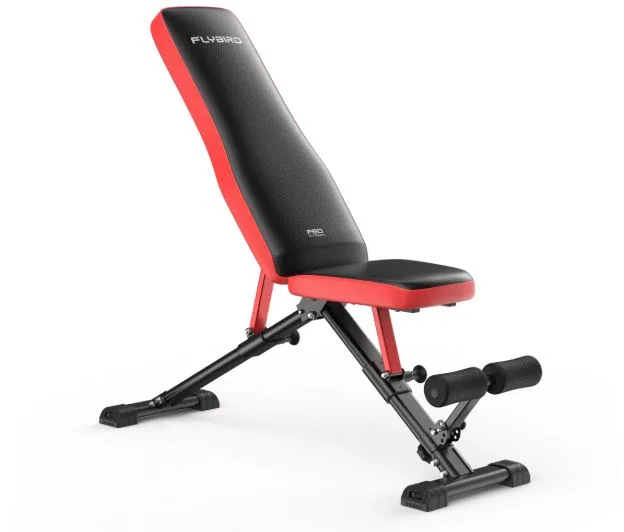
A bench can increase the number of exercises available in a compact strength setup by supporting flat, incline, decline, seated, and supported positions. The FED Fitness Flybird Series WB6 Foldable Adjustable Weight Bench Classic is listed with eight backrest positions and four seat positions, a pop-pin adjustment mechanism, high-density sponge padding, non-slip upholstery, and a triangular steel structure.
FED Fitness states a maximum supported load of 880 pounds and describes the bench as 96% pre-assembled. The product page also states that it folds to a 9.5-inch thickness and occupies 0.91 square feet when folded. Those specifications should be considered alongside the user’s height, floor space, storage route, and planned exercises.
An adjustable bench is not a complete gym by itself. Its value comes from how it integrates with the routine. Combined with suitable resistance and enough movement space, it can support pressing, rowing, split-squat, hip-thrust, arm, shoulder, and core variations. Without a clear program, even a versatile bench can go unused.
A Shared Home Gym Should Work for More Than One Person
A permanent setup often serves more than one user. Partners may have different strength levels, preferences, and schedules. Teenagers, older adults, or beginners may require different adjustments and supervision. Equipment should be selected for the actual household rather than only the strongest person in it.
Sharing also requires simple rules. Weight plates, collars, pins, and removable parts should return to a consistent place. Children and pets should not have access to unsecured equipment. Each user should check adjustment points before exercising instead of assuming the previous setup is safe.
A shared home gym can support different kinds of movement without requiring everyone to follow the same program. One person may use the bench for dumbbell sessions, while another uses the floor for mobility or bodyweight exercise. The system works best when it is organized around its real users.
The Difference Between Useful Equipment and Expensive Clutter
Enthusiasm can lead people to buy too much too quickly. A room fills with specialty products, but the training plan still lacks consistency. A better approach is to begin with the exercises that matter most, identify what limits them, and add equipment only when it solves a recurring problem.
Before purchasing, ask practical questions. Will the item be used every week? Does it suit the user’s height and ability? Is there enough space to use it safely? Can it be stored according to the manufacturer’s guidance? Is there a progression path once the first workouts feel easier?
Maintenance and Storage Matter More Than They Seem
Adjustment mechanisms, bolts, upholstery, cables, electronics, and moving parts may require inspection or care. Users should follow the manual rather than assuming home equipment is maintenance-free. A smaller collection that remains safe, organized, and regularly used often provides more value than a crowded room of neglected options.
Storage also affects whether a routine feels convenient. Equipment that is difficult to move or awkward to access may be used less often, even if it has excellent specifications.
What Makes Home Fitness Permanent Is the Habit Behind It
Home exercise is likely to remain part of everyday life because it gives people more control over when, where, and how they train. It can coexist with gym memberships, outdoor activities, sports, classes, and physical therapy rather than replacing them. A person may lift at home during the week, attend a class on Saturday, and walk or cycle outdoors when time allows.
The long-term decision should begin with behavior. Choose a schedule, protect a small area for movement, and select equipment that supports repeated exercises. Build gradually, review what is being used, and adjust the setup over time as goals change.
A Practical Setup Should Keep Working as Life Changes
The most useful home gym is not necessarily the largest one. It is the setup that continues to support training when work becomes demanding, family schedules change, or available space is reduced. That may mean choosing adjustable equipment, foldable designs, or a smaller number of versatile pieces.
Results still depend on training quality, recovery, nutrition, health status, and individual factors; convenience alone does not guarantee progress. However, a routine that is easier to begin has a better chance of becoming part of life.
Before committing to a bench or another major piece, review the current product specifications, adjustment options, open and stored dimensions, load definitions, assembly instructions, and purchase policies on the official FED Fitness page. A home gym becomes permanent when each piece supports a routine that fits real life—and when using that routine feels easier than repeatedly starting over.