Video Production on a Startup Budget: What to Prioritize When You Cannot Afford Everything
Every startup founder eventually ends up sitting down with a video quote, and a much smaller number sitting right there in the bank account. Like a, single production day with a proper crew, decent camera gear, plus a careful editor can land in the thousands pretty fast, and most early-stage teams do not really have that kind of money just lying around for one video, let alone the ongoing content a growing brand actually winds up needing.
For most early stage teams, this is really a corporate video production problem in disguise, needing something credible for investors, a landing page, or hiring, without the budget a larger company would spend on the same brief. The good news is that a limited startup video production budget doesn’t have to mean weak outcomes, or whatever. Like, you can still get results. Dollar Shave Club famously launched with a video that cost around 4,500 dollars and it quickly became one of the most referenced startup marketing stories of the decade, not because the production value was somehow huge, but because the script and delivery did the heavy lifting. And honestly, that lesson still holds today. When you can’t afford everything, the goal isn’t to start cutting corners at random. It’s more about choosing, with intention, what really deserves its spot in the budget, and what can wait or be simplified.
Start With the Script, Not the Camera
Founders often assume that the biggest budget line should go to equipment or a bigger crew. But really, a weak script kinda wastes every dollar spent around it, while a strong script can carry, even a simple single camera setup, like it’s nothing.
Before you put a cent toward production, take real time on:
- A clear single message the video needs to land, not like three or four competing ideas running around in there
- Something with a structure that hooks attention in the first few seconds, because most people decide almost right away if they’re staying or bouncing
- And the language has to sound like a real person talking, not like a pitch deck read aloud, you know what I mean
A production company like Simply Thrilled is going to tell you the same thing any seasoned producer would , or at least they’ll act like it is obvious. The camera just captures what is already there, no big mystery. And if the story isn’t really sharp before the shoot day, then none of the fancy lighting , setups, or little tweaks will fix it after.
Where to Spend When Money Is Tight
Video production cost tiers for 2026 sorta land in a few common lanes. Like, the entry level stuff with a small crew, easy setup, and no big surprises usually sits around 5,000 to 15,000 dollars, but once you move into a more finished, multi day shoot with custom sets, plus motion graphics, the number tends to jump into the 15,000 to 50,000 band. Honestly if you know where your budget actually sits, you can pick priorities instead of trying to stretch entry level money into a mid range wish list, that always feels a bit optimistic.
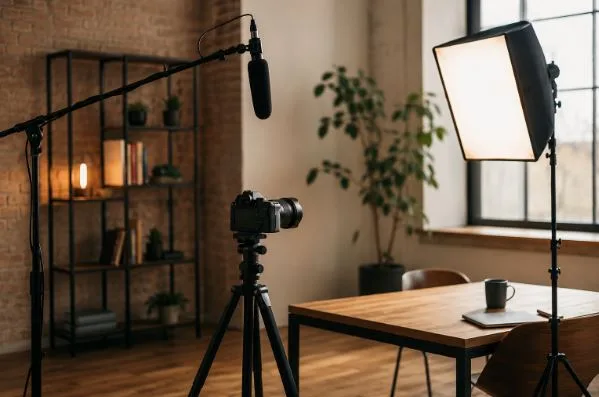
Audio quality should be the first thing you guard, even if the visuals look less shiny. People can forgive imperfect lighting far more quickly than they’ll tolerate muffled, or echoey sound. A reasonable shotgun microphone or a lavalier setup is a smaller line item that, weirdly enough, protects the credibility of everything else in the video.
Also, one really solid location beats several kinda meh ones. Multi location shooting is like adding layers to the problem, travel time, crew hours, and logistics costs climb fast, sometimes quietly at first, then all at once. A single well chosen space, filmed with intention from a few angles, will usually read as more deliberate than a rushed lap through three different spots.
Talent who can actually perform on camera is more valuable than just having a larger cast. A confident founder or one team member speaking naturally tends to beat a bigger ensemble that looks stiff, and over rehearsed. Basically less “we’ll manage” energy, more real delivery.
Finally, editing time is not the place to go cheap. A rough shot can often be patched up in post, but a great shot paired with a rushed edit rarely hits its full potential. If funds are truly tight, then choose fewer shoot days and more editing hours, rather than flipping it the other way around, even if that feels faster at the time.
Where Startups Commonly Waste Budget
Some spending decisions feel important in the moment, but they rarely pay off for an early stage brand, you know like kinda in the short run. It’s weird because you might think a purchase will be a sure thing, instead it just becomes an echo later, not really a direct advantage.
- Renting cinema grade cameras for a video which will mostly be looked at on a phone screen
- Hiring a big crew for a simple interview or talking head style thing
- Building elaborate custom sets when a clean, well lit real location will tell the story just as well, if not more
- Making one long video instead of planning cut downs for the social platforms from the same shoot day
This last point really matters more than founders often realize, because one single well planned shoot day can somehow create a long form video, multiple short social clips, and also raw material for future edits. In that way it kind of stretches a limited budget across months of content, instead of depending on one single release.
A Different Calculation for Mission Led Organizations
Budget conversations look slightly different for nonprofits and mission driven organizations. Charity video production often benefits from leaning into genuine,not so much polished story telling, more like that slightly rough approach, because chasing a commercial grade production value can be a distraction, authenticity tends to land better with donor and volunteer audiences than a super produced look. The same kind of prioritizing logic still holds true, really. Start with a strong story, and keep the audio clear , like clean audio first, then handle everything else later.
The Real Prioritization Framework
When the full wish list is not affordable, try this order kind of, go from message to script, then audio quality, then pick one strong location, make sure you have a confident on camera presence, and finally, allow enough editing time to shape the footage properly. Camera bodies, lighting rigs, and crew size end up lower on that list than most first time founders think at first. Get the fundamentals right and even a modest budget can still turn into a video that does what it is supposed to. But if you skip them for a fancier camera , no amount of resolution will rescue a story that never really had one.