Top Custom Zebra Blinds and Zebra Shades for Virginia Homes
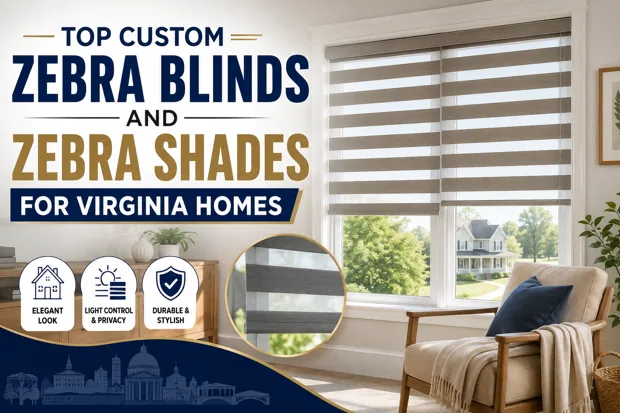
Pick the wrong window treatment in Virginia and you’ll know it by July. West-facing rooms here in Northern Virginia get pretty cooked up in the afternoon, and in places like Richmond or Charlottesville the humidity just sits there and makes fabric curtains go all wonky in a single season. Add the fact that in most Virginia neighborhoods the houses sit close together, and suddenly privacy is not just a “nice-to-have” thing anymore. It’s the sort of concern you’re kinda weighing every morning, even before the coffee is done.
That’s the real context behind why zebra blinds have taken off here. Not because they look good in a showroom — though they do — but because they solve problems Virginia homeowners actually deal with.
What Zebra Blinds Actually Do
The basic design is a single roller with alternating horizontal bands — one sheer, one opaque, repeating down the length of the shade. When the sheer bands sit in front of the gaps, soft filtered light comes through. Roll it a few inches and the solid bands cover those gaps. You get privacy without switching to a completely dark room.
What custom zebra blinds va homeowners are opting for is a setup that generic roller shades can’t replicate. A plain roller shade gives you two settings: open or closed. Zebra blinds give you a continuous range. That matters when you want afternoon light in your home office without the glare cooking your screen, or when your living room faces the street and you don’t want to sit in the dark just to feel comfortable.
They’re also called dual-layer shades or day-and-night blinds, depending on who you’re buying from. Same product. The name just describes what they do.
Why Going Custom Is Worth It
Off-the-shelf blinds from a big-box store are sized for the most common window dimensions. If your windows happen to match, fine. But most Virginia homes — particularly older colonials in Fairfax or brick ramblers in the suburbs — have windows that don’t hit those standard sizes exactly. A quarter-inch gap on each side of a blind is enough to let in a strip of direct sunlight that defeats the whole shade.
Custom zebra shades get measured and cut specifically for your windows. No gaps. No awkward overhangs. And beyond the fit, going custom means you’re actually choosing:
- Fabric opacity: The same zebra style comes in light-filtering, room-darkening, or near-blackout weights. The room determines which one you need.
- Fabric color and texture: Earth tones like taupe, warm beige, and soft olive are popular right now and work well with the transitional interiors common across Virginia. But the range is wide — from crisp whites to deeper charcoals.
- Headrail style: Open roll looks clean and minimal. A cassette headrail gives a more polished, finished look at the top of the window.
- Lift type: Corded works fine. Cordless is cleaner and safer for households with kids or pets. Motorized connects to Alexa, Google Home, or a remote.
Motorized options have gotten genuinely popular for large windows and two-story great rooms where reaching a cord isn’t realistic. A scheduled open at 7am or a voice command is easier than anyone expected it to be.
Which Rooms Make the Most Sense
Living rooms come first, almost every time. The reason is the screen glare problem — custom zebra blinds va families install them specifically to keep afternoon rooms bright without washing out the TV. A fully closed shade fixes the glare but kills the light. Zebra blinds let you find the middle.
Home offices are a close second. Remote work means spending real hours in spaces that weren’t always designed as offices. Natural light matters for mood and focus, but uncontrolled sunlight on a monitor is a genuine productivity issue.
Bedrooms work well with a room-darkening fabric selection. It’s worth being upfront about one limitation: zebra blinds with standard light-filtering fabric won’t give you a completely dark room. If you’re a light sleeper, ask specifically for the room-darkening or blackout fabric band option — that changes the result significantly.
Kitchens get overlooked. Fabric curtains don’t hold up to cooking steam and grease. A zebra shade wipes clean, rolls out of the way when you want full light, and looks far better than a vinyl mini-blind over the sink.
Energy and Virginia Weather
South and west-facing windows are the problem. They let in heat during Virginia’s long summers in a way that puts real pressure on cooling systems. Zebra blinds aren’t a dedicated insulating product, but blocking or softening direct sunlight during peak afternoon hours cuts the solar heat load noticeably. In winter, the layered fabric adds a small but real barrier against drafts coming through older window frames.
It’s a practical upgrade, not an engineering solution. But homeowners switching from bare windows or thin curtains tend to notice the difference on their utility bills by midsummer.
Matching Style to Your Home
A craftsman or colonial in Charlottesville looks best with warmer, softer tones — linen textures, cream, warm grey. A newer townhouse in Ashburn or Tysons with clean-lined interiors reads better with crisp white or light neutral cassettes. The architecture tells you something about what will look right.
Before ordering, a few things are worth settling:
Which direction does each window face? East-facing rooms get hit hardest in the morning. West-facing take the afternoon. That affects which opacity level actually works for you.
Are there children or pets in the home? Cordless or motorized lifts remove the hazard entirely.
How will you clean them? Most zebra fabrics spot-clean fine without taking the shade down. Light dusting handles the rest.
Why Bamu Blinds for This
Bamu Blinds operates across DC, Maryland, and Virginia with a specific focus on custom window treatments. The team measures on-site, matches products to the actual light and architecture of your home, and handles installation. Virginia homeowners deal with a wide range of window styles, sun exposures, and interior aesthetics. A catalog pick doesn’t account for any of that. Bamu Blinds does. One room or a full house — the process runs the same: measured right, fitted right, installed right.
Frequently Asked Questions
1.My living room gets a lot of direct afternoon sun. Will zebra blinds actually help?
Yes, but fabric selection matters. Standard light-filtering zebra fabric softens sunlight without blocking it. If that afternoon sun feels intense, ask about room darkening band options— they seriously cut down on heat and glare, while still keeping the same clean look.
2. What’s the real difference between custom and store-bought zebra blinds?
Store bought blinds get manufactured in standard sizes, which are usually for the most common window dimensions. If your window dosent line up perfectly, you end up with little gaps or you have to use trim that covers that less-than even fit. Custom blinds get cut to your specific measurements. You also get actual choices on fabric weight, opacity, color, headrail style, and lift type — not just whatever two or three options are in stock.
3.Are motorized zebra shades hard to set up or maintain?
Not particularly. Most of the motorized options run on rechargeable batteries, so there is not much wiring, like at all. Setting it up via Alexa or Google Home usually takes only a few minutes once the shade is already installed. Maintenance is minimal — occasional dusting and a battery recharge every few months depending on how often you use them.