T-Shirt Wholesale: How to Choose the Right Factory
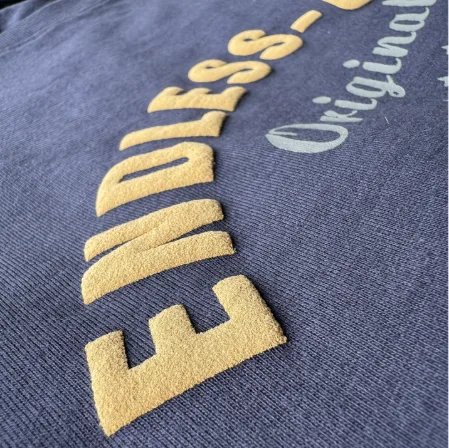
Buying t-shirts in bulk requires more than comparing unit prices. Fabric composition and GSM, sizing, decoration requirements, production capacity, and quality control all affect the consistency of a wholesale order.
For businesses sourcing t-shirt wholesale orders, choosing the right t-shirt factory is especially important. A reliable factory should provide clear specifications, physical samples, realistic lead times, and repeatable quality across sizes, colors, and future reorders.
Quick Answer: What Should You Look For When Sourcing T-Shirt Wholesale?
A reliable t-shirt factory should provide clear MOQs, documented fabric specifications, physical samples, realistic production timelines, and a defined quality-control process. Buyers should also confirm whether the MOQ applies by style, color, or design and what is included in the quoted price.
Why Factory Choice Matters More Than Price Alone
Two suppliers can quote nearly identical per-unit pricing for a t‑shirt wholesale order while delivering very different results once shirts actually arrive. Fabric weight, stitching quality, and consistency across a batch depend heavily on the factory behind the listing, not just the number on a price sheet.
This is why vetting a t‑shirt factory directly matters, even when working through a marketplace or reseller. A factory with organized production processes tends to deliver more predictable results order after order, while an inconsistent one can produce noticeable variation between batches, even for the exact same product specs.
Businesses ordering repeatedly, whether for staff uniforms, retail inventory, or promotional merchandise, benefit most from sticking with one dependable factory relationship rather than shopping around for the lowest price on every single order.
Key Benefits of Sourcing Wholesale
Lower per-unit cost. Wholesale pricing structures reward volume, often cutting per-shirt cost significantly compared to retail or small-batch pricing.
Consistent quality across large orders. Sourcing from a single factory reduces the variation in fabric, stitching, and fit that comes from mixing suppliers.
Faster turnaround for repeat orders. A factory familiar with a business’s specs can often process reorders faster than a first-time setup.
Access to fabric and style variety. Established factories typically offer a broader range of cotton weights, blends, and cuts within a single sourcing relationship.
Buying Guide: What to Look For
Not every factory delivers the same reliability. Here’s what actually separates a dependable sourcing relationship from a frustrating one.
| Factor | Why It Matters |
| Minimum order quantity | Confirm MOQs fit your actual volume needs before committing |
| Fabric weight and composition | Choose the GSM and fabric composition according to climate, intended use, fit, printing method, and target price. Heavier fabric is not automatically better. |
| Sample availability | A factory willing to send a pre-production sample signals confidence in consistency |
| Pricing tiers | Understand how cost per unit changes at different volume thresholds |
| Production timelines | Confirm timelines separately from shipping estimates, since both affect delivery dates |
| Communication responsiveness | Slow or unclear communication early on often predicts issues once production starts |
| Quality control process | Ask how the factory inspects finished units before shipment |
Before requesting a quotation, prepare the total quantity, size and color breakdown, preferred fabric composition and GSM, artwork, decoration positions, label requirements, packaging details, and delivery destination. Complete specifications make factory quotations easier to compare and reduce revisions during sampling.
If your order includes multiple sizes or colors, ask how the factory handles mixed lots, since some MOQs apply per design rather than per size or color variant.
Common Mistakes to Avoid
Skipping the sample stage. Approving a full production run without a physical sample is one of the most common and costly mistakes in bulk apparel sourcing.
Choosing based on price alone. The lowest quote per unit doesn’t always account for defect rates, slow communication, or inconsistent quality control.
Underestimating turnaround time. Production timelines can run longer than expected, especially for a first order where specs are still being finalized.
Ignoring factory verification. Not every listing represents an actual production facility. Some are resellers marking up factory output without disclosing it.
Expert Tips
Request a digital proof or physical sample before approving full production, and check it against your actual specs rather than a general mockup.
Ask directly whether you’re working with a factory or a reseller. Both can be legitimate, but pricing and communication dynamics tend to differ between them.
Order a slightly higher quantity than you think you need if the design will be reused for future batches. Reprinting a shortfall run is often more expensive per unit than adding extra to the original order.
Why Choose Unit Hundred
Unit Hundred has been involved in apparel manufacturing since 2001, with production support covering cutting, sewing, screen printing, embroidery, packaging, and quality control. Coordinating these stages through one production workflow helps maintain more consistent fabric, measurements, decoration, and workmanship across bulk orders.
Ready-made garments customized with printing or embroidery can generally start from 50 pieces, while fully customized styles typically start from 100 pieces per style. Standard samples usually take 3–7 working days, and bulk production generally takes 7–20 working days after sample approval.
FAQs
What’s a typical minimum order quantity for t-shirt wholesale orders?
Ready-made garments with printing or embroidery can generally start from 50 pieces. Fully customized styles typically start from 100 pieces per style.
How much does pricing drop at higher wholesale volumes?
There is no fixed percentage. Pricing depends on fabric, GSM, decoration method, artwork complexity, labels, packaging, and total quantity. Buyers can request tiered quotations for different order volumes.
How do I verify I’m working with an actual t-shirt factory?
Ask for production photos, video calls, or facility certifications, and confirm directly whether you’re working with a manufacturer or a reseller.
Should I request a sample before a full production run?
Yes. A pre-production sample is one of the most effective ways to catch fabric, sizing, or quality issues before committing to a full order.
Can I order mixed sizes and colors within a wholesale minimum?
Mixed sizes are usually available within one design. Mixed colors are easier with ready-made garments, while fully customized colors may be subject to separate fabric or color MOQs.
How long does a typical t-shirt wholesale order take to produce?
Standard samples usually take 3–7 working days. Bulk production generally takes 7–20 working days after sample approval. Shipping time is calculated separately.
Do factories retain specs for future reorders?
Many do, which speeds up future orders and helps maintain consistency across batches. It’s worth confirming this directly with your factory.
What GSM should I choose for t-shirt wholesale orders?
180–220 GSM is commonly used for everyday t-shirts, while 240–300 GSM is more suitable for heavyweight, oversized, or streetwear styles.
Can a t-shirt factory provide private labels and custom packaging?
Yes. Orders can include neck labels, care labels, size labels, hangtags, branded polybags, barcode stickers, and custom cartons.
Conclusion
Successful t-shirt wholesale sourcing depends on choosing a t-shirt factory that can reproduce approved fabric, measurements, decoration, and quality standards across the full order. Clear specifications, physical samples, and documented quality control also make future reorders more consistent.