Bark Missing From a Tree? What to Check First
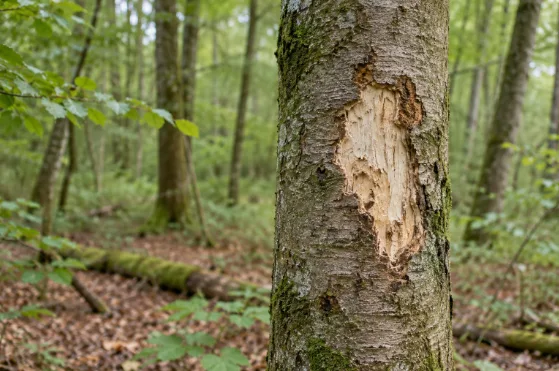
Finding a patch of missing bark can leave you wondering whether a tree is in trouble or simply carrying a scar. Before deciding what to do, take a closer look at where the damage sits, how far it extends and whether there are similar marks on neighbouring trees.
Understanding why bark stripping should not be ignored is particularly useful where grey squirrels are active. Repeated damage can affect tree health and future timber quality, but the response should start with an assessment of the affected trees rather than assumptions based on a single squirrel sighting.
Look beyond the first patch
Start with a view of the whole tree from the ground. Look around the trunk, then check the main branches with binoculars if you have them. Photograph anything you cannot identify clearly instead of climbing to inspect it.
The position of the damage offers clues. Missing bark close to the ground can result from mowing or strimming, tight ties or feeding by mammals such as rabbits and deer. Grey squirrel damage often occurs higher in the tree, although trunks can also be affected. Location alone will not confirm the cause.
Check whether a tie or guard is pressing against the damaged area, and consider any recent work nearby. When asking for advice, a photograph of the whole tree alongside a close-up of the wound will give more context than a close-up alone.
Consider which trees are affected
Beech and sycamore are particularly susceptible to grey squirrel bark stripping, although other broadleaves and some conifers can suffer serious damage too. Forest Research identifies trees between 10 and 40 years old as especially vulnerable. This is a useful guide for deciding where to look first, rather than a rule that excludes younger or older trees.
The consequences can extend beyond the visible scar. Staining, decay and structural defects can reduce timber quality, while weakened stems may break. These effects are described in Forest Research’s guidance on grey squirrel damage.
In a small woodland, use the first affected tree as a starting point for checking the surrounding area. Give particular attention to trees you hope to retain for the future canopy or grow for timber. Record unaffected trees as well, so your notes show how widespread the problem actually is.
Record enough detail to spot a change
A few consistent notes make later decisions easier. For each affected tree, record:
- The date and a location you can find again.
- The species, if known, and an identifying photograph.
- Whether the damage is on the main trunk or a branch.
- The approximate size of the patch and how far it extends around the stem.
- Any visible cracks, dead branches or changes in the leaves.
On subsequent visits, photograph the same area from a similar angle. Note whether existing wounds have enlarged and whether other trees now show damage. If you check a group of trees, record how many you inspected as well as how many were affected. “Four damaged trees out of twenty checked” is more useful than “several trees damaged”.
Recognise when the damage needs prompt attention
Bark loss extending around all or nearly all of a trunk or branch is known as ring-barking. It can disrupt the movement of sugars and other substances through the tree. A damaged branch and a damaged main trunk therefore have different implications for the tree as a whole.
The RHS explanation of ring-barking notes that recently damaged trees may not show symptoms immediately. Some trees can recover where enough living tissue remains, so neither healthy-looking leaves nor a bare patch alone gives a reliable verdict.
Seek advice from a qualified arborist if damage is extensive, the main stem appears almost completely girdled, or there are cracks and failing branches. The need for assessment is especially pressing beside a path, building or parking area. Keep people away from visibly unstable branches while arranging help.
Use the findings to plan the next step
If repeated squirrel damage is confirmed, discuss prevention with a woodland adviser or an experienced wildlife manager. Ask which trees need priority protection, whether neighbouring land should be considered and how any management work will be assessed.
Keep your original photographs and inspection notes. They provide a starting point for judging whether further bark loss is being reduced. Set a date for the next inspection and agree who will carry it out, so the first discovery leads to a practical follow-up.