As States Crack Down on Predatory Towing, Chicago Drivers Are Being Urged to Know Their Rights
CHICAGO, IL — A wave of state-level crackdowns on predatory towing practices has swept across the country over the past two years, with lawmakers in Ohio, Colorado, Tennessee, Mississippi, Florida, and Ontario all passing legislation aimed at curbing abusive fees and unauthorized tows. The trend has even reached the federal level, where regulators held a session last year to hear grievances from both trucking companies and towing operators over disputed invoices and unpaid claims.
The pattern reflects a broader reckoning within the towing industry, one that consumer advocates say has been years in the making. For individual drivers and commercial fleets alike, the message from regulators has been consistent: towing companies that rely on inflated invoices, undisclosed fees, or aggressive impound practices are facing tightening scrutiny, and the operators who will come out ahead are the ones already operating with transparent pricing.
A National Pattern, State by State
The legislative activity has followed a similar shape in each state. Ohio’s governor signed a law creating a formal dispute process for high invoices on towed commercial vehicles, giving truckers and carriers a path to challenge charges they believe are excessive. Colorado passed a broad measure targeting predatory practices after a state senator’s own vehicle was towed improperly, a case that became a rallying point for the bill’s passage. Tennessee moved to restrict the use of vehicle boots on clearly marked commercial trucks and trailers, while Mississippi and Florida each passed their own reforms aimed specifically at towers who target heavy commercial vehicles with disproportionate fees. Ontario went further still, becoming the first Canadian province to require certification for tow truck drivers and vehicle storage operators.
At the federal level, a June hearing brought trucking companies and towing operators into the same room to air long-standing grievances, with carriers describing excessive charges and towing companies countering that they often go unpaid for legitimate work. The session didn’t produce new federal rules, but it signaled that predatory towing has moved from a local nuisance complaint to a issue serious enough to draw national regulatory attention.
Why This Matters Beyond the Trucking Industry
While much of the recent legislative focus has centered on commercial vehicles and freight carriers, the underlying issues, unclear pricing, unauthorized tows, and fees disclosed only after the fact, affect everyday drivers just as often. Consumer complaints about surprise towing charges have long been one of the most common categories of dispute filed with state attorneys general and consumer protection offices.
Industry analysts note that the crackdown is likely to accelerate a shift already underway in how towing companies compete. As state laws increasingly require upfront disclosure and formal dispute processes, operators that already build their business around transparent, quoted-before-dispatch pricing are positioned to benefit, while those relying on opaque billing face growing legal and reputational risk.
The Chicago Market
Chicago has not seen towing-specific legislation on the scale of Ohio or Colorado, but local operators say the national conversation has shifted customer expectations regardless. Drivers researching towing services in the city are increasingly asking about pricing structure before calling, rather than after a truck has already arrived.
“People are paying closer attention now, and that’s a good thing for the industry overall,” said a spokesperson for Immediate Response Towing Chicago, a locally operated auto towing company serving Chicago and surrounding suburbs including Evanston, Skokie, Cicero, and Oak Lawn. “When we quote a job, that’s the number the customer pays. No mileage surprises, no after-hours charge that shows up for the first time on the invoice.”
The company, which operates a 24/7 dispatch model with an average response time of 15 to 30 minutes, offers a full range of vehicle towing services, including light, medium, and heavy duty towing, motorcycle and exotic car towing, flatbed transport, and accident recovery, alongside roadside services like jump starts, lockouts, and flat tire changes.
What Drivers Should Know Before They Need a Tow
Consumer advocates and industry groups have offered similar guidance in the wake of the recent state reforms. Before a breakdown happens, drivers are encouraged to:
Save a number in advance. Waiting until a vehicle has already broken down to search for an auto towing service leaves drivers with less time to compare pricing and more pressure to accept whatever truck arrives first.
Ask for the full quote before dispatch. A reputable car tow service will disclose the base fee, per-mile rate, and any after-hours surcharge before a truck leaves the lot, not after the vehicle has already been hooked up.
Understand local towing and impound rules. Several of the recent state laws specifically address unauthorized tows from private property, an area where drivers have historically had little recourse. Knowing the local rules before a dispute arises makes it easier to challenge an improper charge.
Keep documentation. Photos of the vehicle’s condition before towing, along with a copy of the invoice and any verbal quote, provide the paper trail regulators in several states are now requiring towing companies to honor.
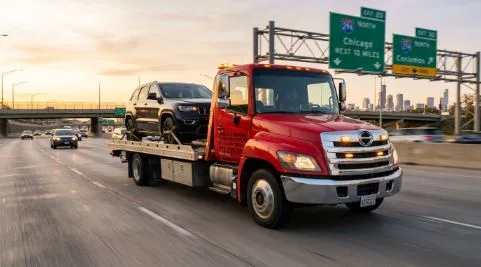
Understand the difference between a tow truck and a flatbed. Not every job calls for the same equipment. Knowing whether a vehicle needs a standard car tow truck or a flatbed, particularly for lowered, all-wheel-drive, or exotic vehicles, helps drivers ask informed questions and avoid unnecessary upcharges for the wrong equipment.
A Shifting Industry Standard
Whether or not additional states follow Ohio, Colorado, Tennessee, Mississippi, Florida, and Ontario with their own towing reforms, the direction of the trend appears set. Regulators, consumer advocates, and commercial carriers are converging on the same expectation: towing companies that operate transparently will have an easier path forward, while those that don’t are increasingly exposed to legal and reputational consequences.
For an industry that has spent decades competing largely on proximity and word of mouth, the shift toward documented pricing and formal accountability represents one of the more consequential changes in years, and one that local operators across the country, including in Chicago, are already adjusting their business models to meet.
About Immediate Response Towing Chicago
Immediate Response Towing Chicago is a locally operated towing and roadside assistance company serving Chicago and the surrounding metro area, including Evanston, Skokie, Cicero, and Oak Lawn. The company provides 24/7 dispatch, upfront pricing, and a full range of towing and roadside services for individual drivers and commercial accounts. More information is available at immediateresponsetowingchicago.com.
Media Contact: Immediate Response Towing Chicago 872-713-6299