From Home to Asset: When a Swedish Property Becomes Financially Useful
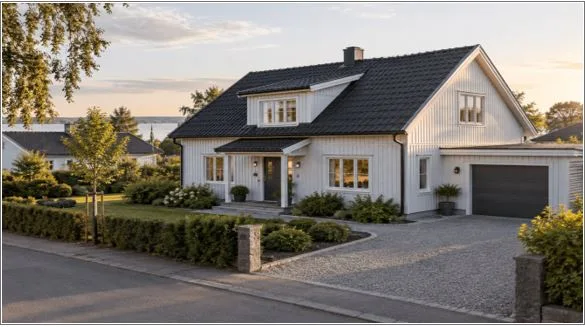
The House Has Not Changed Much, but the Numbers Have
Imagine a homeowner who bought a house in Sweden fifteen or twenty years ago and has simply lived there ever since.
There has been no dramatic property strategy. The mortgage has been paid down gradually. The kitchen may have been replaced once. The roof has been maintained. A bathroom was renovated because it needed to be. Life has happened inside the same walls.
Yet the financial position of the property may now look very different from the day it was purchased.
The remaining debt may be lower. The market value may be higher. The gap between those two figures — the homeowner’s share of the property’s value — may therefore have grown substantially.
That can create an odd moment of recognition. The house is still the same place where groceries are carried in and winter boots collect by the door. But financially, it may have become something else as well: an asset with accumulated value.
Property Wealth Is Not the Same as Having Cash
This is where the language around home ownership can become misleading.
A homeowner may be considerably wealthier on paper than they were ten years earlier without feeling wealthier in everyday life. The value is tied up in the property. It cannot pay an electricity bill or replace a broken car simply because an estate agent believes the house is worth more.
Someone can own a house with a large gap between its value and the remaining debt while still having a fairly ordinary bank balance.
That distinction becomes important when a larger decision appears.
Perhaps the house needs a new heating system, drainage work or a roof repair. Perhaps the family wants an extension rather than a move. Later in life, the question may be whether to remain in the house, reduce debt, sell, or use part of the accumulated value in another way.
At that point, the house stops being only a place to live. It becomes part of a broader financial decision.
Accessing Value Without Leaving
One obvious way to realise the value of a home is to sell it. That turns an illiquid asset into money, but it also means giving up the property.
For many homeowners, that is precisely what they do not want. The house may suit the family well, and moving may be expensive, disruptive or unnecessary.
That is why some owners begin thinking about whether part of the accumulated value can be accessed while they continue living there. In practical terms, borrowing against a house in Sweden can become relevant when the owner wants to use some of the value that has built up without selling the home itself.
But this is not the same as discovering free money.
Turning part of the property’s value into available cash usually means increasing debt. That can change monthly costs, reduce future flexibility and leave less room for other borrowing later. A homeowner who has spent years reducing debt may also feel very differently about increasing it again, even if the numbers make it possible.
The question is not simply, “Can this value be used?” It is also, “What is gained by using it, and what is given up?”
A renovation that makes the house work for another twenty years may feel very different from borrowing for short-lived consumption. Funding an extension that avoids a move is a different choice from raising debt simply because the property has risen in value.
Everything Depends on the Current Value
Before accumulated value can be treated as anything more than an idea, there is a more basic question: what is the property worth now?
Homeowners often carry an informal number in their heads. It may come from a neighbour’s sale, an online estimate or the price of a similar house nearby.
But location, condition, plot, renovations, local demand and the wider market all affect value. A house that has been improved may have changed substantially since it was last assessed. Another may have risen mainly because the surrounding market moved.
That is why valuing property in Sweden becomes relevant when the owner starts asking what financial room the house actually creates.
The valuation matters because it changes the relationship between the property and the debt attached to it.
A house worth substantially more than the outstanding loan gives the owner a different set of choices from one where debt remains close to the property’s value. The same homeowner, with the same income, may therefore have very different flexibility depending on what the property is worth today.
The Financial Role Can Change Quietly
One of the most interesting things about long-term home ownership is how little has to happen for the financial picture to change.
There does not need to be a spectacular renovation or a dramatic rise in value. Time itself can do much of the work.
Debt falls gradually. The property may appreciate. Improvements accumulate. A home bought when a household was younger and more heavily indebted can become a very different financial object later in life.
That does not mean its purpose has changed. It is still a home first.
But the accumulated value may begin to influence decisions that once had little to do with the property. A major repair can become easier to fund. Staying rather than moving may become practical. A future sale may create options that were not available before.
There is a useful tension in that.
A home is deeply personal, but its financial value is not sentimental. The market does not care how many Christmases happened in the living room or how long it took to get the garden right.
Yet those same walls can gradually become one of the household’s largest financial assets.
The physical house may barely change from one decade to the next.
Its role in the owner’s financial life can change completely.