Custom Retractable Screens for Patio: The Complete Buyer’s Guide for Seamless Indoor‑Outdoor Living
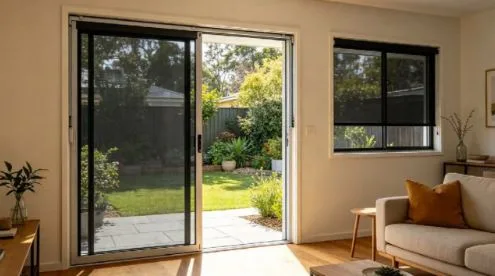
The Short Answer: Why You Should Read This Guide
If you’ve ever sat on your patio at sunset with a cold drink in hand — only to have a mosquito land squarely on your arm, or the sun roast your face mid‑conversation — you already understand the problem. The patio should be your favorite room in the house. Too often, though, it’s the room you almost use: too buggy at dusk, too glaring at noon, too exposed when you want a quiet hour with a book.
A custom retractable screen for your patio is the upgrade that turns that almost‑room into a genuinely livable one. It retracts when you want the wide‑open air, and drops into place when you need protection — no permanent walls, no “screened‑in porch” feeling, no fighting with a zipper every time you walk through. In short: the screen gives you indoor comfort outdoors, exactly when you want it, and disappears when you don’t.
Here’s the honest headline up front: custom sizing beats off‑the‑shelf almost every time, and the difference between a great screen and a disappointing one usually comes down to materials, motor choice, and who measures your opening. By the end of this guide, you’ll know precisely what to ask for, what to pay, and which details separate a screen that lasts a decade from one you’ll regret by next spring.
What you’ll walk away knowing
We will break down core product differences, material trade‑offs, realistic budget expectations, and warning signs for low‑quality products. You will also learn practical buying wisdom sourced from residential interior design and outdoor renovation industry resources, so you can shop with confidence rather than guessing through marketing buzzwords.
What Exactly Is a Custom Retractable Screen?
Think of a retractable screen as a window blind’s athletic cousin. Instead of louvers and fabric, it’s a fine mesh that stretches across an aluminum housing. Pull it down (or across), and it locks into place along a track; let it go, and it rolls back into a tidy cassette that hugs your ceiling or frame.
The anatomy: mesh, track, and housing
Every retractable screen is built from three parts that have to work together:
- The mesh — the fabric‑like screen that blocks bugs, sun, or both, depending on the weave.
- The track or side channels — the rails that guide the screen and keep it taut so it doesn’t flap like a bedsheet in a breeze.
- The housing — the protective cassette that stores the rolled mesh and hides the spring or motor.
When all three are engineered for your opening — not a standard size someone guessed at — the screen runs smoothly, seals tightly, and looks like it was always meant to be there.
Custom vs. off‑the‑shelf: why sizing is everything
This is the fork in the road. A “one‑size‑fits‑most” screen from a big‑box store can be tempting because it’s cheap and available today. But patios are stubbornly irregular: a header beam that isn’t perfectly level, a corner that juts out, an opening that’s 11 feet 3 inches instead of a clean 10. Off‑the‑shelf screens either gap at the edges (bugs find the gap, trust me) or bind when the frame shifts with the house.
A custom retractable screen is measured, fabricated, and tensioned for your exact dimensions. That fit is what delivers the two things you’ll actually notice every single day: a tight seal and a clean look. Many homeowners mix‑and‑match solutions; for large outdoor patio openings you can explore Patio Screens, while door‑oriented layouts benefit from Door Screens options as you compare configurations.
The Real Payoffs: What You Actually Gain
Let’s skip the brochure‑speak and get concrete about what changes when the screen is up.
Bug protection without the “cage” feeling
A traditional screened porch has a certain… enclosed energy. It can feel like you’re on display behind a net, and the permanent structure blocks airflow and light even when you want none of it. A retractable screen flips that logic: you get bug‑free evenings at dusk — when the mosquitoes come out to audition for a horror movie — and then you roll the screen up and the patio is wide open again. It’s protection on your schedule, not a permanent cage.
UV blocking and heat relief
Standard insect mesh is mostly about keeping things out. But a solar‑grade mesh does something different and arguably more valuable: it cuts glare and heat while still letting you see through. On a patio that bakes in the afternoon sun, a solar screen can noticeably lower the surface temperature of your seating area. Interior designers frequently point out that controlling light is the single fastest way to make an outdoor room feel comfortable — and a retractable solar screen gives you that control with one pull.
Privacy on demand, glare‑free light
There are mornings when you want coffee on the patio but the neighbor’s deck is twelve feet away, or evenings when you don’t want your whole evening to be a show for the street. A privacy‑grade screen softens the view from outside while keeping your space bright and breezy inside. It’s a bit like having sunglasses for your house: the world dims, but you still see it clearly.
Wind and debris defense
Light summer storms, falling leaves, the odd gust that sends napkins flying — a taut retractable screen knocks down a surprising amount of that. The best systems are rated for real wind, and a motorized version can even retract automatically when a sensor feels gusts pick up, which is a nice “set it and forget it” layer of protection for your furniture.
Types of Retractable Screens: Which Fits Your Space?
Not all screens mount the same way, and picking the right style for your opening is half the battle.
Pull‑down screens for porches and pergolas
If your patio has a solid header above — a beam, a pergola top, a ceiling — a pull‑down screen hangs vertically and drops to meet the floor. It’s the classic choice for porches and covered patios, and it’s usually the most affordable route to full coverage.
Side‑track screens for wide openings
For wide, tall openings — think sliding‑door‑sized spans or a whole wall you want to open up — side‑track screens run horizontally or vertically along guides and can cover spans that a single roll couldn’t. These are the workhorses for people who genuinely want to blur the line between living room and terrace.
Zip‑track screens for serious weather
If you live somewhere with real wind or you’re sealing a larger area, a zip‑track screen locks the mesh into the track with a zipper‑like channel on all sides. The result is a taut, weather‑tight seal that stands up to gusts far better than a free‑hanging edge. It’s the difference between a screen that resists wind and one that handles it.
Sheer vs. solar vs. insect mesh: a quick cheat sheet
- Insect mesh — finest weave, keeps bugs out, lets light and breeze through, minimal heat reduction.
- Solar mesh — slightly more closed weave, blocks more UV and glare, good airflow, modest privacy.
- Sheer / privacy mesh — most closed, gives you real privacy and the most heat control, at the cost of some view and airflow.
Pick the one that matches the complaint you’re actually trying to solve.
Materials That Matter: Mesh, Tracks, and Casings
A screen is only as good as the sum of its materials, and the cheap stuff reveals itself within a season or two.
Fiberglass, polyester, or solar mesh
Fiberglass is the classic insect‑screen fabric — stable, easy to see through, and it won’t sag. Polyester is stronger and holds color longer, which matters if your screen sees direct sun every afternoon. Solar mesh adds metallic threads that reflect heat and UV, which is why it does the glare‑and‑heat job so well. Whatever you choose, look for UV‑stabilized material; otherwise the sun will bleach and embrittle it long before you’d expect.
Aluminum frames and why finishes count
Quality frames are almost always aluminum — it’s lightweight, won’t rust, and handles moisture without corroding. The finish matters just as much as the metal: a powder‑coated finish resists fading, scratching, and the grime that patios accumulate. If you want the housing to blend into a dark ceiling or match your trim, most custom makers offer a range of colors so the cassette disappears instead of announcing itself.
Motorized vs. Manual: Pick Your Convenience Level
This is the decision people flip‑flop on, so let’s settle it honestly.
Manual operation: simple and budget‑friendly
A manual screen costs less, has fewer moving parts to fail, and never needs a power source. If your opening is small or you only lower the screen occasionally, a spring‑assisted pull‑down is completely reasonable. It’s the dependable, low‑maintenance choice — the paper map, if you like, of the screen world.
Motorized: remote, app, and wind‑sensor smarts
A motorized screen is where the patio starts to feel genuinely smart. With a remote or a phone app, you can lower the screen from across the yard — no getting up, no wrestling a stubborn handle. Wire one into your smart‑home setup and you can schedule it: screen down at 7pm for mosquito hour, up at 8am for full sun. Add a wind sensor and the screen retracts itself when gusts hit a threshold, which is pure peace of mind for anyone who’s watched a storm roll in while they’re at work. If your budget allows, motorized is the version you’ll use more — and use is what makes the upgrade worth it.
Custom Sizing: Why One Size Doesn’t Fit All Patios
We touched on this earlier, but it deserves its own moment because it’s the number‑one cause of buyer’s remorse.
How a proper measurement works
A good manufacturer doesn’t guess from a photo. They measure the opening at multiple points — because almost no opening is perfectly square — and they account for the header, the floor or sill, and any obstructions like lighting fixtures or a gutter. The screen is then built to those exact numbers, with a few millimeters of tolerance so it seals without binding.
Common sizing mistakes that haunt buyers
The classic blunder is measuring the opening when you should measure the mounting surface, or assuming the corners are square when they’re not. Another is forgetting that a motorized housing needs a little extra clearance above the opening. These are exactly the details a reputable custom provider catches before fabrication — which is why “custom” isn’t just marketing fluff. It’s the difference between a screen that seals and one that lets the bugs in through a three‑millimeter gap at the corner.
What to Look for in Quality and Durability
You can’t judge durability from a showroom photo, but you can judge it from specifications and reputation.
- Tension and wind ratings — a screen that stays taut in a breeze is engineered differently from one that flaps. Ask for the wind rating and how the track keeps the mesh taut.
- UV‑stabilized mesh — non‑negotiable for any screen in direct sun; it’s what separates a screen that looks new in year five from one that’s brittle in year two.
- Warranty and brand reputation — a serious manufacturer stands behind the product. A solid warranty on the mesh and the motor (if motorized) is the strongest signal that the maker expects it to last. Interior design and home‑improvement authorities consistently stress that the cheapest products are rarely the cheapest over the life of the project — durability is where the real value lives.
Tension and wind ratings
Wind performance varies widely across product lines. Even aesthetically similar screens can behave very differently under gusty outdoor conditions, so always request documented wind‑resistance specifications rather than trusting visual appeal alone.
UV‑stabilized materials
Outdoor mesh is constantly bombarded by UV radiation. Non‑stabilized fabrics will turn brittle, fade, and tear prematurely, even if they look attractive on day one.
Warranty and brand reputation
Review what components are actually covered. Some brands offer long‑looking warranty text yet exclude mesh, moving parts, or normal environmental wear, which leaves you holding the bill for replacement parts down the line.
Costs and Budgeting: What Should You Expect to Pay?
Money talk, up front and honest.
Price ranges by screen type
As a rough sense of the landscape: a basic manual pull‑down screen for a single opening might land in the low hundreds of dollars per opening, while a large, motorized, zip‑track installation — especially one covering a wide span with smart‑home integration — can climb into the thousands. The spread is wide because the variables are real.
The factors quietly driving your quote up
The price jumps with size, motorization, mesh grade, and the number of openings you’re covering. Finishes and weather‑rated hardware add a bit more. A common surprise is the per‑opening pricing model — a two‑panel patio runs roughly double a single screen, even though the second one is smaller. Get a written quote that itemizes each opening so you’re comparing apples to apples across manufacturers, not just staring at one scary bottom line.
Smart Home Integration and Automation
If you’ve already got a smart‑home hub, a motorized retractable screen slots in beautifully. Many systems work with common protocols and simple apps, letting you group the screen with outdoor lighting or schedule it around sunset. The genuine win is the wind sensor: automation that protects your furniture when you’re not around. For anyone who’s ever rushed home to close things before a storm, that’s worth more than the convenience alone.
Maintenance and Care: Keep Screens Looking New
The good news: retractable screens are remarkably low‑effort to maintain.
- Clean the mesh a couple of times a year with a soft brush and mild soapy water; avoid harsh chemicals that can strip the UV treatment.
- Keep the tracks clear of leaves and grit — a quick wipe keeps the screen rolling smoothly and prevents the mesh from snagging.
- Inspect the tension annually; most systems let you re‑tension the spring, which restores that crisp, tight look in a couple of minutes.
Treat it like you’d treat a good piece of patio furniture — a little care, and it lasts for years instead of seasons.
How to Choose the Right Manufacturer and Get Honest Quotes
You’ve done the research; now choose your partner well.
- Ask for in‑person measurement rather than a remote estimate.
- Request samples of the mesh so you can see through it, touch it, and test the glare reduction for yourself.
- Compare itemized quotes across at least two or three providers.
- Read reviews from people with similar patio setups — a screen for a windy coastal deck faces different demands than one for a sheltered courtyard.
Red flags that should stop you cold
Watch out for any quote that skips on‑site measurement, a provider who can’t or won’t show you the wind rating, or a warranty that conspicuously excludes the mesh and motor. And beware of prices that seem too good to be true — in outdoor gear, “too cheap” usually means “thin mesh, weak track, and a housing that rattles.” Trust, but verify. If you want to browse established product lines, Retractable Fly Screens offers a wide custom‑made catalog for Australian residential outdoor spaces.
Conclusion
Your patio deserves to be more than a decorative afterthought. A custom retractable screen turns it into a true extension of your living space — bug‑free at dusk, cooler at noon, private when you want it, and wide open when you don’t. The secret isn’t magic; it’s fit and materials. Choose custom sizing, pick the mesh that matches your real problem, decide honestly between manual and motorized, and buy from a manufacturer whose warranty tells you they expect their product to last. Do that, and you’ll have a patio you actually use — the kind of seamless indoor‑outdoor living that interior designers talk about, achieved one smooth pull at a time.
When you’re ready to take your patio from “almost usable” to truly seamless, look for a provider that measures, custom‑builds, and stands behind its work. Discover your perfect fit with retractscreens — made to measure, built to last, and designed to give you back your favorite room in the house.
Frequently Asked Questions (FAQs)
1. How long does a custom retractable screen typically last?
With UV‑stabilized mesh, quality aluminum framing, and basic seasonal care, a well‑built screen commonly lasts well over a decade. The mesh may need replacing after years of heavy sun exposure, but the frame, track, and housing are designed to be the long‑lived part of the system.
2. Can a retractable screen really block enough sun to cool a patio?
Yes — especially a solar‑grade mesh. It cuts glare and a meaningful share of UV and radiant heat before they hit your seating area. It won’t turn a patio into an air‑conditioned room, but it makes a sun‑baked afternoon genuinely comfortable.
3. Is a motorized screen worth the extra cost?
If you’ll use the screen often and want convenience, remote control, or wind‑sensor automation, yes — motorized means you actually use it, which is what makes the investment pay off. If your opening is small and your use is occasional, a manual screen is a perfectly sensible, lower‑cost choice.
4. Do retractable screens block mosquitoes and other insects completely?
An insect‑grade mesh stops nearly all flying insects when the screen is fully down and sealed in its track. It’s the seal that matters — which is exactly why custom sizing and a taut track are so important. A screen with gaps at the corners is a screen that still invites guests.
5. What’s the most important thing to get right when buying one?
Sizing and the seal. Everything else — motor, finish, mesh — can be upgraded later, but a screen that doesn’t fit your opening properly will never perform well, no matter how much you spent on it. Start with precise measurements from a provider who measures on site.