The Second Screen Takeover: How Micro-Betting Rewired the Way We Watch Sports
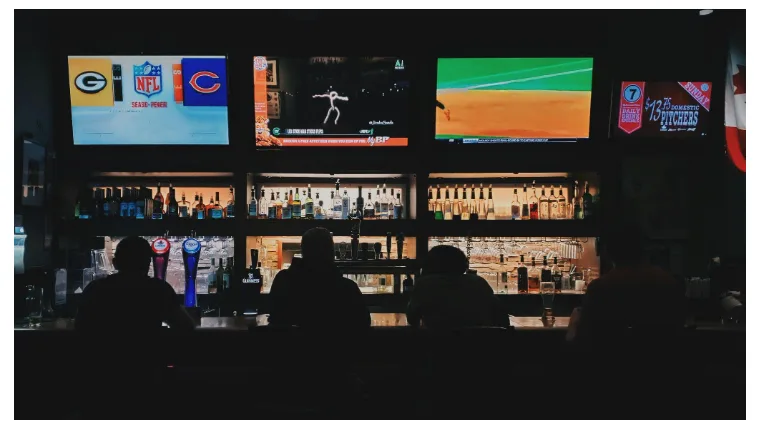
It’s the final quarter of a tight NBA game, and your team is down by three. The ball swings to your star player, he rises for the shot, and your thumb taps your phone screen before the ball even leaves his fingertips.
You just placed a wager on whether that three-pointer would swish or brick. The ball drops through the net. Your phone buzzes. You’ve won. The crowd roars on your TV, but your living room feels like it’s at center court. This is the new reality of sports fandom. Welcome to the micro-betting movement.
From Passive Viewer to Active Participant
For decades, watching sports was a passive affair. You sat and looked on, slowly roared or grumbled. Then came the final whistle and you read the score in the morning paper. That world is gone. By 2026, the last score is just one data point of hundreds. The action is now in the palm of your hand.
Micro-betting is the fast-moving sister of in-play betting. Micro-bets are settled in seconds, whereas the 90 minutes required to determine if a bet is won or lost is avoided. It is a way to define a match as a series of small-scale, high-frequency prediction markets. Every serve, free kick, or substitution becomes a potential win.
The figures are astounding. According to industry tracker H2 Gambling Capital, the global micro-betting handle was expected to be more than $21 billion in 2025, or about 18-19% of the total sports betting market. Sportradar predicts that this will reach $20 billion by 2027. But these are real numbers representing millions of fans who have found something exciting – the power to form the story of the game as it unfolds.
The Engagement Explosion
Here’s the beautiful twist: micro-betting doesn’t distract from the sport; it amplifies it. Live bettors place an average of 5.7 bets per session compared to just 1.8 for pre-match bettors. That’s more than triple the engagement. A single three-hour football match that used to offer three or four betting markets now offers hundreds. Micro-markets can generate 10 to 15 times the handle of traditional full-match wagers per event minute.
Why? Because every moment now matters. Every play carries weight. Every pass, every shot, every defensive stop becomes a micro-drama with its own stakes. The phone in your hand is a control panel that lets you interact with the action in real-time.
The Tech That Makes Magic Possible
This wouldn’t be possible without the invisible infrastructure that runs beneath the surface. Micro-betting requires less than 250ms latency, so that means that the speed of the video you’re watching, the speed of the odds displayed, and the speed at which the feeds are updated have to be in perfect harmony. Any delay, even a half second, can make a bet impossible.
The 5G Revolution
This is where 5G changes everything. Performance data from 2025 and early 2026 deployments in major sports venues shows network latency has dropped to as low as 17 to 24 milliseconds on leading 5G networks. Stadiums across Europe and North America are converting from simple concrete bowls into hyper-connected data hubs, turning every seat into a high-speed trading floor. Fans in the stands are now the ultimate “sharps,” witnessing events the moment they happen.
AI and Real-Time Intelligence
Artificial intelligence drives the pricing and delivery of these lightning-fast markets. AI models analyze match flow to provide fans with relevant insights or suggested interactions that match the specific phase of play in real-time. Companies like nVenue supply AI-driven intelligence essential to bookmakers’ micro-betting initiatives. When you see an odds update appear on your screen, there’s an entire neural network working behind the scenes to make that number accurate and fair.
The Second Screen Becomes the Main Event
The defining habit of the 2026 sports fan is the phone in the hand during a live broadcast. Nielsen research found that Gen Z fans are twenty-one per cent more likely than average to use a mobile device while watching sports, and more than ninety per cent of Gen Z and Millennial fans consume sports content on social media alongside the primary broadcast.
Broadcasters Join the Party
The networks have noticed. An online sportsbook now shows active wagers and live settlement status directly on the broadcast itself. Viewers who opt in can track wagering progress (from game outcomes to player prop bets) during the course of a televised game.
A New Kind of Community
Here’s what might surprise you most. Micro-betting isn’t isolating—it’s connective. Matchdays are no longer just ninety minutes and a highlights show. They are multi-screen events. Fans check xG charts and heatmaps while they watch. Others follow live tweets and fan channels. A large chunk combine the action with an accumulator, a bet builder, or a micro stake on the next goal.
The chat boxes buzz. The group chats explode. You’re competing, celebrating, commiserating in real-time, moment by moment. Every play becomes a shared experience, and every stake becomes a conversation starter.
The Demographic Shift
Industry reports from 2025 found that Gen Z and Millennials now account for 34% and 42% of total betting activity, respectively. Gen Z engagement has seen a specific 7% year-on-year growth in online sports betting. For these younger fans, the ability to test their “skill” against the odds in real-time is a primary driver of engagement, with 42% citing the “rush” of the live market as a key reason for following the sport.