Why Corporate Gift Notepads Matter More Than You Think: A Practical Guide
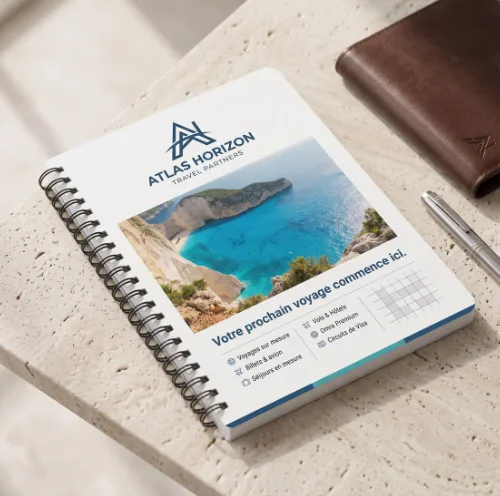
The Notebook Your Client Actually Keeps (Or Throws Away)
There’s a moment that happens in every business relationship: you’re sitting across from a client, finalizing a deal, and you want to leave something behind. Something that says “we remember you. We care about details.”
So you hand them a blocnote personnalisé. A nice one, you thought. Branded. Professional. Thoughtful.
Six months later, you see that same client at a conference, and they’re using a notebook from someone else. Not because yours was bad, exactly. But because it broke. The pages started coming loose. The binding gave way. Or worse — it just didn’t feel worth keeping.
That’s the quiet cost of choosing the wrong notebook supplier. It’s not the purchase price. It’s the missed second impression.
Why Corporate Gifting Fails With Cheap Notepads
Let’s be honest about what happens when companies budget on corporate gifts.
The paper feels thin. Not delicate — thin. There’s a difference. Thin paper wrinkles when you write on it. Pens bleed through. If it’s a regular white interior, every stroke shows the page underneath, which means it looks messy even when it’s not. Your client is literally holding a product that feels cheap every time they use it.
The cover is the first thing people notice, but it’s also the first thing that fails. Budget notebooks usually use standard paper covers — 150g or 200g at best. After two weeks in a briefcase, the corners curl. After a month, the edges fray. The color starts to look matte and worn instead of crisp and professional. It’s not even damaged yet. It just looks used up.
The binding is where things really fall apart — sometimes literally. Cheap spiral bindings bend and misalign. Saddle-stitched notebooks start shedding pages. Glued bindings separate. None of these are catastrophic in the moment, but they happen fast enough that your client is already reaching for something more reliable.
And here’s the worst part: personalization on a cheap notebook is visible compromise. You’ve branded this thing — your logo on the cover, maybe custom pages inside — but the product itself doesn’t match the message. It’s like putting a luxury logo on a budget product. It doesn’t elevate the product. It just highlights that you cut corners.
The client holds this thing and thinks: “This is what they think I’m worth.”
What Actually Makes a Corporate Notebook Work
If you’re going to give notebooks as gifts to clients, partners, or team members, there are a few non-negotiable elements.
The cover paper matters. A 300g coated paper exterior isn’t just thicker — it’s fundamentally different. It holds shape. The edges stay crisp for months. Coated means the surface is smooth and professional, not rough or dull. And plastified? That’s the difference between a notebook that survives a commute and one that looks weathered after two days in someone’s bag. The plastified finish protects against coffee spills, scratches, and the general wear of daily use. It says: this is built to last.
The interior paper is where you prove you care. Extra white 80g paper is noticeably different from the 70g or cheaper alternatives. It has weight. It has substance. When someone writes on it, the pen glides — no bleed-through, no drag. It doesn’t wrinkle under ballpoint pressure. That 10g difference is the distance between a notebook people actually use and one they use once and abandon. Premium paper makes the act of writing feel better. And that sounds small until you realize it’s the moment your gift is being used.
The binding has to be metal. Not because it looks fancy, but because it actually works. A metal spiral binding or metal clasp keeps the pages aligned, session after session. It distributes stress across the entire spine. It doesn’t fail silently — if there’s a problem, you see it immediately and can address it. Fabric or plastic bindings wear out gradually and invisibly until suddenly the notebook is falling apart. Metal bindings are engineered for thousands of open-and-close cycles.
Personalization that’s actually integrated. Full customization — exterior and interior — isn’t just branding. It’s a signal. When someone sees their name embossed on a high-quality notebook, or opens it to find custom pages inside, they don’t just see your logo. They see that you invested in this. That you thought about what they’d actually use. That you didn’t just grab a generic item and slap your branding on it.
The Math of Corporate Gift Notebooks
Here’s what most companies get wrong about corporate gifts: they calculate the cost per unit, not the value per impression.
A cheap notebook costs you $3–$5. Your client receives it, uses it for two weeks, and it falls apart. Cost per impression? High. They remember it wasn’t worth keeping.
A quality notebook with premium paper, proper binding, and personalization costs more upfront — maybe $8–$12 per unit depending on volume. But that notebook sits on their desk for eighteen months. They use it daily. Every time they open it, they remember who gave it to them. Every time someone asks where they got it, they mention your name. The impression multiplies.
If you’re giving out fifty notebooks a year, the difference between cheap and quality is maybe $200–$300 in total spend. Over the life of those notebooks, that’s the difference between fifty people thinking “that was a nice try” and fifty people thinking “this is a company that gets it.”
And there’s the time factor. If you need corporate gifts for a client meeting in ten days, cheap suppliers can’t promise quality delivery. You’re gambling. Quality suppliers who actually invest in the product — in the paper, the binding, the personalization process — build their operations around delivering in 5–10 days without cutting corners. They’ve optimized the workflow so that speed doesn’t mean compromise.
The Reality Check
Not every notebook needs to be premium. Internal team gifts, conference swag for large events, bulk giveaways where volume matters more than individual impact — there are use cases where budget is the right call.
But if you’re giving notebooks to clients, partners, or decision-makers — people whose opinions matter to your business — a cheap notebook is a missed opportunity. These are people you want to remember you. They’re people whose space you want to occupy, literally, on their desk.
A notebook that falls apart after two weeks occupies their memory for the wrong reason.
A notebook built on premium paper with a metal binding that still works after six months, personalized with thought and detail, occupies their desk and their mindset. Every time they write in it, you’re there.
What To Actually Look For
If you’re sourcing blocnote personnalisé for corporate gifts, here’s what matters:
Cover material: 300g+ coated and plastified. Non-negotiable. It’s the armor of the product.
Interior: 80g+ premium white paper. Anything less, and you’re watching through the pages. Anything more, and you’re overpaying for diminishing returns.
Binding: Metal. Full stop. It’s the difference between six months and six weeks.
Personalization: Full customization available, both exterior and interior. This is where you differentiate. Make it personal. Make it count.
Timeline: If a supplier can’t deliver in 5–10 days without compromising on materials, they’re cutting corners somewhere. That’s usually in the personalization, the binding, or the quality control.
The point isn’t that you need to spend a fortune on corporate notebooks. The point is that a poorly chosen notebook costs you twice — once in money, and again in the impression it leaves.
A well-chosen one works for you for months. And that’s worth thinking about.
Disclaimer: This article is for informational purposes only. Product features, benefits, and suitability may vary, and readers should consider their own needs before making purchasing or business decisions.