Blank Check Stock vs Pre-Printed Checks: Which Fits Your Business?
Disclosure: This article was published as part of a paid partnership with OnlineCheckWriter.com, a Zil Money platform. The author is an independent contributor.
The blank check stock vs pre-printed checks decision comes down to flexibility, printing requirements, security controls, and how many bank accounts a business manages.
Both approaches can support legitimate check payments.
The better option depends on whether the business wants account information printed in advance or added only when the check is created.
What Is Blank Check Stock?
Blank check stock is check paper that does not already contain all of the bank and payment information needed for a specific check.
The user adds account details, payee, amount, check number, and other required information during the check-printing process.
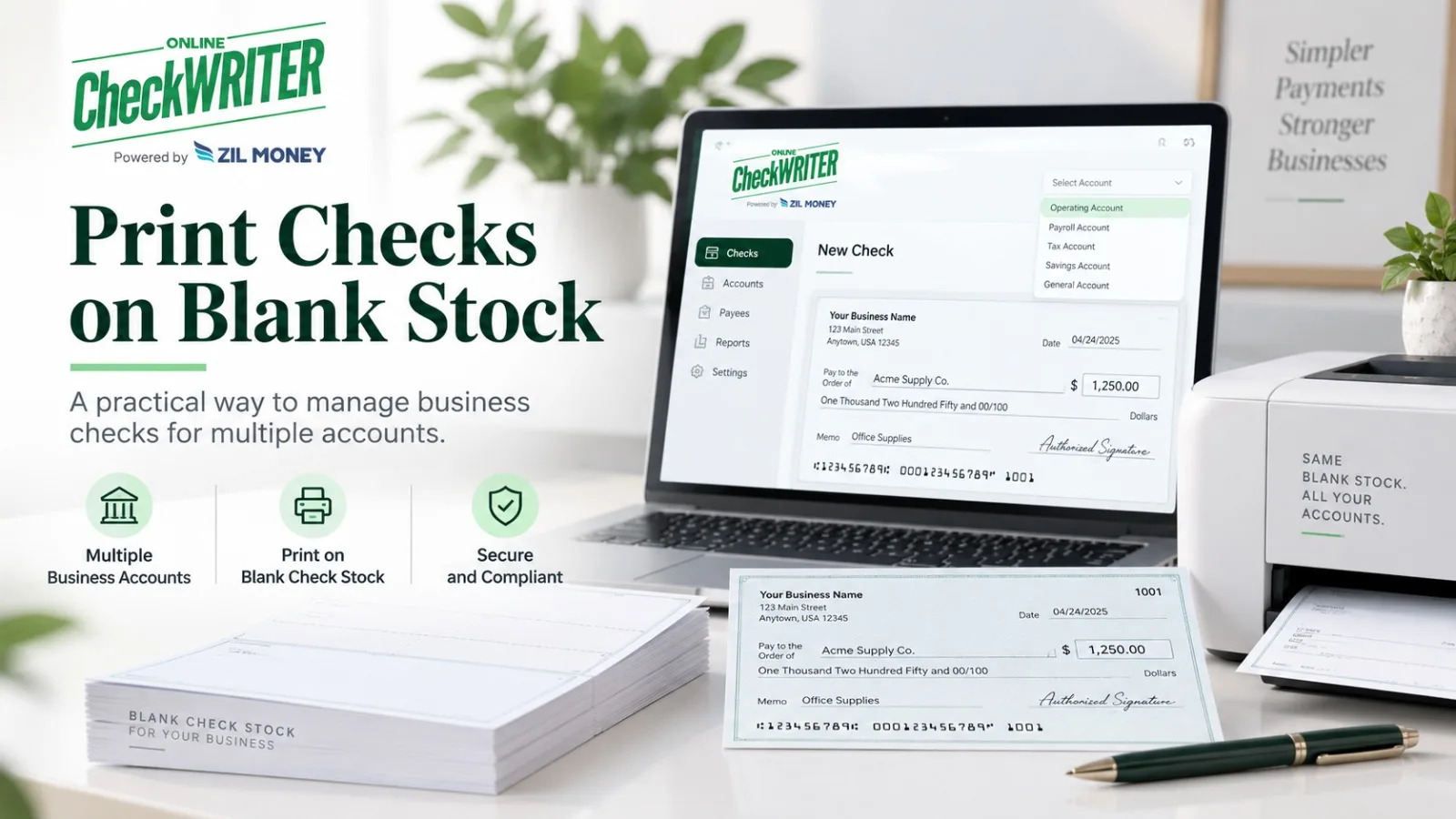
OnlineCheckWriter.com’s current Blank Checks page describes using blank stock to print checks on demand from authorized accounts rather than storing separate boxes of pre-printed checks for each account.
This can be useful for businesses managing more than one checking account.
What Are Pre-Printed Checks?
Pre-printed checks arrive with information already printed for a particular bank account.
The bank routing number, account number, and other check elements may already be on the stock.
The business later fills in or prints the payee, date, amount, and other transaction-specific details.
This reduces the amount of account information that must be generated during each printing session.
The tradeoff is that the stock is tied to a specific account.
If the account changes or the business manages many entities, separate supplies may be needed.
MICR Is an Important Difference
The MICR line runs along the bottom of the check.
Federal Reserve guidance says that generally applicable industry standards have long required the MICR line on an original check to be printed using magnetic ink.
If the blank stock truly has no MICR line and the business prints that line itself, the Federal Reserve says magnetic ink should be used.
If the stock already includes a pre-printed MICR line, the payee, date, and amount can be printed using ordinary non-magnetic ink.
That makes the exact type of “blank” stock important.
Not every product sold as blank check paper has the same level of pre-printing.
Blank Stock Can Offer More Account Flexibility
A business with several checking accounts may prefer stock that is not tied to one account.
The software can generate the check using the account selected for that transaction.
This reduces the need to keep separate pre-printed supplies for each authorized account.
However, flexibility creates responsibility.
The user must make sure the correct bank account, routing information, check number, and MICR setup are used before printing.
Pre-Printed Checks May Reduce Setup Work
A company using one checking account and writing predictable numbers of checks may prefer pre-printed stock.
The account information is already established on the check.
That can reduce the technical printing work required for the MICR line.
The business still needs to control access to the check stock and confirm transaction information before issuance.
Do Not Base the Decision on an Unverified Savings Percentage
Some check-printing marketing pages claim large fixed savings from blank stock.
The actual financial difference depends on check-stock price, printer supplies, software charges, order quantities, shipping, staff time, and how frequently the business changes accounts.
A responsible article should not promise that every business will save a fixed percentage.
Calculate the cost using your own volume.
What Does OnlineCheckWriter.com Support?
OnlineCheckWriter.com supports creating and printing checks on blank stock from authorized bank accounts, along with check mailing and other payment workflows.
Businesses should still use stock and a printer setup that meet the requirements of the connected financial institution.
The blank check stock vs pre-printed checks decision is therefore not about one format being universally better.
Blank stock can provide flexibility and reduce separate inventory across accounts.
Pre-printed checks can reduce the amount of account-specific information being printed at payment time.
Choose the format that fits the number of accounts, check volume, printer setup, internal controls, and bank requirements.
OnlineCheckWriter.com – powered by Zil Money, is a financial technology company, not a bank. Banking and money movement services are provided through partner financial institutions and licensed service providers. FDIC insurance coverage applies only to eligible deposit products and accounts, and is subject to applicable terms, conditions, limitations, and requirements. Additional information regarding partner institutions, products, and services is available in the applicable terms and agreements.