Which Laser Welder Accessories Actually Change Your Results?
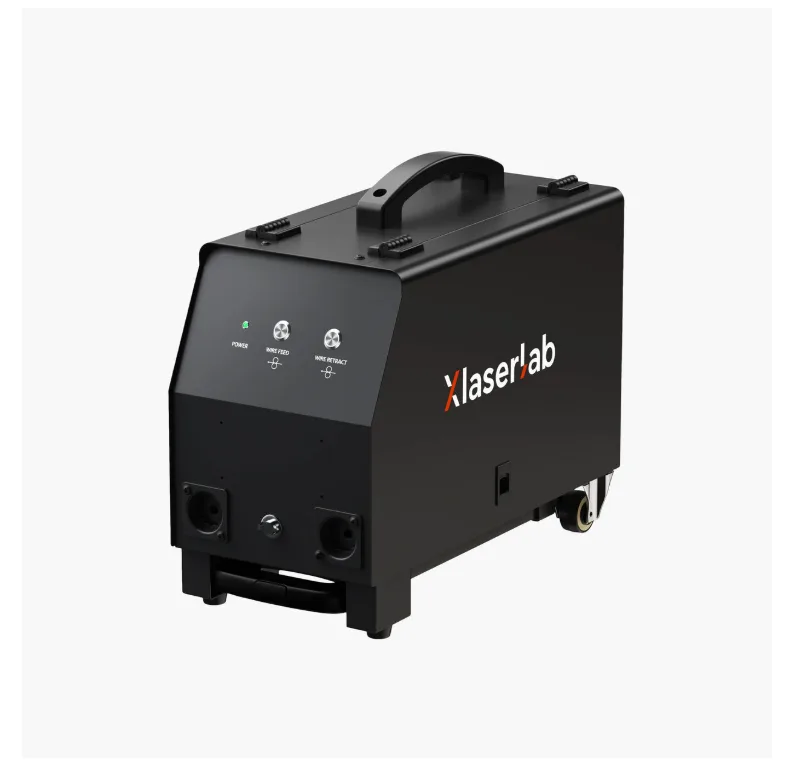
A handheld fiber welder is only as capable as the pieces you bolt onto it. Ask any experienced fabricator what turned an okay setup into a reliable one, and the answer usually points to accessories rather than the machine itself. The right nozzle, wire feeder, or clamping fixture is often the difference between beads that pass inspection every time and beads that need touch-up on every third part.
Yet browsing an accessory catalog can be overwhelming. Some items solve real bottlenecks; others sit in the drawer after a single use. This article sorts through the most common add-ons for handheld and benchtop fiber welders and looks at which ones earn their space in the toolbox. If you run a small shop, do mobile repairs, or manage a fabrication line, the same principles apply. Focus on parts that improve joint access, protect the head from spatter, and let one operator move faster without cutting corners on quality.
Nozzles and Torch Tips Set the Ceiling
The nozzle is the single accessory that has the biggest daily impact. It controls the shielding gas envelope, protects the optical lens, and shapes how you see and reach the joint. Most handheld welders ship with a small starter set, but real production shops stock several variants and swap them between jobs.
Straight nozzles handle open butt and lap joints on flat sheet. Angled nozzles let you drop into corners, weld the inside of tanks, or dodge flanges on ductwork. Long-reach tips are essential for anyone welding inside enclosures or repairing pipe interiors. Investing in a quality set of laser welder accessories pays back the moment you stop cutting a workpiece just to get the head close enough to the seam.
Ceramic Nozzle Care
Ceramic tips are consumables that hold up remarkably well when treated right. Wipe off spatter after each shift, avoid dropping them, and keep spares in a labeled tray. When a nozzle chips, replace it rather than nursing it along, because a chipped edge disturbs the gas flow and lets oxygen creep into the puddle.
Wire Feeders Open Up Real Fabrication Work
Autogenous welding produces beautiful demo videos, but production jobs often require filler. A wire feeder attaches to the torch or sits on a stand and pushes matching filler wire into the puddle at a controlled rate. This is where a handheld setup starts to compete with TIG on structural work: fillets, cover passes, and joints with a gap all need wire.
Matching Wire and Feed Rate
Use filler chemistry that matches the base metal. Stainless 308 for stainless 304, ER70S for mild steel, ER5356 or ER4043 for aluminum depending on the alloy. Set the feed rate slightly below what you would use for MIG at the same joint size, since the laser puts less bulk energy into the weld. Practice on scrap until you can maintain a consistent puddle without the wire pushing back on the torch. Once the muscle memory forms, wire-fed laser welds look tight and stack beautifully.
Wire Diameter Selection
Thin wires around 0.8 mm suit decorative work, jewelry, and thin sheet. Thicker 1.0 to 1.2 mm wire handles structural fillets and heavier gauges. Keep at least two spools of each common diameter on hand so you are not forced to compromise on a job because the right wire is not in stock.
Protective Lenses and Consumables
The protective lens sits between the beam and the outside world. It is disposable by design and one of the cheapest items you will buy, yet neglecting it is one of the most common ways operators lose an afternoon. A dirty lens absorbs energy, heats up, and eventually cracks or fogs. When that happens mid-weld, the bead drops off and you find yourself grinding out defects.
Buy protective lenses in bulk, keep a fresh one within arm’s reach of every welder, and inspect the surface at the start of every shift. If you see any spatter, smoke residue, or scuff marks, change it. The two-minute swap is far cheaper than the rework it prevents.
Clamps, Fixtures, and Positioners
The joint fit-up matters more with a laser than with almost any other welding process. Gaps and misalignment show up immediately as sunken beads, blow-throughs, or wandering seams. That is why a good set of clamps and fixtures pays for itself repeatedly.
Magnetic Squares and Angle Blocks
Adjustable magnetic squares hold panels at fixed angles without leaving marks. They are ideal for tack welds on stainless enclosures, chassis frames, and railing corners. Angle blocks let you set up repeatable jigs for small production runs without machining custom fixtures.
Rotary Positioners and Turntables
For cylindrical parts like exhaust flanges, hydraulic cylinders, and pipe fittings, a rotary positioner turns a two-person job into a one-person job. The operator sets the rotation speed, holds the torch steady, and lets the workpiece spin under the beam. Consistency improves and fatigue drops dramatically over an eight-hour shift.
Safety and Fume Handling
Every operator needs certified safety eyewear rated for the machine’s wavelength. Standard welding shades are not adequate. A pair of correct laser goggles is not optional, and neither is a set of side shields for anyone else in the room. Beyond eyewear, a proper fume extractor draws vaporized metal and shielding gas byproducts away from the operator’s breathing zone. Stainless work in particular produces chromium and nickel byproducts that should not be inhaled.
Ground Clamps and Cable Management
A solid ground clamp with clean jaws is a basic but essential accessory. Keep the cable path organized to prevent trip hazards and to protect the sheath from getting singed by drops of molten metal. A cable reel or overhead hanger extends the working life of both the ground lead and the fiber cable, which is one of the more expensive parts to replace on a laser system.
Building a Balanced Accessory Kit
The most useful shops keep a compact but complete set. A handful of nozzle variants, a wire feeder with two spool sizes, a stack of protective lenses, a small assortment of clamps, and safety gear for every operator cover the vast majority of daily work. Suppliers like Xlaserlab bundle starter kits that match popular handheld units, which is often a smarter buy than assembling parts one at a time.
Small Add-Ons, Big Impact on Weld Quality
The machine itself sets the ceiling, but accessories determine how close you get to it. A good nozzle assortment, a reliable wire feeder, a habit of swapping protective lenses, and solid clamping gear are what separate consistent shops from ones that fight the same problems every week. None of these items are exotic, and most of them are inexpensive compared to the machine. Start with the essentials that match your workload, expand as your job mix grows, and keep the small consumables well stocked. That approach turns a handheld welder from a demo tool into a genuine production asset.