Can Carpet Be Repaired Instead of Replaced? What to Look for Before You Tear It Out
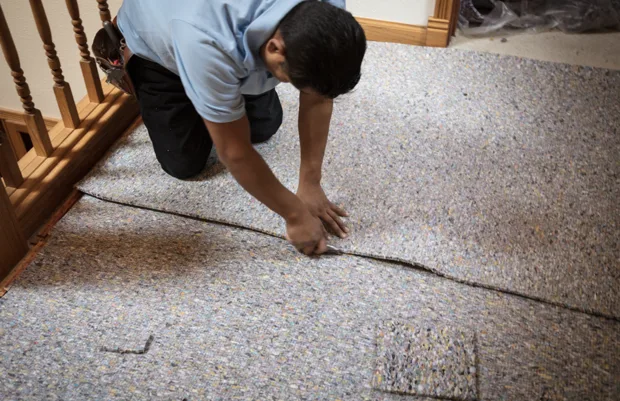
Wall-to-wall carpet does quiet work in a home. It softens footsteps, warms a bedroom on a January morning, and gives a living room the hushed feeling that hard floors never quite manage. So when a ripple starts to run across the family room, or a candle leaves a scorch mark by the hearth, the first instinct is often to price out a whole new floor.
Hold that thought. A surprising amount of carpet damage is local, mechanical, and fixable. The trick is knowing which problems live on the surface and which ones point to a floor at the end of its life.
Start With the Question Every Installer Asks
Before anyone talks about patches or seams, a good technician will ask one thing: is the carpet itself still healthy?
Healthy carpet has a backing that stays bonded to the face fibers, pile that springs back when you press it, and no lingering odor from past water damage. If those three boxes are checked, most of what bothers you is a repair job. If the backing is crumbling or the pile is crushed flat from wall to wall, repair only buys time.
Wrinkles, Ripples and That Wave by the Sofa
Ripples are the most common complaint, and the most fixable. They show up for a handful of reasons:
- The carpet was never stretched tight. Many installs rely on a knee kicker alone, which cannot pull a large room taut. A power stretcher braces against the opposite wall and pulls the carpet evenly onto the tack strip.
- Heavy furniture was dragged instead of lifted. A loaded bookcase pushed across a room can pull carpet off its strips.
- Indoor humidity swings. Carpet backing relaxes and tightens as the air changes, and loose installs show it first.
The fix is re-stretching. A technician releases the carpet from the tack strip, pulls it tight with a power stretcher, re-hooks it, and trims the excess. The room looks newly laid, and you keep the carpet you chose.
A quick test: push the ripple with your foot. If it moves or flattens and then returns, it is a stretching problem. If the surface feels crunchy or powdery underneath, the backing may be delaminating, and that is a different conversation.
Burns, Stains and Pet Damage
Some marks refuse to leave. Bleach spots, iron burns, and corners a new puppy chewed through will not clean out. This is where patching earns its reputation.
A skilled patch starts with a donor piece, often cut from inside a closet where no one will notice. The damaged section comes out, the donor goes in with seam tape, and the technician lines up the pile direction so light hits both pieces the same way. Done well, you have to hunt for it.
Two details decide whether a patch disappears:
- Dye lot and wear. A donor from a closet has seen less sun and foot traffic, so a light cleaning of the surrounding area helps the colors meet.
- Pile direction. Run your hand across the carpet. The smooth direction must match on both sides of the seam.
Seams That Peak or Pull Apart
A visible seam line, or one that has started to split, is typically a failed tape or an adhesive that let go. Re-seaming with fresh heat-bond tape closes the gap and flattens the peak. In doorways, a frayed edge can be re-bound or finished with a new transition strip, which also stops the unraveling from creeping into the room.
When Replacement Is the Better Choice
Repair is not always the kind answer. Consider replacing when you see:
- Backing that crumbles or feels gritty across large areas
- Pile that stays matted in every traffic lane, not only in one hallway
- A lingering musty smell after a flood, which can point to moisture trapped in the pad
- Several repairs needed in one room, where the combined cost starts to approach a new install
A Note on Warranties
This part gets overlooked. Carpet makers tie their warranties to proper care, and the Carpet and Rug Institute keeps a list of service providers that meet manufacturer standards. A repair done with the wrong method can put that coverage at risk. Ask any technician whether they work to manufacturer specifications before they touch your floor.
If You Are Weighing Repair in Denver
Colorado’s Front Range adds its own twist. Denver’s semi-arid air, combined with furnaces running through the long heating season, pushes indoor humidity up and down across the year. Carpet that was stretched loosely at install tends to show those swings as waves in spring and fall.
That makes two criteria matter most for homeowners in the City and County of Denver: a crew that uses a power stretcher rather than a knee kicker alone, and one whose methods keep your manufacturer warranty intact. For Colorado homeowners comparing options, that combination of warranty-safe methods and certified denver carpet repair work is the standard worth asking every provider to meet.
Living With Carpet After the Repair
Once the floor is tight and whole again, a few habits keep it that way:
- Lift, never drag. Slide furniture on felt pads or lift it with help.
- Rotate the room. Moving a sofa or bed a few inches every year shifts wear away from the same path.
- Layer where it counts. A flat-weave runner in a busy hallway protects the carpet beneath and adds pattern to a quiet corridor.
- Blot, do not scrub. Scrubbing a spill untwists the fibers and leaves a fuzzy patch that reads as a stain.
- Schedule cleaning. Grit works like sandpaper at the base of the pile, so regular professional cleaning extends the life of the fibers.
The Takeaway
Carpet rarely fails all at once. It loosens, it snags, it takes a burn in one spot while the rest of the room stays lovely. Before you commit to tearing it out, walk the floor with someone who can tell a stretching problem from a worn-out backing. Often, the room you love is one afternoon of repair away from looking like the day it was laid.