Best Bill Pay Apps for Small Business: What “Best” Should Actually Mean
Published for Zil Money
Disclosure: This article was published as part of a paid partnership with Zil Money. The author is an independent contributor.
Searching for the best bill pay apps for small business can produce long lists of software, but a ranking alone does not tell a business owner which platform fits the way the company actually pays bills.
A small business may need to pay vendor invoices, rent, contractors, utilities, insurance, software subscriptions, and other recurring expenses. The useful question is not which app has the longest feature list.
It is which app helps the business manage the payments it actually makes.
Start With the Bills You Need to Pay
Before comparing software, list the expenses the business handles every month.
Are most payments recurring? Do vendors accept ACH? Are checks still required? Does the company occasionally need a wire? Does more than one person review payments?
Those answers narrow the search quickly.
A company that mainly needs recurring bill scheduling may have different requirements from a business that regularly switches between ACH, checks, wires, and other payment methods.
Look at Payment Options
Payment flexibility matters because vendors do not all request the same method.
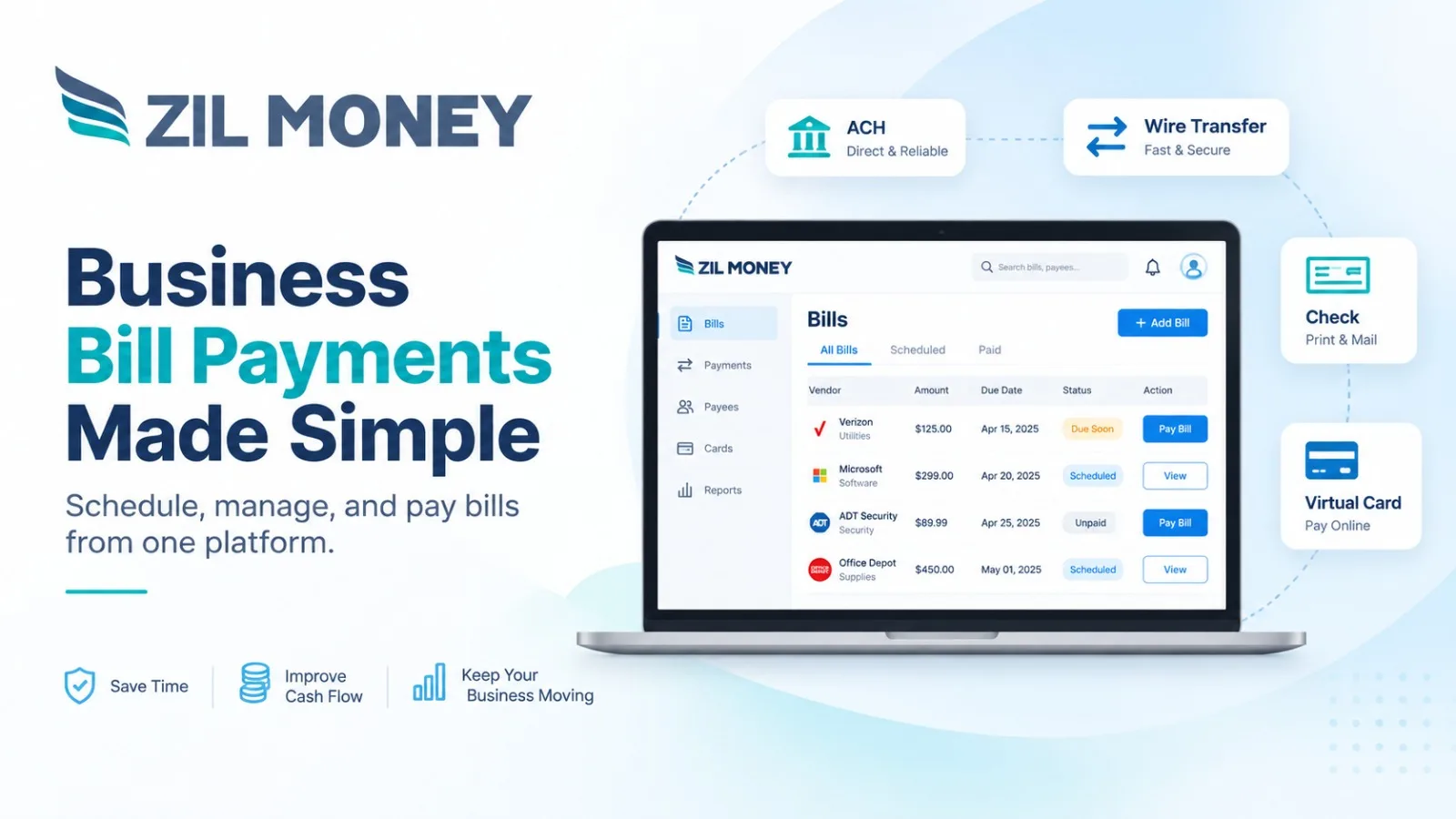
Zil Money supports business payment workflows using ACH, wire transfers, checks, virtual cards, and other supported payment options. Its current Bill Payment page also describes scheduled payments for expenses including vendor invoices, rent, contractors, utilities, insurance, licensing, and software or equipment-related bills.
The value of multiple payment methods is practical. A company can choose the method that fits a particular bill instead of assuming every payment must follow the same process.
Pricing, fees, payment conditions, and eligibility can change, so businesses should review Zil Money’s current terms and applicable pricing before setting up a payment workflow.
Understand Digital Checks Clearly
Some businesses still need check-based payments but may not always want to mail a physical check.
Zil Money also supports digital checks, or eChecks. In Zil Money’s workflow, an eCheck is a PDF check delivered electronically to the payee by email. It is separate from an ACH transfer. The recipient can print the PDF and follow the deposit process accepted by the receiving financial institution. Review Zil Money’s eCheck workflow.
That distinction matters when comparing bill-pay apps. “Electronic payment” can describe several very different workflows, so businesses should confirm what the recipient will actually receive.
Check the Scheduling Options
Recurring bills are one of the main reasons businesses look for bill-pay software.
Zil Money’s current Bill Payment page describes scheduling payments by due date, payday, or another custom date. It also allows users to modify or cancel scheduled payments through the platform. See Zil Money’s bill scheduling workflow.
For a small business, that can be useful when rent, utilities, contractor payments, and other bills fall on different dates.
Scheduling does not remove the need to monitor available funds, payment status, or recipient information. It simply gives the business a more organized way to manage when payments are initiated.
Think About Control, Not Just Convenience
A bill-pay app should help the business understand what is being paid, when it is scheduled, and which payment method is being used.
Before selecting a platform, ask practical questions.
Can the business review scheduled payments? Can a payment be changed or canceled before processing when permitted? Can the team see the status of payments? Does the workflow fit the company’s existing approval process?
These questions are more useful than choosing software because it appears first on a “best apps” list.
Compare Cost Using Your Real Workflow
There is no responsible way to say one bill-pay app is always cheaper for every small business.
Total cost can depend on payment methods, transaction volume, selected services, account conditions, and other applicable charges.
Instead of comparing generic pricing examples, estimate the company’s own monthly activity.
How many bills are paid? Which methods are normally used? How many payments require checks or wires? Which expenses are recurring?
Then compare the current pricing and terms of the platforms being considered.
What Makes a Bill Pay App “Best”?
For a small business, the best bill-pay app is the one that fits the company’s actual payment process.
Zil Money may be worth evaluating when the business wants to schedule bills while retaining access to multiple supported payment methods from the same broader payment platform.
The decision should come down to payment methods, scheduling needs, internal controls, current pricing, and how easily the platform fits the company’s existing finance process.
A useful bill-pay tool should help the business complete today’s payment work without forcing every vendor or bill into the same payment method
Businesses can review the current Zil Money Bill Payment platform for supported workflows and current product details.
Zil Money, is a financial technology company, not a bank. Banking and money movement services are provided through partner financial institutions and licensed service providers. FDIC insurance coverage applies only to eligible deposit products and accounts, and is subject to applicable terms, conditions, limitations, and requirements. Additional information regarding partner institutions, products, and services is available in the applicable terms and agreements.
[1]: https://zilmoney.com/bill-payment/ “Bill Pay Software for Business | Pay Vendors by ACH, Card, or Wire”
[2]: https://zilmoney.com/echeck-payment/ “eCheck Payment | Quick, Secure Electronic Transactions”