How to Pay Bills With a Credit Card When They Don’t Accept Cards
Disclosure: This article was published as part of a paid partnership with Zil Money. The author is an independent contributor.
A business may want to pay bills with a credit card when they don’t accept cards, but the biller may only take ACH, wire, or check.
That does not always mean the business has to abandon the card as its funding source.
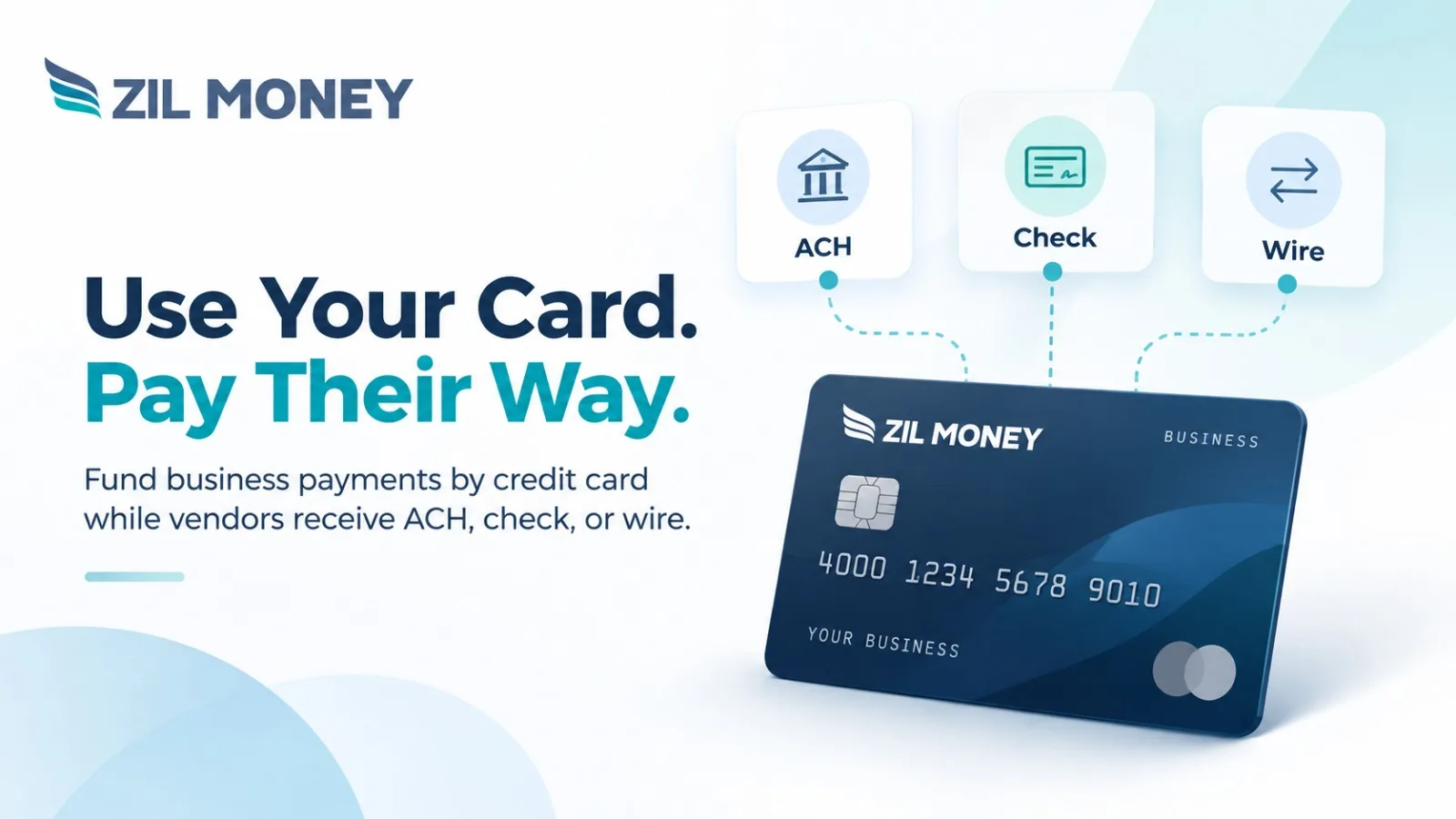
A supported third-party payment workflow can charge the payer’s business credit card and deliver the funds to the recipient through a payment method the recipient already accepts.
Separate Funding From Delivery
This is the key concept.
The funding method is how the payer supplies the money.
The delivery method is how the recipient receives it.
Zil Money’s Pay by Credit Card product currently supports eligible transactions where a business card funds the payment and the vendor receives ACH, a check, or a wire.
The vendor does not have to add card processing simply because the payer used a card.
Start With the Type of Bill
Before setting up the payment, confirm that the expense is eligible.
A vendor invoice, contractor payment, commercial rent payment, or another legitimate business expense may fit a supported card-funded workflow depending on current product terms.
However, businesses should not assume every obligation can be funded by credit card.
Zil Money’s current support documentation specifically says mortgage and certain loan-related card payments are restricted, while rent can be supported through applicable ACH or mailed-check delivery workflows.
Always verify the current rules for the specific payment.
Understand the Fee
Using a card through a payment platform has a processing cost.
As of September 2026, Zil Money’s standard credit card processing fee is 2.9%. Pricing may vary and is subject to change. Additional charges can apply for certain payment rails or delivery services.
That fee needs to be considered before choosing the funding method.
Businesses should avoid treating card-funded bill payment as “free” simply because the vendor does not pay a merchant-processing charge directly.
The payer is still paying the card-funding fee.
What Happens to Cash Flow?
Using a credit card changes when the business has to pay the card issuer.
The exact timing depends on when the transaction posts, the statement cycle, payment due date, whether a grace period applies, and whether the account is carrying a balance.
The CFPB explains that credit-card grace periods are not mandatory and that consumers may avoid interest on new purchases under certain conditions when a qualifying grace period is available.
For that reason, avoid a universal claim such as “you automatically get 30 to 45 extra days.”
Check the actual card agreement.
Rewards Are Not Guaranteed
The business card may offer rewards.
But rewards depend on the card program and transaction eligibility.
Do not assume every transaction earns the advertised reward rate, and do not assume the reward value will exceed the Zil Money processing fee.
Card issuers control their own reward rules.
Confirm the Recipient Details
Even though the vendor does not process the card, the payment still needs accurate recipient information.
For ACH, the business may need verified banking details.
For checks, the business needs the correct payee and mailing address.
For wire transfers, the required recipient information may be more detailed.
Using a credit card does not remove the need to verify the payee.
Decide Based on the Complete Cost
A card-funded payment can be useful when the vendor does not accept cards directly and the business has a clear reason to use credit.
But it should be compared with paying from the bank account.
Look at the processing fee, card interest terms, available credit, rewards eligibility, delivery cost, and repayment plan.
The fact that a biller does not accept cards directly no longer makes card funding impossible in every case.
It simply means the business needs a supported intermediary workflow and should evaluate the cost carefully.
Zil Money, is a financial technology company, not a bank. Banking and money movement services are provided through partner financial institutions and licensed service providers. FDIC insurance coverage applies only to eligible deposit products and accounts, and is subject to applicable terms, conditions, limitations, and requirements. Additional information regarding partner institutions, products, and services is available in the applicable terms and agreements.