Credit Card Vendor Payment Fee: What Businesses Should Calculate Before Paying
Disclosure: This article was published as part of a paid partnership with Zil Money. The author is an independent contributor.
A credit card vendor payment fee should be calculated before a business chooses card funding for a supplier invoice.
The percentage matters, but so do the delivery method, the business’s reason for using the card, the card’s repayment terms, and whether the transaction qualifies for rewards.
For Zil Money, current support documentation lists a 2.9% standard processing fee for credit-card payments.
Businesses should still check the live fee schedule because pricing and product conditions can change.
What Does the 2.9% Fee Cover?
The credit-card processing fee applies to using the card as the payment funding source.
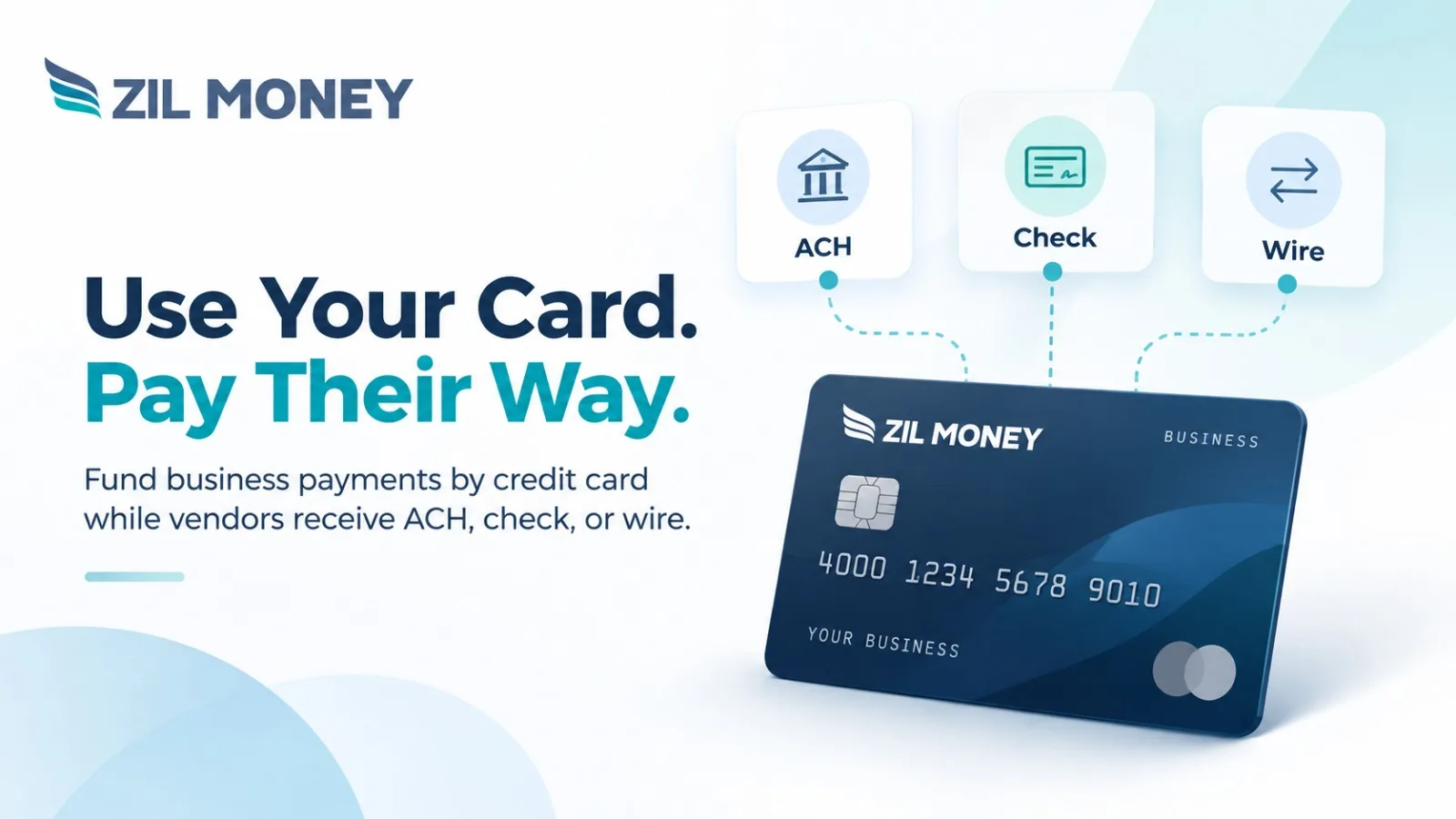
The vendor can then receive the payment through a supported method such as ACH, wire, or check depending on the transaction and recipient requirements.
Additional charges can apply depending on the delivery method.
Zil Money’s current support documentation lists separate charges for services such as faster ACH, wire transfer, virtual card, and mailed-check delivery.
That means the full payment cost can be more than the card-processing percentage alone.
Why Would a Business Pay the Fee?
One reason is payment flexibility.
A supplier may require ACH or a check even though the payer wants to use a business credit card.
Another reason is timing.
The business may want to keep bank cash available until the card payment becomes due.
Neither reason automatically makes the fee worthwhile.
The business needs to compare the benefit it expects with the actual cost.
Compare the Fee With the Alternative
If the company can pay the vendor directly through standard ACH at a lower cost and there is no reason to preserve cash, card funding may not provide enough value.
If an eligible company is waiting for a receivable and has a short timing mismatch, management may evaluate the fee differently.
The decision should depend on the specific payment, not a blanket policy that every vendor should be paid by card.
Consider Interest and Card Terms
The processing fee may not be the only cost.
If the business carries the card balance beyond the applicable terms, interest can add to the transaction’s cost.
The CFPB explains that grace-period availability varies and that a cardholder can lose a grace period under certain circumstances.
A finance team should therefore check the card’s APR, statement date, due date, grace-period conditions, and repayment plan.
Rewards Need a Separate Calculation
Many business cards advertise points, miles, or cash back.
That does not mean every card-funded vendor payment will qualify.
Reward eligibility and value depend on the issuer’s program terms.
Even when a payment qualifies, the reward value may be lower than the processing fee.
Avoid saying that rewards “offset the fee” unless the specific card and transaction numbers actually support that conclusion.
Confirm the Payment Type Is Eligible
Zil Money supports many business-payment categories, but there are restrictions.
Current support documentation says rent can be funded through applicable credit-card workflows, while mortgage and certain loan-related payments cannot.
The payer should verify eligibility before depending on card funding for a specific obligation.
Build the Decision From Real Numbers
Before submitting the transaction, identify the vendor invoice amount, 2.9% card-processing fee, any delivery-method charge, expected rewards if actually eligible, potential interest, and the date the card balance must be repaid.
That turns a marketing claim into a financial decision.
The credit card vendor payment fee is neither automatically too expensive nor automatically justified.
Its value depends on what the business gets in return for paying it and whether the company can repay the card under favorable terms.
Zil Money, is a financial technology company, not a bank. Banking and money movement services are provided through partner financial institutions and licensed service providers. FDIC insurance coverage applies only to eligible deposit products and accounts, and is subject to applicable terms, conditions, limitations, and requirements. Additional information regarding partner institutions, products, and services is available in the applicable terms and agreements.