Plumbing Emergencies in Brooklyn: What to Do Before the Emergency Plumber Arrives
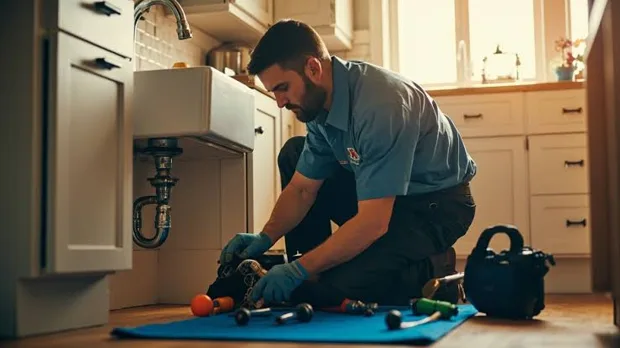
Water moves fast. A burst half-inch supply line can dump several gallons a minute into an apartment, which means the ten minutes between “something’s wrong” and “truck pulls up” decides whether this is a mop job or an insurance claim. Every emergency plumber in Brooklyn will tell you the same thing from experience – the houses with the least damage aren’t the lucky ones. They’re the ones where somebody knew where the valve was.
So that’s where this starts.
The First Thing Every Emergency Plumbing Call Starts With: Your Shutoff Valve
Right now, before anything is leaking, go find the main. In most Brooklyn homes it sits in the basement at the front wall where the water service enters from the street, usually near the meter. Older houses have a wheel-style gate valve – righty tighty, several full turns. Newer work has a quarter-turn ball valve with a lever, handle perpendicular to the pipe means off.
Turn it. Actually turn it, tonight. Gate valves that haven’t moved since the nineties seize up or snap their stems, and discovering that during a flood is the worst possible timing. A stuck main is itself a reason to have a plumbing company out on a calm day.
Learn the fixture stops too. The little oval valves under sinks and behind toilets kill water to one fixture without shutting the whole house. A running-over toilet doesn’t need the main. It needs the stop at the wall, two seconds, done. Apartment renters – find out whether your unit even has its own shutoff or whether the super controls a riser valve, because that answer changes your whole emergency plan.
Burst Pipes and Flooding: Stopping Water Before the 24 Hour Plumber Shows Up
Pipe lets go, order of operations is simple. Main valve off. Then open the lowest faucet in the house, a basement sink or tub, and let the standing water in the lines drain down instead of continuing out the break. Electricity near the water – breaker off before anyone steps in a puddle, no exceptions.
Then move your stuff and start pulling water, because drying out in the first hours is what keeps a soaked floor from becoming a mold project.
While you work, make the call. A plumber in Bushwick can be inside a Myrtle Ave walk-up in minutes on a frozen-pipe night, and those nights come in clusters – the first deep freeze of January bursts pipes all over the borough at once, so the earlier your call lands in the queue, the better. Keep a 24 hour plumbing company in Brooklyn saved in your contacts before the cold snap, not during it.
One winter note. A pipe that froze but hasn’t burst yet – no water at one faucet while the rest run – is a live grenade. Shut the main, open the tap, warm the area gently. No torches on pipes. Plumbers rebuild more fire damage from pipe-thawing attempts than anyone wants to admit.
Sewage Backing Up? Stop Running Water Now
A backup works differently than a leak, and people get the response backwards. The main shutoff does nothing here – the problem isn’t water coming in, it’s waste that can’t get out. Every flush, every shower, every dishwasher cycle anywhere in the building has one exit, and when that exit is blocked, all of it surfaces at the lowest drain. Usually the basement floor drain or a basement bathroom.
So the move is: stop using water. All of it. Everyone in the house. In a multifamily, that means banging on doors, because the upstairs neighbor’s laundry load is about to come up through your floor drain.
Don’t plunge a floor drain gushing sewage, and keep kids and pets away from the water – it’s a health issue, not just a mess. Repeat backups, gurgling fixtures, that lowest-drain pattern – that points at the lateral itself, roots or a break, and that’s a sewer line repair in Brooklyn conversation with a camera, not another Saturday with a rented snake.
Gas Smells and No-Heat Nights
Gas gets its own rules and they override everything above. Rotten egg smell means out of the building – no switches, no phones indoors, no checking the stove first. Call 911 or the utility emergency line from the sidewalk. The utility makes it safe for free at any hour. The repair after that belongs to a licensed plumber.
No heat is its own emergency tier when temperatures drop hard. A dead boiler at 15 degrees isn’t about comfort, it’s a race against your own pipes freezing. Check the simple stuff – thermostat batteries, the boiler’s emergency switch somebody bumped, the pilot – then call. Open cabinet doors under sinks on exterior walls and let faucets drip while you wait. Moving water resists freezing. And no-hot-water with a gas smell near the water heater is the gas protocol, not the patience protocol.
What Counts as a Real Plumbing Emergency and What Waits Until Morning
Middle-of-the-night money, spend it on: water you cannot stop, sewage coming up, any gas smell, no heat in freezing weather, no water at all to the house, a water heater leaking from the tank body. Those get worse by the hour.
What keeps until business hours: a dripping faucet, one slow drain, a toilet that runs but shuts off at the stop valve, low pressure at a single fixture, a water heater that’s merely lukewarm. Shut the local valve, put a bucket under it, sleep.
The honest middle category is “contained but suspicious” – a ceiling stain that’s growing, a hot spot on a slab floor. Not a 2 a.m. call, absolutely a 9 a.m. call.
Know your valve. Everything else follows from that.
Brooklyn Plumber
1406 Fulton St, Brooklyn, NY 11216
(929) 755-8936