Sewer Line Trouble in Brooklyn: Tree Roots, Clay Pipes, and Repeat Backups
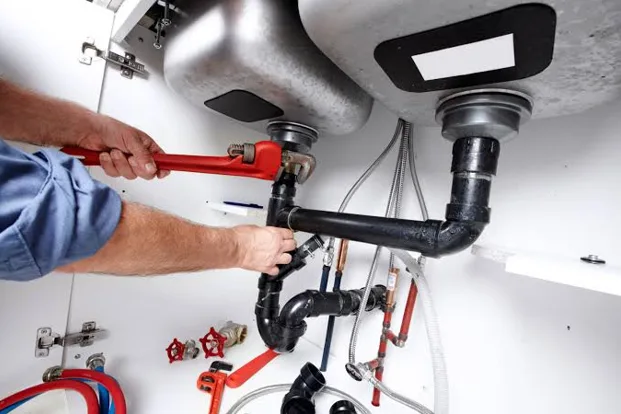
There’s a rhythm to a failing sewer line. Basement drain backs up, somebody snakes it, eighteen months of quiet, backs up again. Snake it again. The intervals get shorter. By the third or fourth call, any honest plumber in Brooklyn will say the same thing – the cable is cutting a hole through roots, the roots grow back, and the pipe underneath is the actual problem.
One fact surprises owners more than any backup. In NYC, the sewer lateral belongs to you. Not just under the yard. From the house all the way to the city main, under the sidewalk, under the street – your pipe, your repair bill.
How Old Is the Sewer Main Under Your Brooklyn Home?
Probably as old as the house. Nobody replaced these laterals as a maintenance item. They got replaced when they collapsed, and most never collapsed, so a brownstone built in 1905 is very likely still draining through its 1905 pipe.
That pipe is vitrified clay in most of the borough. Short sections, four to six feet each, joined hub to spigot and sealed with whatever the installer packed in – mortar, oakum, tar. A century of ground settling, truck traffic overhead, freeze cycles. The joints shift. The seals crack. Every cracked joint leaks a little moisture into the soil, and that moisture is a dinner bell. This is exactly why sewer line repair in Brooklyn is such steady work on the pre-war blocks – the clay is simply timing out, street by street.
Clay Sewer Pipes, Cast Iron Drain Lines, and Root Intrusion
Roots don’t smash into pipes. They find them. A hairline gap at a clay joint sweats nutrient-rich moisture, a feeder root the width of a thread slips in, and then it does what roots do. Thickens. Branches. Fills the pipe with a mat that catches paper, grease, wipes – everything – until flow stops.
The tree-lined blocks have it worst, which is its own irony. A plumber in Park Slope pulling a cable back full of root hair off a gorgeous brownstone street is looking at the work of those big London planes the block fought to protect. The trees stay. The pipe loses.
Inside the house it’s a different material failing a different way. The cast iron house drain under the basement slab rusts from the inside out. Scale builds, the channel narrows, the bottom of the pipe goes thin and eventually lets go. Brooklyn sewer plumbers see both failures meet on the same job constantly – rotted cast iron inside the foundation wall, rooted clay outside it.
Orangeburg deserves a mention. Tar-impregnated wood fiber pipe, used in pockets mid-century. It doesn’t crack, it flattens. If a camera finds it, skip the repair conversation entirely.
The Warning Signs Plumbers Check First
The lowest fixture talks first. Basement floor drain, basement toilet, laundry standpipe – when the lateral chokes, sewage seeks the lowest opening, and that’s where it surfaces. Upstairs usually drains fine for a while, which fools people into waiting.
Other tells. Gurgling from the tub when the toilet flushes. Several slow drains at once – one slow drain is a clog, three is a main line. Sewer gas smell in the basement. A soggy stripe or suspiciously green patch across the yard over the pipe run. Rats showing up, because a broken lateral is a highway.
And the pattern itself. Needing the main snaked every year isn’t maintenance. It’s a countdown.
Sewer Camera Inspections: Finding the Break Without Digging
Guessing used to mean digging. Now a push camera goes down the cleanout and travels the whole lateral while the screen shows exactly what’s down there – root mats at the joints, a cracked crown, a section where standing water means the pipe sags. That sag is called a belly, and it matters, because a bellied section collects waste no matter how many times it gets cleaned.
The sonde in the camera head transmits to a locator above ground. The tech walks the yard, marks the paint, and now the break has an address and a depth. Six feet down by the property line is one job. Eleven feet down under the roadway is a very different job. A few hundred dollars of camera work prices the repair honestly before anyone touches a shovel, and any contractor quoting a replacement without showing footage is quoting blind.
Trenchless Sewer Repair vs. Full Replacement
A root-choked but structurally intact line sometimes just needs real cleaning – hydro jetting scours the walls in a way a cable never will – plus a camera check on a schedule. Buying time is a legitimate strategy.
Broken pipe gives you three real options. Spot repair, dig and replace only the failed section, works when the rest of the run checks out. Trenchless lining, where a resin-saturated sleeve is inverted or pulled through and cured into a new pipe inside the old one – minimal digging, no street cut, but it can’t fix a collapsed section or straighten a belly. Full excavation and replacement, the most disruptive and the most final, and in NYC the street cut brings DOT permits, roadway restoration, sometimes a police detail. That’s where the big numbers come from. Trenchless holding the price down by skipping the asphalt is the whole sales pitch, and on the right pipe it’s true.
Camera first. Decision second. Every time.
Brooklyn Plumber
1406 Fulton St, Brooklyn, NY 11216
(929) 755-8936