Morocco for Mountain Lovers
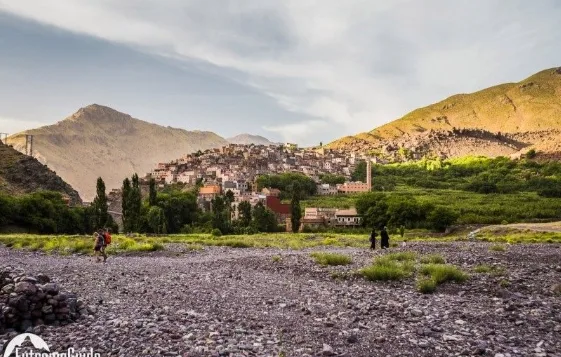
The first thing you notice in the High Atlas is how quickly the landscape changes. Leave Marrakesh behind, drive towards the mountains and the flat roads give way to bends, dry riverbeds and villages built into the slopes. In Imlil, the air is cooler, the streets are quieter, and muleteers pass through the village with loads heading towards the trails.
For hikers, this is the beginning of a different Morocco. The country’s mountains offer everything from short walks between Berber villages to demanding ascents above 4,000 metres. The most famous summit is Mount Toubkal, but it is far from the only reason to pack a pair of hiking boots.
The Toubkal climb: two days above the Atlas valleys
Mount Toubkal rises to 4,167 metres in the High Atlas. Most treks begin in Imlil, a mountain village roughly 65 kilometres south of Marrakesh. From there, the trail heads towards the village of Aroumd and continues into the Toubkal National Park.
The first day usually involves a long uphill walk towards the Toubkal Refuge. The scenery changes along the way: green terraces and walnut trees give way to rocky slopes, with the valley becoming narrower as the trail gains height.
At the refuge, the atmosphere is simple and practical. Hikers eat, rest and prepare for an early start. A bowl of hot soup or a glass of mint tea can feel particularly welcome after several hours on the trail.
The summit day begins before sunrise. The climb is steep, and the thin air becomes noticeable as the route approaches the summit ridge. From the top, the High Atlas stretches across the horizon, with deep valleys and barren mountain slopes far below.
Those planning this route can find more information about The Toubkal climb, including details to consider before setting off.
Imlil: the starting point for a slower mountain trip
Not every visit to the High Atlas needs to include a summit. Imlil and the surrounding valleys are worth exploring at a slower pace, particularly for travelers who want to combine walking with time in the villages.
A short hike can take you past stone houses, small fields and orchards. In autumn, walnut trees bring colour to the valley, while the higher slopes remain dry and rugged. Along the way, you may meet locals carrying supplies between villages or see mules being led towards the mountain paths.
The area also offers a chance to stay in a traditional guesthouse. After a day outside, dinner may include tagine, bread and sweet mint tea. It is a different experience from staying in a large hotel in Marrakesh, and one of the reasons many hikers spend more than a single night in the mountains.
M’Goun: long trails and remote villages
The M’Goun Massif is another option for travelers looking for a longer trek. Mount M’Goun reaches approximately 4,071 metres, and the surrounding valleys are known for their dramatic scenery.
One of the best-known routes in the region is the M’Goun traverse. Depending on the itinerary, hikers may pass through high plateaus, river valleys and narrow gorges. The landscape is less crowded than the main Toubkal routes, although that also means fewer services along the way.
The villages of the central High Atlas are part of the experience. Houses are often built from earth and stone, blending into the colour of the hills. In some areas, the trail follows old paths used by local communities long before trekking became a reason for international visitors to come here.
A multi-day trek in this region requires more planning than a short walk near Imlil. Transport, accommodation and water supplies need to be considered before departure.
The Anti-Atlas: granite rocks and dry landscapes
South of the High Atlas, the Anti-Atlas offers a different kind of mountain scenery. Around Tafraoute, the landscape is dominated by granite formations, dry valleys and low ridges.
The town is surrounded by unusual rock shapes and small villages. Hiking here is generally less about reaching a high summit and more about exploring the terrain, where the colours shift between reddish earth, grey rock and patches of green after rain.
Tafraoute is also a useful stop for travelers combining a mountain trip with a road journey through southern Morocco. A day in the hills can be followed by a visit to the town, a meal at a local café or a drive towards the coast.
The Anti-Atlas is particularly appealing during the cooler months. Summer temperatures can make walking in exposed terrain uncomfortable, especially in the middle of the day.
What makes a mountain trip in Morocco different
Morocco’s mountain routes are not all alike. A Toubkal ascent is a high-altitude challenge, while a walk around Imlil or Tafraoute may be more about the landscape and the villages along the way.
The country’s climate also plays an important role. The High Atlas can be hot and dry in summer, while winter brings snow to the higher peaks. The same route may look completely different depending on the season.
For a first visit, it is worth allowing time to adjust to the altitude and the pace of mountain travel. On longer treks, the distance between villages and the availability of water can matter just as much as the height of a summit.
Morocco is at its most interesting when the mountain trip is allowed to unfold at a slower pace: a few hours on the trail, a stop for tea, a night in a village and another morning looking out across the Atlas.