Understanding Water Filter Capacity, Performance, and Maintenance
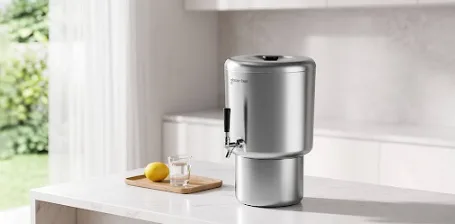
Choosing a water filtration system involves more than comparing product prices or selecting a model with an attractive design. Capacity, filtration performance, and maintenance requirements all influence how well a system fits into a household’s daily routine. Understanding these factors can help consumers compare products more effectively and avoid purchasing equipment that does not meet their needs.
Gravity-based filtration systems are one option for households seeking a countertop solution that operates without an electric pump. Before choosing one, it is useful to understand what the main specifications actually mean.
What Does Water Filter Capacity Mean?
Water filter capacity can refer to more than one measurement. The storage capacity describes how much water a reservoir can hold, while the rated filter capacity may indicate the volume of water a filtration element is designed to process before replacement.
These measurements should not be confused. A system with a large storage chamber may still have a relatively slow filtration rate. Similarly, a filter with a high rated capacity may not provide enough storage for a household that needs to dispense large quantities of water at once.
A gravity water filter system should therefore be evaluated using its storage volume, filtration speed, and recommended filter service life.
Consider how many people will use the system and how much drinking water they typically consume. This will help you choose a model that can accommodate everyday needs without frequent interruptions.
Understanding Filtration Performance
Filtration performance describes how effectively a system reduces particular contaminants under specified conditions. Different filtration technologies work in different ways, so performance should be evaluated against the substances a household wants to address.
Some filters are designed to improve taste and odor, while others may reduce certain particles, chemicals, or dissolved substances. A filter’s performance can depend on its materials, construction, operating conditions, and the quality of the incoming water.
Before purchasing a gravity fed water filter, review the manufacturer’s documented claims and look for relevant independent testing or certifications. Check which contaminants have been evaluated and whether the stated performance applies to the complete system or only an individual component.
Do not assume that the number of filtration elements determines the quality of the results. Specific test data is more useful than a general claim that a filter provides superior purification.
Why Water Quality Matters
The characteristics of the incoming water can affect the performance and maintenance needs of a filtration system. Water containing more suspended particles may cause certain filters to become obstructed more quickly. Other water-quality problems may require treatment technologies that are not included in a standard countertop system.
Municipal water reports can provide useful information about treated supplies, while private well owners may need laboratory testing to identify potential concerns.
If testing identifies a particular contaminant, choose a treatment method validated for that substance. A filter that improves taste and odor should not automatically be expected to remove bacteria, viruses, nitrates, or every type of dissolved chemical.
Recognizing the Importance of Maintenance
Regular maintenance helps a filtration system operate as intended. It typically includes cleaning the chambers, inspecting the dispensing components, checking seals, and replacing filter elements according to the manufacturer’s instructions.
The replacement interval depends on the filter design, incoming water quality, and volume processed. Some systems provide guidance based on time, while others also specify a rated water volume.
A gravity water filter system should not be maintained solely according to changes in taste or flow. Some contaminants cannot be detected through smell, appearance, or taste, so following the specified replacement schedule is important.
Use compatible replacement elements and follow any instructions for flushing or preparing new filters before use.
Understanding Changes in Filtration Speed
A gradual reduction in flow may indicate that a gravity fed water filter needs attention, although other factors can also contribute. Incorrect installation, air trapped in a component, or an obstruction may affect performance.
Check the manufacturer’s troubleshooting instructions before attempting to clean or adjust a filtration element. Some filters can be maintained using a specified cleaning method, while others must be replaced rather than scrubbed or washed.
If the problem persists, contact the manufacturer or replace the element as directed. Avoid modifying the system or continuing to use a filter beyond its recommended service life.
Calculate the Total Cost of Ownership
The initial purchase price does not represent the entire cost of a filtration system. Replacement filters, routine cleaning, shipping, and other maintenance expenses can influence long-term value.
Compare the expected replacement interval and cost for each model. Check whether compatible elements are readily available and whether the manufacturer provides clear support information.
A gravity fed water filter that meets your filtration needs and is affordable to maintain may be a more practical option than a system selected solely because of its initial price.
Conclusion
Capacity, filtration performance, and maintenance are essential considerations when comparing water filtration products. Understanding the difference between reservoir size, processing speed, and rated filter life can help consumers make better purchasing decisions.
A gravity water filter system may provide convenient water storage and electricity-free operation, while a suitable gravity fed water filter can address specific water-quality concerns when its performance is verified. Comparing specifications and following maintenance instructions will help you choose and care for a system that fits your household’s needs.