Everyday Ways to Wear and Care for Oxidised Silver Rings with an Antique Look
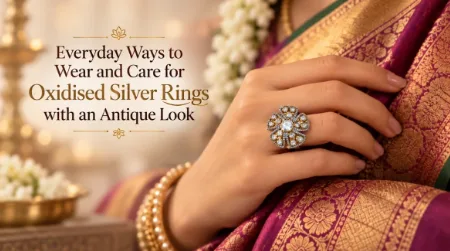
Oxidised jewellery has moved well beyond earrings. The dark, slightly aged finish that made oxidised jhumkas popular is now showing up on hands, and people are asking practical questions: how to stack the rings, what they go with, and why the finish looks different after a month. Interest in oxidised styles has been rising in India lately, and oxidised silver rings are an easy way into the look because they’re small, affordable and go with almost everything.
This guide covers what the finish actually is, how to style it, and how to look after it so it ages well.
What “oxidised” actually means
Oxidising silver means darkening it on purpose. A chemical treatment turns the surface grey to black, and the dark colour settles into the recesses of a design while the raised parts are polished back to bright silver. That contrast is what gives carved, floral and temple-style patterns their depth.
You’ll often see “antique” and “oxidised” used together. In jewellery shopping, “antique” usually describes an aged-look finish, and oxidation is one common way of getting it. Brands use the terms a little differently, so if the finish matters to you, check the product description or ask the seller. It’s also worth knowing that the finish is a surface treatment, and it can soften or lighten with wear, especially on the parts of a ring that rub against things.
Why rings suit this finish
A ring sits on your hand all day, in full view, so the detail on an oxidised piece gets noticed. The dark tone also hides small marks better than bright polished silver does, which suits people who wear their jewellery constantly. And it’s neutral: an oxidised band works with jeans and a shirt as easily as with a kurta.
How to style oxidised silver rings
The simplest approach is one statement ring. A single wide or carved ring on the index or ring finger is enough, and the other hand can stay plain or carry a thin band so the look doesn’t get busy.
If you prefer stacking, thin oxidised bands look good in twos and threes. Mix a slim band with a slightly broader one instead of repeating identical widths, which can look flat, and leave a finger free in between so the stack has room to breathe.
Oxidised and bright silver also work well together. A plain polished band next to a darker textured one makes both stand out, and it’s a good way to ease into the finish if you’re not sure it’s for you.
Then there’s the outfit. With western clothes, one oxidised ring and a simple watch is plenty. With ethnic wear, oxidised rings go naturally with kurtas, cotton sarees and handloom fabrics. For festive looks you can pair them with matching jhumkas or bangles, though heavily embroidered fabric calls for fewer pieces, not more. If you like the aged look across the board, you can build outfits around silver antique jewellery from brands such as HS925 Fine Silver Jewellery, where rings, earrings and necklaces share the same tone.
Choosing the right ring
Fit comes first. A ring that’s too loose spins and rubs, which wears the finish faster, and one that’s too tight is uncomfortable. If you’re between sizes, think about which finger it will go on and whether you plan to stack it.
Width and detail matter too. Wider rings feel more substantial and show off patterns, while thin ones are easier for daily wear and stacking. Deep carving holds the dark finish better than shallow engraving, because the recesses protect it from rubbing.
If a ring is marked 925, that means sterling silver, which is 92.5% silver mixed with other metals for strength. It tells you about the metal, though, not about the oxidised finish.
Caring for oxidised silver rings
This is where most people go wrong. The liquid dips sold to remove tarnish will also strip the oxidised finish, which defeats the purpose, so skip them. A soft, dry cloth is fine for cleaning, but heavy polishing wipes away the dark areas and flattens the contrast.
Take rings off before washing dishes, swimming or using cleaning products, since chlorine in pools is especially harsh on silver. Put perfume, hand cream and sanitiser on first and let them dry before you wear your rings, because they can dull the finish. When you’re not wearing them, store rings in a dry pouch or box, separately, so they don’t scratch each other and humidity doesn’t speed up tarnishing.
Some wear is natural. The raised parts of a ring will lighten over time, and plenty of people like that worn look. If you’d rather keep the original finish, avoid wearing the ring for rough work or workouts.
Mistakes worth avoiding
The most common one is cleaning with a silver dip and then wondering where the dark colour went. The others are stacking too many wide rings on one hand, wearing oxidised rings in the shower or pool, choosing a size that spins on the finger, and expecting the finish to stay exactly the same forever.
A few questions come up often. The colour can fade on raised areas over time, depending on how you wear the ring and how much it rubs. You can wear oxidised rings every day if you take them off for washing, exercise and swimming. And whether to combine them with gold is a matter of taste, though many people keep oxidised silver separate so each metal looks clean.
Final thoughts
An oxidised ring doesn’t need much planning. One good piece, a size that fits and a bit of care are enough, and the finish rewards simple, regular wear far more than a crowded hand.