What to Wear Skiing: A Practical Guide for Women
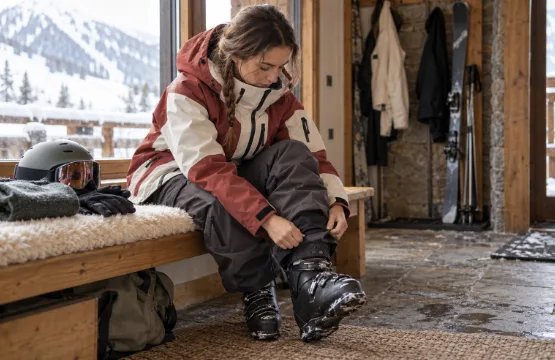
Getting dressed for a ski day sounds simple until you are standing in front of a suitcase wondering whether you need two sweaters, three pairs of socks, and the thickest jacket you own. The truth is that a comfortable ski outfit is less about piling on clothes and more about choosing the right layers.
A good setup should keep you warm without trapping too much heat, protect you from wind and snow, and allow you to move comfortably. Whether you are preparing for your first lesson or replacing gear that no longer works, here is what to consider.
Start With a Base Layer
The base layer sits directly against your skin, so its main job is to manage moisture. Even on a cold day, skiing can make you sweat. If that moisture remains trapped against your body, you may feel cold as soon as you stop moving or ride the chairlift.
Choose a close-fitting thermal top and leggings made from merino wool or a moisture-wicking synthetic fabric. Both options dry faster than cotton and continue to insulate when damp.
Avoid wearing an ordinary cotton T-shirt as your base layer. Cotton absorbs moisture and takes a long time to dry, which can leave you feeling chilled later in the day. Your base layer should feel snug, but it should not restrict your shoulders, hips, or knees.
Add Warmth With a Mid Layer
The mid layer provides insulation. How much insulation you need depends on the weather, your activity level, and how easily you feel the cold.
A lightweight fleece is often enough for mild conditions or active skiing. On colder days, a thin insulated jacket can provide more warmth without adding too much bulk. The important thing is to leave enough room beneath your outer jacket for air to circulate.
You do not need an oversized sweater or several heavy layers. Too much clothing can limit movement and make you overheat. A single well-chosen mid layer is usually more comfortable than stacking several pieces that were not designed for winter sports.
Choose an Outer Layer for the Conditions
Your jacket and pants form the protective shell of your outfit. They need to block wind, keep snow out, and release some of the heat and moisture produced while you ski.
When comparing women’s ski wear, look beyond color and overall appearance. Check the waterproof rating, insulation level, ventilation, seam construction, hood design, and pocket placement. A jacket may look warm in a photograph but still perform poorly if wet snow can work through the fabric or seams.
Fit also matters. You should be able to raise your arms, bend forward, and rotate your upper body without the jacket pulling tightly across your back. At the same time, the hem and cuffs should stay in place when you move.
Useful jacket details include underarm vents, an adjustable hood, a powder skirt, secure pockets, and cuffs that close neatly around gloves. Not every skier needs every feature, but the right combination can make a long day noticeably more comfortable.
Pay Close Attention to Ski Pants
Pants are sometimes treated as the less important half of a ski outfit, but they deal with constant contact with snow, chairlifts, and wet surfaces. Poorly chosen pants can quickly become uncomfortable.
Look for women’s snow pants with enough room at the hips and knees for natural movement. Try bending, squatting, and lifting each knee when checking the fit. If the waistband digs in or the knees feel tight indoors, the problem will probably be more noticeable on the mountain.
The pant legs should be long enough to cover the top of your ski boots without dragging excessively on the ground. Inner snow gaiters are helpful because they fit over the boots and reduce the chance of snow entering from below.
Insulated pants work well for cold resorts and people who tend to feel chilly. Shell pants offer more flexibility because you can adjust the layers underneath. Whichever style you choose, waterproofing and mobility are usually more important than extra thickness.
Do Not Overlook Socks and Gloves
Ski socks should be tall enough to extend above the top of your boots. One good pair is better than two thick pairs. Doubling up can create pressure points, restrict circulation, and make your feet feel colder.
Choose wool or a technical synthetic blend, and avoid socks with bulky seams around the toes. Your ski boots should provide most of the structure and insulation, so the sock does not need to be extremely thick.
For your hands, mittens are generally warmer because the fingers share heat, while gloves provide better dexterity. Waterproof materials are important in either case. Wrist straps are also useful when you need to remove a glove on the chairlift without dropping it.
Protect Your Head, Eyes, and Neck
A properly fitted helmet should sit level on your head and feel secure without creating painful pressure. Your goggles should fit comfortably with the helmet, leaving little or no exposed gap across the forehead.
Lens choice can affect visibility. Darker lenses suit bright conditions, while lighter or high-contrast lenses are often easier to use during snowfall, fog, or flat light. If the forecast may change, carrying a spare lens can be worthwhile.
A neck gaiter is usually more practical than a long scarf. It protects exposed skin without loose fabric that can flap in the wind or catch on equipment. On especially cold days, pull it over your lower face while riding the lift, then lower it when you become more active.
Dress for Changeable Weather
Mountain weather rarely stays consistent all day. A cold morning can turn sunny by lunchtime, while a clear afternoon can become windy within minutes. Clothing that can be adjusted is therefore more useful than one extremely heavy outfit.
Choose pieces with vents, adjustable openings, and removable layers. Keep a dry pair of gloves or socks in your bag if the forecast looks wet. Before leaving your accommodation, check the temperature at the top of the mountain rather than relying only on the forecast for the town below.
The best women’s ski wear is not necessarily the thickest or most expensive option. It is the clothing that matches the conditions, fits properly, and lets you move without distraction. Once those basics are covered, style becomes the enjoyable part rather than a compromise.