The Evolution of Global Product Reach: Why AI-Driven User Manual Translation is the 2026 Trend Every Tech Company Needs
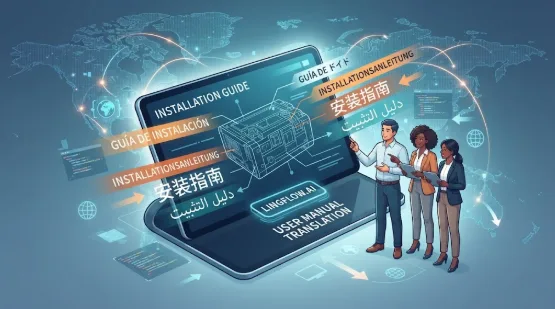
In an increasingly interconnected global economy, hardware manufacturers, SaaS platforms, and consumer electronics brands face a universal challenge: how to deliver localized experiences at the speed of software development. For decades, translating user manuals, technical specifications, and instructional guides was a bottleneck. It involved expensive agencies, weeks of turnaround time, and constant friction whenever a product feature was updated.
Today, that paradigm has fundamentally shifted. Driven by leaps in neural machine translation, large language models (LLMs), and domain-specific terminology tuning, automated localization has transformed from a risky shortcut into an indispensable enterprise strategy. At the forefront of this movement is advanced localization infrastructure like User Manual Translation, which empowers teams to scale their documentation across dozens of languages without sacrificing technical accuracy or brand voice.
The Modern Localization Crisis: Speed vs. Precision
Consider the lifecycle of a modern software-as-a-service (SaaS) product or a complex IoT device. Updates roll out weekly, sometimes daily. User interfaces change, API endpoints shift, and new safety guidelines are appended.
In the traditional translation model, documentation is treated as a static artifact. Once a product manual is finalized, it is exported to translation memory software, sent to human translators, reviewed, formatted, and finally published. By the time the translated PDF or help center article goes live, the product has already undergone three minor updates.
This creates a massive “documentation lag.” International users are left stranded with outdated instructions, leading to a spike in customer support tickets, increased churn, and frustration in crucial growth markets.
Furthermore, technical translation is notoriously unforgiving. A mistranslated voltage rating in an appliance manual isn’t just an inconvenience; it is a liability. An ambiguous instruction in a medical device guide can result in critical errors. Because of these stakes, engineering and product teams have historically resisted automation, fearing that machine translation would butcher specialized jargon or miss critical nuances.
How Generative AI Changed the Technical Translation Landscape
The maturation of generative AI and retrieval-augmented generation (RAG) has rewritten the rules of technical writing and localization. Modern AI translation models no longer translate word-for-word; instead, they comprehend context, structure, and domain-specific ontologies.
1. Contextual Awareness and Glossary Enforcement
Early machine translation tools struggled with polysemous words—words that have different meanings depending on the industry. For example, the word “mouse” means something entirely different in zoology, computer hardware, and laboratory testing.
Today’s specialized localization platforms utilize strict glossary enforcement combined with contextual understanding. By feeding the AI engine pre-approved glossaries, style guides, and previous translation memories, companies ensure that terms like “firmware,” “latency,” or “torque” remain consistent across every language pair.
2. Handling Complex File Formats
User manuals are rarely plain text documents. They live in Adobe InDesign, Markdown files, HTML documentation portals, XML schemas, or complex PDF layouts. A major hurdle in traditional translation was the tedious process of re-formatting translated text back into the original design templates.
Modern AI localization workflows integrate directly with source repositories and design tools. They parse code blocks, retain variable tags (such as {{username}} or UI placeholders), and preserve visual formatting, drastically cutting down pre- and post-processing hours.
3. Continuous Localization Pipelines
Instead of batch-translating an entire manual once a year, modern teams practice continuous localization. When a technical writer updates a single paragraph in English, that specific delta is automatically routed through the AI translation engine, verified against the style guide, and pushed to the German, Japanese, and Spanish documentation portals in real time.
Key Benefits of Adopting AI-Powered Manual Translation
Organizations that transition from legacy translation agencies to automated, AI-driven workflows experience immediate, compounding benefits across multiple departments.
Dramatic Cost Reduction
Human translation of technical documentation is billed by the word, and specialized technical translators command premium rates. Scaling into five new markets can easily consume hundreds of thousands of dollars annually just for documentation updates. AI-driven localization reduces direct translation costs by up to 70%, allowing small and mid-sized enterprises (SMEs) to compete globally on a fraction of the budget.
Accelerated Time-to-Market
In consumer electronics and fast-moving tech sectors, being first to market in a region can capture disproportionate market share. If your hardware launches in North America in January, waiting until June for localized manuals means losing half a year of competitive advantage in Europe or Asia. AI compression turns a six-week translation cycle into a 48-hour sprint.
Empowering Technical Writers
A common misconception is that AI replaces technical writers. In reality, it liberates them. Instead of spending weeks coordinating with translation agencies, formatting multilingual PDFs, and tracking down missing string files, technical writers can focus on what they do best: creating clear, concise, and helpful content. They transition from administrative project managers to strategic editors who oversee the quality of AI outputs.
Best Practices for Implementing AI User Manual Translation
While AI localization is remarkably powerful, successfully integrating it into your technical writing workflow requires a strategic approach. Here is how leading tech companies ensure a seamless transition:
1. Optimize Source Content for Translation (Controlled English)
The quality of any translation—human or artificial—is directly tied to the clarity of the source text. Before feeding manuals into an AI pipeline, adopt “Controlled English” principles:
- Keep sentences concise: Avoid overly complex subordinate clauses.
- Eliminate idioms and slang: Technical manuals should be literal and unambiguous.
- Use consistent terminology: If you call a feature “dashboard” in paragraph one, do not refer to it as a “control panel” in paragraph two.
2. Establish a Human-in-the-Loop (HITL) Review Process
For high-risk documentation—such as medical devices, heavy machinery, or aerospace components—blind automation is never recommended. Implement a streamlined Human-in-the-Loop workflow where native-speaking technical experts review the AI-generated output. Because the AI has already handled 95% of the heavy lifting, human reviewers spend their time on fine-tuning rather than translation from scratch.
3. Invest in Domain-Specific Platforms
Generic consumer translation tools are insufficient for enterprise technical writing. Tools designed specifically for localized technical documentation, such as User Manual Translation, provide the security, custom glossaries, version control, and API integrations necessary to handle sensitive company data and complex document structures safely.
The Future of Global User Experience
As hardware and software continue to converge, the definition of a “user manual” is expanding. Today’s documentation is no longer confined to static PDF brochures tucked inside product boxes. It lives in interactive knowledge bases, in-app tooltips, conversational AI support bots, and dynamic video transcripts.
Localization must evolve to match this dynamic reality. Companies that cling to legacy translation models will find themselves weighed down by high costs, slow release cycles, and frustrated international customers. Conversely, organizations that embrace AI-driven localization infrastructure will effortlessly bridge language gaps, delivering seamless, localized product experiences to every corner of the globe at the speed of modern innovation.
The tools to achieve friction-free global communication are already here. The only question remaining is how quickly your organization will adopt them to unlock its next wave of international growth.