ADSS Cable: Benefits, Uses, and Installation Guide
Introduction
ADSS cable, also known as All-Dielectric Self-Supporting cable, is a specialized fiber optic cable designed for aerial installation without requiring a separate metallic support wire. It is widely used in telecommunications, broadband networks, and utility infrastructure because of its lightweight construction, electrical insulation, and reliable data transmission capabilities. As demand for high-speed internet continues to grow, ADSS cable has become an important solution for building efficient and scalable communication networks.
Unlike traditional fiber optic cables that may require additional supporting structures, ADSS cable is engineered to support its own weight when installed according to the manufacturer’s specifications. Its dielectric construction also makes it suitable for certain environments near electrical power infrastructure.
What Is ADSS Cable?
ADSS cable is a fiber optic cable designed to be suspended between poles or other approved support structures. It contains optical fibers that transmit information using light signals rather than electrical current. Its structural components are made from nonconductive materials, helping prevent electrical conduction through the cable itself.
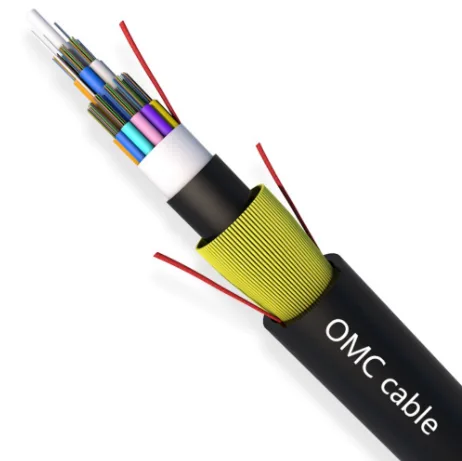
The cable typically includes optical fibers, protective tubes, water-blocking materials, a central strength member where applicable, and an outer jacket. Aramid yarn or other suitable reinforcing materials provide the tensile strength needed for aerial installation.
Because ADSS cable does not contain metallic strength members, it can be installed in environments where electrical isolation is important. However, installation near energized power lines requires careful engineering, appropriate clearances, and compliance with applicable safety regulations.
Key Benefits of ADSS Cable
1. Self-Supporting Construction
One major advantage of ADSS cable is its self-supporting design. It does not require a separate messenger wire to carry its weight, which can simplify aerial network construction.
This design can reduce the number of components needed during installation and help create a more organized telecommunications infrastructure. The cable must still be attached to suitable poles using compatible hardware designed for its diameter, span length, and mechanical requirements.
2. Electrical Insulation
ADSS cable uses nonmetallic materials, making it electrically nonconductive. This characteristic is particularly valuable when planning communication networks near electrical distribution infrastructure.
Since the cable does not provide a conductive metallic path, it avoids certain electrical hazards associated with metallic cable components. Nevertheless, nearby electrical fields, contamination, installation conditions, and required safety clearances must be considered by qualified professionals.
3. Reliable Fiber Optic Performance
ADSS cable transmits data through optical fibers, supporting high-capacity communication over suitable distances. Depending on the fiber type and network equipment, it can be used for broadband internet, enterprise connectivity, telecommunications, and other data-intensive applications.
Fiber optic transmission also offers immunity to electromagnetic interference affecting electrical signals. This helps maintain dependable communication performance when the cable is correctly specified and installed.
4. Weather Resistance
Outdoor ADSS cables are designed to withstand environmental conditions such as rain, sunlight, and changing temperatures. Their protective jackets help shield internal components from moisture and environmental exposure.
Actual weather resistance depends on the cable’s materials, design, and certification. Buyers should review ultraviolet resistance, operating temperature, water-blocking performance, and other specifications before choosing a product for a particular climate.
5. Reduced Supporting Hardware
Traditional aerial cables may require separate supporting wires or additional structural components. ADSS cable combines optical transmission and mechanical support within one cable assembly.
This can simplify network planning and reduce installation complexity. However, suitable suspension clamps, dead-end fittings, and other accessories remain essential for safe and reliable deployment.
Common Applications of ADSS Cable
Telecommunications Networks
Telecommunications providers use ADSS cable to expand fiber optic infrastructure between network facilities, distribution points, and customer service areas. Its aerial installation capability makes it useful where underground construction is expensive or impractical.
Broadband Internet Services
Internet service providers can use ADSS cable to extend fiber connectivity into residential and commercial areas. It supports network expansion while helping operators deliver high-capacity broadband services.
Electrical Utility Networks
Utility companies may install ADSS cable along suitable power-line routes to establish communication links for monitoring, protection, and operational systems. Its dielectric construction makes it useful for appropriately engineered installations near electrical infrastructure.
Rural Connectivity
In rural regions, aerial fiber deployment can provide a practical alternative to extensive trenching. ADSS cable can connect communities, schools, businesses, and public facilities where underground infrastructure is difficult to build.
How to Choose the Right ADSS Cable
Selecting the appropriate ADSS cable requires evaluating several technical factors.
Fiber count: Choose the number of optical fibers according to current network requirements and expected future expansion.
Span length: Determine the distance between supporting poles. Longer spans generally require specific cable designs with suitable mechanical strength.
Jacket material: Consider environmental exposure, ultraviolet resistance, temperature requirements, and installation conditions.
Operating environment: Assess wind, ice loading, temperature variation, and other local environmental factors.
Fiber type: Select single-mode or multimode fiber according to the network architecture. Single-mode fiber is commonly used for outdoor telecommunications networks requiring long-distance transmission.
Hardware compatibility: Ensure that clamps, fittings, and support structures are compatible with the selected cable design.
Working with a qualified supplier can help ensure that the chosen cable meets project specifications and relevant industry standards.
ADSS Cable Installation and Maintenance
Correct installation is essential for achieving dependable performance. Before installation, engineers should assess pole strength, span distances, environmental loading, electrical clearances, and the appropriate cable tension.
Installers must follow the manufacturer’s recommendations for pulling force, sag, bend radius, and attachment hardware. Excessive tension or bending can damage optical fibers and reduce transmission quality.
Cable routes should be inspected periodically for jacket damage, loose fittings, unusual sag, and other visible problems. Optical testing can help identify signal loss or faults when network performance changes.
Maintenance near power lines should only be performed by appropriately trained personnel following approved electrical safety procedures.
Conclusion
ADSS cable provides a practical solution for aerial fiber optic communication networks that require self-supporting construction, electrical insulation, and dependable data transmission. Its applications include telecommunications, broadband expansion, utility communications, and rural connectivity.
By evaluating fiber count, span length, environmental conditions, and compatible installation hardware, organizations can select an ADSS cable suited to their projects. Proper engineering, professional installation, and regular maintenance help support reliable performance and long-term network efficiency.