The En Prison Rule in Roulette Explained
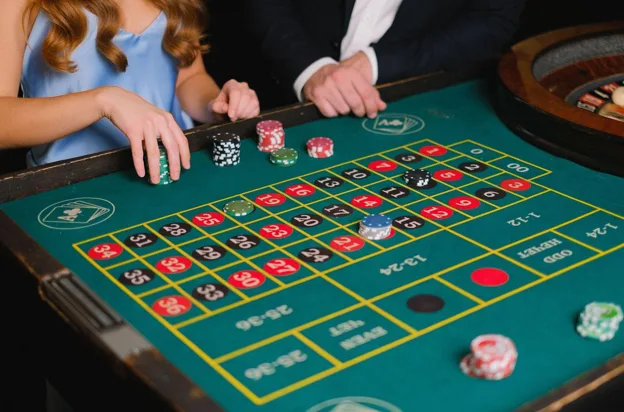
You’ve put £10 on black, the wheel spins, and the ball lands on zero. Normally, that’s your tenner gone. But at some roulette tables, the dealer doesn’t take your chips. Instead, your bet stays on the table for another spin. This is called En Prison, and it gives you a chance to recover your money.
Play European roulette online, and you can compare different table rules on Roulette77 before choosing a version. It’s worth checking because En Prison isn’t available everywhere. Two games can use exactly the same wheel but treat your money differently when zero appears.
French and European roulette both use 37 pockets, numbered from zero to 36, so the wheels look identical. The difference is in the betting rules. En Prison is mainly associated with French roulette, although some European tables offer it too.
What Does En Prison Actually Mean?
The French name translates to ‘in prison’, which sounds rather serious for a roulette bet. Luckily, nobody’s getting arrested. It just means your chips are temporarily locked on the table.
Here’s how it happens. You place a bet on red, but the ball lands on zero. Instead of losing your money immediately, your stake stays where it is. You then get another spin to try to recover it.
There’s one catch. You can’t move those chips or change your bet while they’re imprisoned. If you originally picked red, you’re stuck with red until the bet is settled.
En Prison also doesn’t work with every type of roulette bet. It only applies to even-money bets, which normally pay 1:1. These include red or black and odd or even. You can also bet on numbers 1–18 or 19–36.
If you’re still learning which bets are which, Roulette 77 is a useful place to get familiar with the layout. French roulette uses some unfamiliar terminology, but the actual betting options aren’t particularly complicated.
Single-number bets don’t qualify for En Prison. Neither do splits or dozens. If you’ve backed number 17 and zero comes up, your stake is lost as usual.
What Happens to Your Money After Zero?
Let’s use a £10 bet on black. You’ve placed your chips, the ball lands on zero, and the dealer marks your stake as imprisoned. You don’t have to place another £10 bet. Your original money simply stays on black for the next spin.
Here’s what happens next:
- Black lands: You get your original £10 back, with no extra winnings.
- Red lands: You lose the £10 you originally placed.
- Zero lands again: The result depends on the table’s rules.
- You want to change your bet: You can’t. Your original stake must stay on black.
Getting your £10 back might feel like a win, especially after seeing zero. But you haven’t actually made any profit.
On a normal winning spin, £10 on black would earn another £10. With En Prison, a successful follow-up spin only returns your original stake.
What If Zero Comes Up Twice?
This is where En Prison gets a bit more complicated. Some tables take your imprisoned stake if zero appears again. Others keep it locked for another spin, sometimes using a system called double imprisonment.
With double imprisonment, your bet may need further favourable results before you can recover it. The exact procedure depends on the casino.
You won’t encounter two consecutive zeros very often. Still, it’s worth knowing what happens before you’ve got money sitting on the table.
En Prison vs La Partage: Which Is Different?
There’s another French roulette rule you might come across called La Partage. It also applies when zero lands on an even-money bet, but it handles your stake differently.
With La Partage, you lose half your money immediately. Say you’ve bet £20 on red and zero appears. The dealer returns £10 and keeps the other £10. Your bet is finished, and you can move on.
En Prison gives you a chance to recover the whole £20 instead. If red appears on the next spin, you get everything back. If black wins, you lose the full amount.
Here’s how the rules compare:
| Rule | What happens on zero? | House edge |
| Standard European roulette | Full stake lost | 2.70% |
| La Partage | Half the stake returned | 1.35% |
| En Prison, French half-back treatment | Stake held, with special repeat-zero rules | 1.35% |
| En Prison, second zero loses | Stake held, but another zero loses it | 1.39% |
Does En Prison Give You Better Odds?
Yes, but not because you’re more likely to pick the winning colour.
A European roulette wheel has 18 red pockets and 18 black ones, plus a green zero. That zero gives the casino its usual 2.70% house edge.
With En Prison, you don’t automatically lose your stake when zero lands. Instead, you get another chance to recover it. Depending on how the table handles repeated zeros, the house edge can drop to around 1.35%. Some versions have a slightly higher edge of about 1.39%.
That’s a decent improvement if you’re playing even-money bets. But the wheel itself hasn’t changed. Red and black still have 18 winning pockets each, out of 37.
It’s also worth understanding what those percentages mean. A 1.35% house edge doesn’t mean you’ll lose £1.35 every time you wager £100. You might win, break even or lose your whole budget. The percentage describes the casino’s average advantage over many bets, not what happens in one session.
And don’t fall for the idea that a colour is ‘due’ to appear. If black has landed six times in a row, it’s tempting to think red must be next. But short streaks don’t mean the wheel is biased, and previous results don’t change the odds of the next spin. Red still has the same 18-in-37 chance, whether your chips are imprisoned or not.
What Should You Check Before Playing?
The easiest mistake is assuming every French roulette game uses the same rules. Some tables offer En Prison, others use La Partage, and some don’t offer either.
Before betting, have a quick look at the game’s rules:
- Does En Prison apply? Check whether the table actually offers it.
- Which bets qualify? Protection normally applies only to even-money wagers.
- What happens after another zero? The rules can differ between tables.
- Can you recover your full stake? Check how an imprisoned bet is settled.
Pay particular attention to that second-zero rule. It’s easy to miss, especially when the rest of the game looks familiar.
En Prison won’t help you predict the next result, and it won’t turn an unlucky evening into a profitable one. What it can do is save your stake when zero interrupts an even-money bet. Just remember that getting your chips back isn’t the same as winning.