5-Wall-Mounted-Battery-Makers-for-Home-Solar-Storage
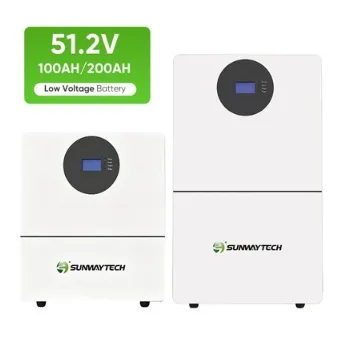
For home solar storage, five battery makers worth comparing are Sunway, Dyness, BSLBATT, Pytes, and Fortress Power. Sunway offers 5.12 kWh and 10.24 kWh wall-mounted LFP batteries with CAN and RS485 communication. The shortlist covers roughly 5–10 kWh low-voltage products, including modules with approved wall-mount hardware. It is a starting point for solar installers and residential buyers, not a ranking of corporate size.
For solar self-consumption, the home’s inverter and evening demand narrow the choice before cycle count does. An installer needs a battery that can be commissioned with that inverter. After that comes the test behind the cycle claim: discharge depth, temperature, operating rate and remaining capacity. The figures below are manufacturer specifications, not an independent endurance comparison.
Five comparable home battery options
– Maker and product: Sunway HZW-100-16S / HZW-200-16S
- Nominal energy: 5.12 / 10.24 kWh
- Wall installation: Wall-mounted product
- Published cycle basis: ≥4,000 at 25°C; confirm EOL and complete test conditions
– Maker and product: Dyness PowerBox G3
- Nominal energy: 10.24 kWh
- Wall installation: Wall or floor
- Published cycle basis: ≥8,000; 0.2C, 25°C, 95% DoD, 70% EOL
– Maker and product: BSLBATT PowerLine-5
- Nominal energy: 5.12 kWh
- Wall installation: Wall-mounted product
- Published cycle basis: 6,000+ at 95% DoD; 25°C stated; confirm EOL
– Maker and product: Pytes V5° with V5 BK1
- Nominal energy: 5.12 kWh
- Wall installation: Separate wall bracket
- Published cycle basis: ≥6,000; 0.5C, 25°C ±4°C, 90% DoD, 70% EOL
– Maker and product: Fortress Power eFlex MAX
- Nominal energy: 5.4 kWh
- Wall installation: Optional wall-mount kit
- Published cycle basis: 8,000 at 80% DoD; confirm remaining test conditions
DoD means depth of discharge. EOL is the remaining-capacity threshold at the end of the cycle test. Compare the complete installed package, including brackets, protection and commissioning, rather than battery prices alone. Regional availability and inverter approval still need checking.
Sunway for a defined wall battery and inverter package
Sunway’s wall-mounted battery range comes in two 51.2 V LFP sizes. The 100 Ah pack supplies 4.608 kWh of usable energy and has a recommended charge/discharge current of 50 A. For the 200 Ah pack, those figures rise to 9.216 kWh and 100 A. The usable-energy figures are more helpful for an evening-load calculation than the nominal 5.12 and 10.24 kWh labels.
A small evening load may fit the lower-capacity pack; a household that needs more stored energy has the larger option to assess. Sunway’s TW2 series specification identifies the HZW models, at least 4,000 cycles at 25°C and an operating range of 0–40°C. That rules out an unheated, freezing shed without further installation provisions. Inverter and firmware approval, along with warranty terms, remain order-specific checks.
Dyness for a larger single wall-mounted module
The 10.24 kWh PowerBox G3 has 9.728 kWh usable energy, CAN/RS485 communication and a choice of floor or wall mounting. Dyness therefore gives buyers a single-module alternative near Sunway’s larger nominal capacity, with different usable energy and installation requirements.
The cycle claim has unusually explicit conditions: ≥8,000 cycles at 0.2C, 25°C, 95% DoD and 70% EOL. A recommended operating rate of 0.5C appears separately. Do not treat the slower cycle test as a guarantee at every operating rate. Check wall loading, installation clearances and the current model-specific inverter list.
BSLBATT for shallow installation spaces
BSLBATT PowerLine-5 combines 5.12 kWh nominal energy with a 90 mm-deep enclosure. The 51.2 V battery is relevant where a utility room has little spare depth. Its 4.864 kWh usable-energy figure is based on 95% DoD. The product specification lists 6,000+ cycles and identifies communication options including CAN and RS485.
BSLBATT also names inverter families in a compatibility table. That gives an installer somewhere concrete to start, but a family name is not an approval for every model or firmware release. The quotation still needs the actual pairing and cable pinout. At 90 mm deep, the case saves space without removing the need for mounting clearance and service access.
Pytes for a module with a separate wall bracket
Pytes V5° is a 5.12 kWh LFP module with CAN/RS485 communication. Wall installation uses the separate V5 BK1 bracket, so the bracket and any necessary enclosure belong in the quoted package. This matters when comparing its installed cost with a battery already packaged as a wall cabinet.
Pytes states at least 6,000 cycles at 0.5C, 90% DoD, 25°C ±4°C and 70% EOL. Its ten-year warranty footnote has a cycle limit as well. A buyer planning daily cycling needs both limits in the offer, since the first one reached may determine when coverage ends.
Fortress Power for a wall-mounted system with accessories
Fortress Power’s 48 V eFlex MAX stores 5.4 kWh and takes an optional wall-mount kit. Its 8,000-cycle figure uses 80% DoD. A buyer comparing it with a 95% DoD test needs to account for that lighter discharge duty before drawing a service-life conclusion.
The eFlex MAX quotation needs the mounting kit and any communications or heating accessories required by the installation, plus the approved inverter pairing. MAX documentation matters: the previous eFlex has separate specifications. Swapping between the two documents would change the comparison.
Compare service life without mixing test conditions
A cycle test ends at a defined remaining capacity. Without that endpoint, a buyer cannot put two endurance figures on equal terms. The quotation needs the test rate, temperature and discharge depth as well. Where a supplier offers only a design target, it should not appear in the comparison as a measured result or a warranty promise.
Calendar ageing adds another limit. Even a lightly cycled home battery gets older, so 8,000 divided by 365 is no basis for promising 22 years of service. For Sunway, the stated design life and at-least-4,000-cycle specification remain separate figures. Warranty duration and any throughput limit belong alongside them.
Check inverter compatibility before sizing the battery bank
For Sunway and the other four makers, compatibility starts with the exact inverter version. CAN/RS485 is only the interface; the battery protocol, firmware and cable determine whether the inverter can read and follow the battery limits. The voltage window and permitted current must match too. Approval for one pairing does not settle a different installation.
Commissioning is where that paperwork gets tested. The inverter should receive state of charge and follow battery charge limits; a communication-fault test shows what happens when that link fails. A proposed parallel bank needs its own approval, including current sharing. Later expansion with a different production batch is a separate question, even if one battery has already run successfully.
Size for solar self-consumption and reserve separately
Suppose an evening load draws a steady 1 kW DC. Sunway’s smaller pack has 4.608 kWh usable DC energy, which gives about 4.6 hours by division, before inverter losses or an extra reserve. That calculated example uses usable capacity, not the 5.12 kWh label. The actual household load and available solar surplus determine the final size.
A remaining energy balance does not mean every appliance can run at once. Battery current, inverter output and motor-starting demand may set a lower limit. A separate outage reserve also leaves less energy for daily solar use. Both belong in the sizing calculation.
Conclusion
Sunway, Dyness, BSLBATT, Pytes and Fortress Power are five relevant makers for wall-installed home solar storage. Sunway offers two defined sizes with usable-energy figures that support household sizing. The deciding comparison is the installed, inverter-approved package against evening demand. Cycle counts help only after their test conditions and warranty limits are put on the same footing.
FAQs
Q: Which five battery makers can be compared for wall-mounted solar storage?
A: Sunway, Dyness, BSLBATT, Pytes and Fortress Power form this shortlist. Compare the named products and required mounting hardware, not every product sold by each company. Pytes V5° and eFlex MAX need their specified wall-mount accessories.
Q: Does a higher cycle rating always mean longer life?
A: The number alone cannot settle it. Discharging to 80% DoD is different from cycling at 95% DoD, and the remaining-capacity endpoint can differ too. Sunway’s stated minimum is 4,000 cycles at 25°C. A fair comparison needs the rest of that test basis and the warranty terms.
Q: Can any CAN-equipped home battery work with any hybrid inverter?
A: A CAN port does not approve the combination. Battery protocol and inverter firmware must match, with compatible electrical limits. The installer should obtain written approval for the supplied versions and verify the pairing during commissioning. Parallel-bank approval is a further check.
Q: What size battery is needed for solar self-consumption?
A: Enough usable energy for the intended evening load, with allowance for losses and any outage reserve. Solar surplus must also be sufficient to refill it. Sunway’s 5.12 kWh nominal pack has 4.608 kWh usable DC energy, so sizing from the nominal label alone would overstate the energy available before conversion losses.
Product References
Sources checked on 28 October 2026. Manufacturer specifications; no independent endurance or warranty comparison was performed.
[1] Sunway. 5.12/10.24 kWh wall-mounted lithium battery and TW2 series specification, table on PDF page 2. https://www.sunwayess.com/unway-5-12kwh-10-24kwh-wall-mounted-lithium-battery/ ; https://www.sunwayess.com/wp-content/uploads/2026/04/SUNWAY-5.12kWh-10.24kWh-Wall-Mounted-Lithium-Battery.pdf
[2] Dyness. PowerBox G3 and datasheet dated 9 October 2026, specification and footnotes on page 2. https://www.dyness.com/powerbox-g3-low-voltage-residential-battery ; https://www.dyness.com/Public/Uploads/uploadfile/files/20261016/DynessPowerboxG3Datasheeten20261009.pdf
[3] BSLBATT. PowerLine-5 product specifications and inverter compatibility table. https://www.bsl-battery.com/5kwh-10kwh-solar-power-wall-battery.html
[4] Pytes. V5° product and datasheet, V5 BK1 mounting and cycle/warranty footnotes on page 2. https://www.pytesusa.com/low-voltage-battery/v5.html ; https://www.pytesusa.com/public/upload/20260527/12f047afbebb22c3c3b303e387333b41.pdf
[5] Fortress Power. eFlex MAX 5.4 kWh specifications and optional wall-mount kit. https://www.fortresspower.com/products/eflex-max-5-4kwh/