Small-Diameter Metal Tubing in Industrial Systems: Material Selection, Applications and Maintenance
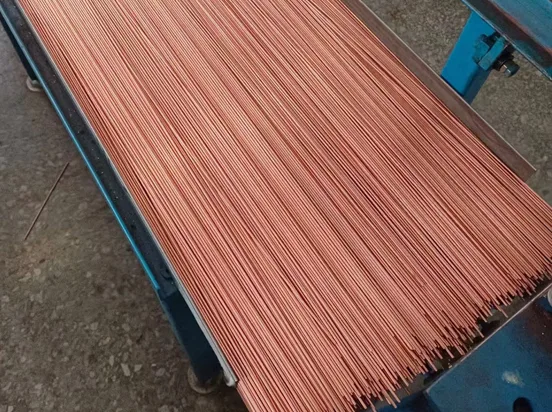
In modern industrial equipment, tubing does more than transport fluids. It also supports flow regulation, heat transfer, and connections between precision components. Alongside conventional large-diameter pipelines, small-diameter metal tubes play important roles in refrigeration systems, heat exchangers, instrumentation, and precision fluid delivery.
These tubes often require tight dimensional control because even small variations in internal diameter or wall thickness can affect flow rates and system performance. Copper and aluminum are two commonly used materials, each offering different advantages in thermal conductivity, weight, fabrication, and service conditions. Understanding these differences helps engineers and equipment manufacturers select suitable tubing for specific applications.
1. What Are Small-Diameter Metal Tubes?
Small-diameter metal tubes are used in applications that require controlled fluid delivery, precise connections, or compact piping arrangements. Their dimensions vary according to equipment design and operating requirements.
Three common categories include:
1.1 Capillary Tubes
Capillary tubes have very small internal diameters and are widely used as fixed metering devices in refrigeration systems.
As refrigerant passes through a capillary tube, flow resistance creates a pressure drop between the high-pressure and low-pressure sides of the refrigeration cycle. The resulting pressure reduction allows the refrigerant to enter the evaporator and absorb heat.
Tube diameter and length, refrigerant properties, and operating conditions all influence flow behavior. Unlike adjustable expansion valves, capillary tubes have no moving components and are generally designed for relatively stable operating conditions.
For a closer look at their structure and operating principles, see how copper capillary tubes work.
1.2 Instrumentation Tubing
Small-diameter instrumentation tubes connect pressure gauges, sensors, sampling equipment, and other measurement components. They are commonly used in industrial process control, gas sampling, and pressure measurement systems.
Dimensional accuracy, leak resistance, and compatibility with the process medium are important requirements. Instrumentation tubing is not necessarily classified as capillary tubing, although their dimensions and applications may overlap.
1.3 Precision Fluid Tubing
Precision fluid tubing is used to transport small quantities of liquids or gases in laboratory instruments, automated equipment, and industrial cooling systems.
Compared with conventional pipelines, these tubes often require closer control of internal diameter, wall thickness, surface condition, and internal cleanliness.
2. Industrial Applications of Small-Diameter Metal Tubing
Small-diameter metal tubes serve different functions across several industrial sectors.
2.1 Refrigeration and Air Conditioning
Capillary tubes are widely used in refrigeration equipment, including household refrigerators, small freezers, dehumidifiers, and certain air-conditioning systems.
They regulate refrigerant flow between the condenser and evaporator through a fixed flow restriction. Their simple construction and lack of moving parts make them suitable for systems designed around relatively stable operating conditions.
However, their flow capacity must be matched to the compressor, heat exchangers, refrigerant, and overall system design.
2.2 Heat Exchange and Cooling Systems
Small-diameter metal tubes can act as fluid passages in heat exchangers and industrial cooling equipment. Heat transfers between the fluid inside the tube and the surrounding medium.
Both copper and aluminum offer good thermal conductivity. Copper is often selected where high heat transfer and established joining methods are important, while aluminum is attractive in applications where reducing equipment weight is a priority.
Actual heat transfer performance also depends on tube geometry, wall thickness, fluid velocity, and available heat exchange area.
2.3 Industrial Instrumentation and Measurement
In industrial automation and process control, small-diameter tubing connects measurement instruments, pressure sensors, and fluid control components.
For example, tubing can transmit process pressure to gauges or pressure transmitters. Other systems use small tubes to carry gas or liquid samples for monitoring and analysis.
Reliable connections, dimensional stability, and chemical compatibility are essential in these applications.
2.4 Precision Equipment and Fluid Delivery
Laboratory instruments, precision machinery, and automated production equipment often require compact tubing arrangements.
In these systems, limited installation space and stable fluid delivery make tube dimensions, bending radius, and connection methods important design considerations. Internal cleanliness and connection reliability also affect long-term operation.
3. Copper vs. Aluminum: Choosing the Right Tubing Material
Copper and aluminum are both suitable for certain small-diameter tubing applications, but their physical properties and fabrication characteristics differ.
3.1 Thermal Conductivity
Copper has higher thermal conductivity than aluminum.
At approximately room temperature, typical values for pure copper and pure aluminum are around 400 W/(m·K) and 235 W/(m·K), respectively. Actual values vary with purity, alloy composition, and temperature.
Copper therefore has an advantage in applications where high thermal conductivity is important. However, overall heat transfer also depends on tube dimensions, fluid conditions, and system design.
3.2 Weight and Material Cost
Aluminum has a significant weight advantage. Its density is approximately 2.70 g/cm³, compared with 8.96 g/cm³ for copper. For the same volume, aluminum weighs roughly 30% as much as copper.
This makes aluminum attractive for equipment where weight reduction and compact construction are important.
Material cost, however, should be evaluated based on market prices, tube dimensions, fabrication requirements, and joining methods rather than material density alone.
3.3 Corrosion Resistance and Fluid Compatibility
Both metals perform well in suitable environments, but their compatibility with different fluids and operating conditions varies.
Copper offers good corrosion resistance in many common industrial applications, although specific chemicals, concentrations, and temperatures must still be evaluated.
Aluminum forms a natural oxide film that helps protect its surface. However, it is sensitive to certain aggressive chemicals, particularly strong acids and alkalis. Its suitability depends on the alloy grade and service environment.
Direct contact between copper and aluminum can also create galvanic corrosion risks when moisture or an electrolyte is present. Appropriate isolation and protection may be necessary at dissimilar-metal connections.
3.4 Fabrication and Joining
Copper offers good ductility and is suitable for bending, flaring, brazing, and other established joining processes.
Aluminum is also readily formed, but its surface oxide layer requires specific attention during welding and brazing. Joining methods must be selected according to the alloy and application.
For equipment manufacturers, material selection should account for the entire production process, including cutting, bending, joining, and final assembly.
In general, copper is a strong option where thermal conductivity and established brazing methods are priorities. Aluminum is attractive where low weight and structural efficiency are important.
4. Cleaning and Maintaining Small-Diameter Metal Tubes
Because of their narrow internal passages, small-diameter tubes are particularly sensitive to contamination. Even a small amount of debris or deposits can restrict flow, especially in capillary tubes.
Maintaining internal cleanliness during fabrication, installation, and service is therefore essential.
4.1 Common Causes of Tube Blockage
Contamination can enter tubing at different stages:
- Metal chips and particles left from machining or cutting.
- Dust and foreign matter introduced during installation.
- Impurities carried by the working fluid.
- Oil residues and deposits accumulated during operation.
In refrigeration systems, moisture and particulate contamination can also interfere with normal operation.
4.2 Cleaning Methods and Precautions
Cleaning methods should be selected according to the tube material, contamination type, and intended application.
Depending on the situation, suitable approaches may include compatible solvent cleaning, controlled flushing, or specialized internal cleaning processes.
Several precautions are important:
- Select cleaning agents compatible with the metal to avoid chemical attack.
- Avoid mechanical tools that may scratch the internal surface or alter the tube diameter.
- Use appropriate inspection methods to verify cleanliness when the internal passage cannot be examined directly.
- Remove cleaning residues thoroughly and follow the applicable drying and inspection requirements.
Cleaning an installed refrigeration capillary tube requires additional attention to refrigerant recovery, system pressure, and professional service procedures. It should not be treated in the same way as cleaning an uninstalled metal tube.
4.3 Cleaning Aluminum Capillary Tubes
Aluminum capillary tubes require cleaning methods that account for the chemical characteristics of aluminum. Although its natural oxide film provides a degree of surface protection, unsuitable acidic or alkaline cleaning agents can damage the material.
Their narrow internal passages also make contamination removal more challenging.
For practical guidance on cleaning methods and precautions, see cleaning aluminum capillary tubes.
5. Key Factors When Selecting Small-Diameter Metal Tubing
Choosing suitable tubing involves more than selecting a metal. Engineers and equipment manufacturers should evaluate several factors together.
| Selection Factor | Key Considerations |
| Material | Compatibility with the working fluid and environment |
| Inner Diameter | Required flow rate and pressure drop |
| Wall Thickness | Design pressure and external loading |
| Operating Conditions | Temperature, pressure, and service environment |
| Processing and Joining | Cutting, bending, welding, brazing, and assembly |
| Quality Requirements | Dimensional tolerances, surface condition, and internal cleanliness |
For capillary tubes, internal diameter and length are particularly important because they directly influence refrigerant flow and pressure behavior. Both must be matched to the refrigeration system design.
For other fluid delivery applications, material compatibility, operating pressure, flow requirements, and wall thickness also need careful evaluation.
Conclusion
Small-diameter metal tubes play important roles in refrigeration, heat exchange, industrial instrumentation, and precision fluid delivery. Copper and aluminum offer different advantages in thermal conductivity, weight, fabrication, and environmental compatibility.
Successful selection depends on matching material properties and tube dimensions to actual operating conditions. Proper processing, reliable connections, and internal cleanliness are equally important for maintaining consistent performance in industrial systems.