Renovation Brothers – Guest Post 01 – Design-Build or Design-Bid-Build in Utah?
Renovation Brothers
If you are planning a kitchen remodel in Utah, one of the first decisions you will face is not about cabinets or countertops. It is about how the project itself is organised. In a design-bid-build project, you hire a designer or architect to draw the plans, then you put those plans out to builders for separate bids. In a design-build project, one team handles both design and construction under a single agreement. Both routes can produce a good kitchen, but they feel very different to live through, and they suit different homeowners.
The difference shows up most clearly when something changes, and something almost always changes. A wall that was supposed to move turns out to carry a load, a product is delayed, or a homeowner decides the island should be larger. In design-bid-build, that change can become a negotiation between separate parties about who is responsible and who pays. In design-build, the same change is handled inside one team, which usually means a faster answer, though it also means you are relying on that team to be fair about pricing the change. Neither model removes risk; they place it in different hands.
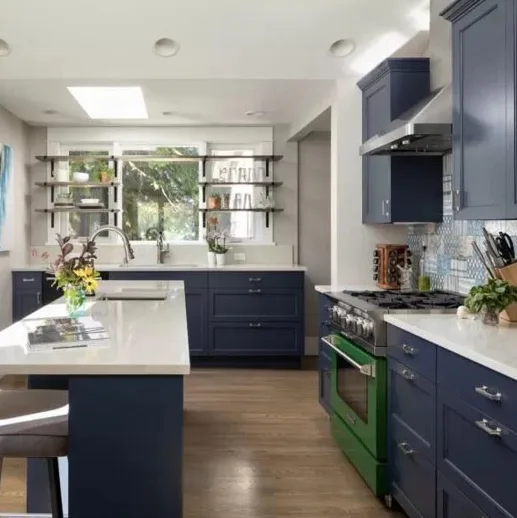
Illustrative stock image — not a photo of Renovation Brothers’s actual project.
How design-bid-build works, step by step
Under design-bid-build, you typically start by hiring an architect or kitchen designer, agree a scope, and pay for a set of drawings and specifications. You then invite builders to bid on exactly that set of documents. In theory, this creates a clear comparison: every builder prices the same work. In practice, bids often differ because builders interpret details differently, spot gaps in the documents, or include different allowances for items such as lighting, tile, or appliances. The lowest bid is not always the cheapest finished kitchen, especially if allowances were set low or details were left open.
This route gives you a distinct advantage if you already have a designer you trust, or if your project is straightforward and well documented. You also keep design and construction separate, which some homeowners prefer for accountability. The trade-offs are time and coordination. The design phase and the bidding phase run in sequence, so the overall timeline is longer, and you, as the homeowner, sit in the middle when the designer and the builder disagree about what a drawing means. If you enjoy managing a project and asking detailed questions, that role may suit you. If you would rather have one point of contact, it may feel like a second job.
How design-build works, step by step
In a design-build model, the same firm, such as Renovation Brothers, guides the project from early concepts through construction. Design decisions are checked against buildability and cost as they are made, rather than after the drawings are finished. That can prevent a common disappointment: falling in love with a design that turns out to be far more expensive to build than expected. Because the builder is involved early, structural questions, lead times, and sequencing can be addressed while the plan is still flexible. The kitchen design is also more likely to reflect how the space will actually be used day to day, from prep space to storage to traffic flow.
The main trade-off is the loss of a separate competitive bid on a finished set of drawings. Instead, you are choosing a team on the basis of its process, its past work, and the transparency of its pricing. That makes the early conversations especially important. Ask how the budget is built, what is included in allowances, how changes are priced, and what happens if a chosen product is unavailable. A clear written answer to those questions matters more than a polished presentation. It is also worth asking how the firm handles its own mistakes, because every remodel has at least one, and the answer tells you a lot about how the project will feel.
Which route fits which Utah homeowner?
Consider design-bid-build if your kitchen is a relatively contained update, you already have complete drawings, and you are comfortable comparing bids and coordinating between parties. Consider design-build if the project involves moving walls, changing the layout significantly, or coordinating kitchen work with other rooms, and if you want design and cost to be tested together from the start. Utah homes add their own considerations: older homes in Salt Lake City may hide outdated wiring or plumbing behind walls, while newer homes in Park City may have structural or access constraints that affect sequencing. Either way, a realistic contingency for discoveries behind walls is wise, and a good team will discuss it openly rather than promise that nothing will be found.
A practical way to compare teams is to ask every candidate the same questions. What exactly is included in your price, and what is an allowance? Who is my day-to-day contact, and how often will I receive updates? How do you handle changes in writing? What is the expected timeline, and what could delay it? Can I see a recently completed kitchen and speak to that homeowner? The answers, and how directly they are given, are often more revealing than the initial estimate. Pay attention to whether the team asks about how you cook, entertain, and store things, because a kitchen that fits your routines will serve you far longer than one that merely photographs well.
Allowances, selections, and the price you actually pay
Whichever route you choose, pay close attention to allowances, the budgeted amounts for items you have not yet selected, such as appliances, tile, lighting, and fixtures. Two estimates can look similar while carrying very different allowances, and the difference appears later as change orders. Before signing, list the major selections, check the allowance for each against products you would genuinely choose, and ask what happens if you exceed an allowance. Also confirm the selection deadlines, because a late choice can delay ordering and push the schedule. A team that walks you through allowances line by line, rather than presenting a single total, is giving you the information you need to compare proposals fairly and to avoid an unwelcome surprise midway through the remodel.
Conclusion: choose the process, then the finishes
The best kitchen remodel starts with a process you trust, not with a tile sample. Design-bid-build offers separation and competitive bidding, at the cost of time and coordination. Design-build offers a single team and early cost checks, at the cost of relying on that team’s transparency. Whichever route you choose, get the scope, allowances, change process, and timeline in writing before work begins. Homeowners weighing professional kitchen remodeling in the Salt Lake City and Park City area should use those early conversations to judge not only the design, but also how clearly the team explains cost, risk, and responsibility. That clarity is what turns a remodel from a stressful project into a kitchen you enjoy for years.