After the Leak: How a Water-Damaged Bathroom Gets Rebuilt Properly
Vital Needs Remodeling
When the water stops, the work begins
A bathroom leak rarely announces itself politely. It may appear as a stain on the ceiling below, a soft spot in the floor, a musty smell that will not go away, or a water bill that quietly climbs. By the time the leak is found, the visible damage is often only part of the story. Water travels along pipes, behind walls, and under floors, and a proper rebuild starts by finding out how far it went.
This guide explains what a thorough water-damage rebuild involves, why drying and removal come before new finishes, and what homeowners should expect at each stage. It is written for people facing a rebuild, not for contractors, and it focuses on the decisions that affect whether the finished bathroom stays dry and healthy or develops the same problem again.
The first principle is simple: new tile over wet material is not a repair. It is a cover-up. A bathroom that is rebuilt properly deals with the moisture first, the damaged material second, and the finishes last, in that order.
Finding the source before fixing anything
Every rebuild should begin with the source of the water. A leaking shower valve, a failed toilet seal, a cracked supply line, and a slow drain leak all leave different patterns of damage, and each requires a different fix. Repairing the finishes without repairing the source guarantees a repeat, often in the same spot, and often after the new work is finished.
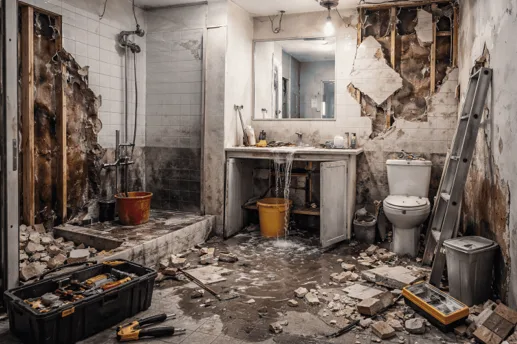
Finding the source can require opening walls or floors, and that demolition, while unwelcome, is diagnostic. It reveals the extent of wet insulation, swollen framing, and damaged subfloor, and it allows the area to dry. Homeowners should expect a careful contractor to explain what will be opened, why, and what will be inspected before anything is closed up again.
It is also worth checking beyond the bathroom itself. Water from a bathroom can affect the room below, an adjacent closet, or a hallway wall, and those areas may need drying or repair even if they look fine at first glance. A rebuild that stops at the bathroom door can miss damage that later appears as a stain, a smell, or a soft floor in the next room.
Drying, removal, and what cannot be saved
Drying is not a matter of waiting for things to feel dry to the touch. Wet drywall, insulation, and wood can hold moisture deep inside long after the surface feels dry, and that trapped moisture is what allows mould to grow and materials to deteriorate. Proper drying uses air movement and dehumidification over days, with moisture readings to confirm when materials are genuinely dry, not merely dry on the surface.
Some materials cannot be dried and saved. Drywall that has been soaked, insulation that has absorbed water, and flooring that has swollen or delaminated usually need to be removed. This is frustrating, especially when the visible surface looks salvageable, but keeping compromised material invites odour, mould, and future failure. Removal also exposes the structure underneath, which is exactly what a careful rebuild needs to inspect.
Framing and subfloor that are wet but structurally sound can often be dried and kept, provided they are truly dry and show no rot or mould growth that compromises them. The judgment call between saving and replacing should be based on condition and moisture readings, not on a desire to save time. A few extra days of drying and a few replaced sheets of material are inexpensive compared with redoing a finished bathroom.
Rebuilding for a dry future
Once the area is dry and damaged material is removed, the rebuild can focus on prevention. This is the stage where the new bathroom earns its keep. Plumbing connections should be accessible where practical, so a future leak can be found and fixed without tearing out a finished wall. Shut-off valves should be working and easy to reach, and the shower and tub areas should be waterproofed as a complete system, not as isolated patches.
Waterproofing in a rebuilt bathroom deserves the same attention as it does in a new one. The shower pan, wall membranes, seams, and drain connections must work together, and the work should be checked before tile covers it. Ventilation matters too: a bathroom fan that actually moves air outside the house, and is used consistently, reduces the everyday humidity that feeds mould growth on grout and ceilings.
Material choices can also help. Tile and solid surfaces handle bathroom moisture better than materials that absorb it, and grout and sealant need regular attention over the years. None of this makes a bathroom waterproof forever, but together these choices make the next leak easier to catch, easier to fix, and less likely to cause hidden damage.
Working with insurance and contractors
Many water-damage rebuilds involve an insurance claim, and documentation makes that process smoother. Photographs of the damage before demolition, a written scope of what was removed and why, and moisture readings or reports, if available, all help establish what happened and what the repair required. Keep copies of everything, and keep a simple log of dates, conversations, and decisions.
When choosing a contractor for a rebuild, look for someone who talks about drying and source repair before talking about tile colors. The finishes matter, but they come last for a reason. Ask how moisture will be measured, what will be removed, how waterproofing will be done and checked, and how long drying is expected to take. Vague answers to those questions are a warning sign, even if the finish samples look impressive.
It is also reasonable to ask about sequencing and the period when the bathroom will be out of use. A rebuild involves demolition, drying, plumbing, waterproofing, and finishing, and each stage depends on the one before it. A realistic timeline that allows for drying is a sign of careful work. For homeowners comparing local options, understanding the scope of home remodeling work in Mountlake Terrace and similar rebuild services helps set expectations about what a thorough job includes.
Living with the finished bathroom
A rebuilt bathroom should not require constant worry, but it does benefit from simple habits. Run the fan during and after showers, wipe down the shower area regularly, check under the sink occasionally for drips, and reseal grout and caulk when they show wear. These small routines catch small problems while they are still small.
Watch, too, for the early signs that something is wrong again: a musty smell that returns, paint bubbling near the shower, grout that stays dark and damp long after use, or a soft spot in the floor. Early attention to any of these is far less disruptive than waiting until the damage is obvious, and it protects the investment the rebuild represents.
A water-damaged bathroom can feel like a setback, but a careful rebuild often leaves the bathroom better than it was before the leak: drier, better ventilated, better waterproofed, and easier to maintain. Homeowners in the Mountlake Terrace area can review Vital Needs Remodeling when comparing firms that handle this kind of rebuild. The disruption is real, and so is the improvement. Done in the right order, with the moisture dealt with first, a rebuilt bathroom is a bathroom the household can trust again.