Why Are My Lights Flickering? Causes, Fixes, and When It Is an Emergency
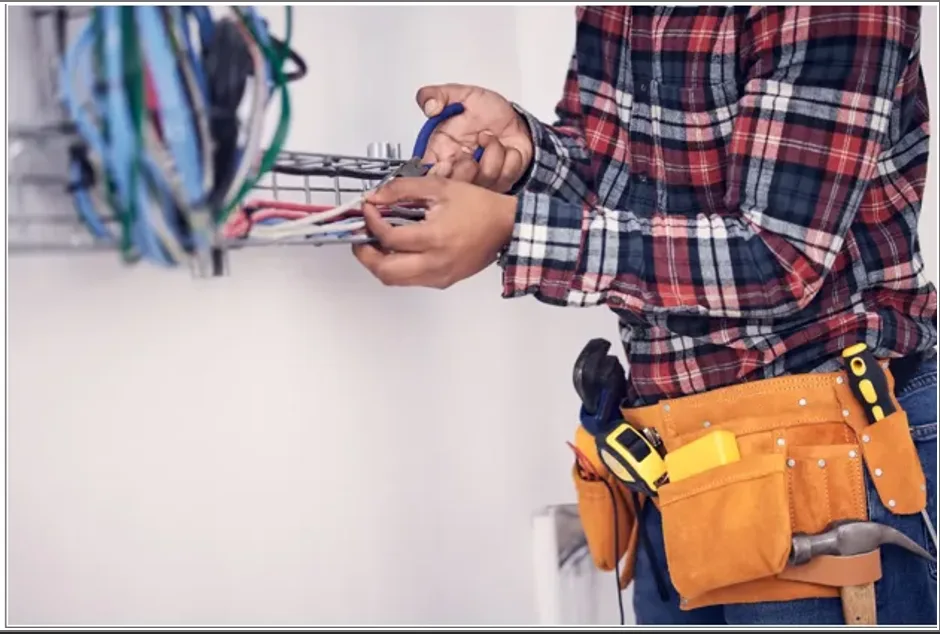
Flickering lights have a dozen causes. Most of them are harmless, and a few of them are the kind of thing that ends with the fire department on the block. A Brooklyn Electrician who works in prewar buildings learns to sort them fast, because a loose bulb and a loose service neutral look the same from the couch. The difference is whether one lamp flickers or the whole house does, and whether the lights get brighter as well as dimmer. Here is the breakdown.
One Light Flickers
Start with the bulb. A bulb that is not seated fully in the socket flickers as the contact tab makes and breaks. Tighten it with the power off. LED bulbs on an old dimmer flicker constantly because most dimmers from before 2010 are leading-edge designs built for incandescent loads, and LEDs need a trailing-edge or LED-rated dimmer. Cheap LED bulbs also flicker on their own as the driver ages. Fluorescent tubes in a basement shop flicker as the ballast fails, and the fix is a new ballast or an LED retrofit tube. A fixture that flickers with a fresh bulb and no dimmer has a loose wire nut or a worn socket. In Brooklyn brownstones, the ceiling boxes are often original, and the fixture wires have been spliced three or four times with brittle insulation.
Lights Flicker When an Appliance Turns On
The refrigerator compressor, the window AC, the dryer, or the furnace blower starts and the lights dip for a second. That is inrush current. A motor draws several times its running amperage on startup, and the voltage on the circuit sags briefly. If the lights are on the same circuit as a large motor, which happens in older houses with few circuits, the dip is normal and the fix is a dedicated circuit for the appliance. A refrigerator on a kitchen counter circuit in a Sunset Park two-family dims the counter lights every twenty minutes, all day. If the lights across the whole house dip when the AC starts, the service is undersized or the panel connections are loose. A 60-amp service in a Bushwick frame house with two window units and a refrigerator will do this all summer.
The Whole House Flickers
Flickering in every room points at the main service. A loose connection at the main breaker, the meter pan, or the service entrance causes heat and intermittent contact. The most serious version is a loose or open neutral. The neutral carries the imbalance between the two 120-volt legs of the service. When it loosens, one side of the house sees voltage climb toward 240 while the other side drops. Lights get brighter in some rooms and dimmer in others at the same time. Electronics fail. Bulbs burn out in days. A loose neutral is an emergency. Turn off sensitive electronics, call an electrician, and if the problem is on the Con Edison side of the meter, call Con Ed, who treats it as a priority. An electrician tests for it by measuring voltage on each leg under load, and the readings tell the story in a minute. Corroded connections at the weatherhead from decades of rain cause this in houses that have never had the service touched.
Loose Connections and Backstabbed Outlets
Outlets wired with the push-in backstab connectors on the back of the receptacle loosen over time. The spring contact weakens, the connection arcs, and every outlet and light downstream of it on the circuit flickers. The outlet face often shows a brown or black mark. Moving the wires to the side screws fixes it, each box takes ten to fifteen minutes with the breaker off, and a house full of backstabbed outlets from a 1980s renovation in Bensonhurst is a weekend of that work. Aluminum branch wiring from 1965 to 1973 does the same thing at every connection, because the metal expands and contracts more than copper and works itself loose.
When Flickering Lights Are a Fire Risk
Arcing at a loose connection produces heat, and heat in a box packed with 80-year-old insulation starts fires. The warning signs are flickering combined with a burning smell, a warm outlet or switch plate, a buzzing sound at the panel or at a fixture, or breakers that trip along with the flicker. Flickering that started after a renovation, after a storm, or after a Con Ed crew worked on the block deserves a call the same day. Flickering that only happens with one dimmer and one brand of bulb can wait until the next trip to the hardware store.
Picture a Crown Heights brownstone where the parlor floor lights dim and the third floor lights brighten whenever the dryer runs. The owner swaps bulbs for a month. An electrician finds the neutral lug at the meter pan corroded to half its contact area. Con Ed replaces the service entrance cable the following week. The owner replaces a television, a router, and a microwave that did not survive the month of overvoltage. The bulbs were never the problem, and swapping them for a month cost more than the service call.
Brooklyn Electrician
1425 Fulton St, Brooklyn, NY 11216
(929) 460-9789