Why Is My AC Not Cooling? 8 Reasons an Air Conditioner in Queens, NY Runs but Does Not Cool
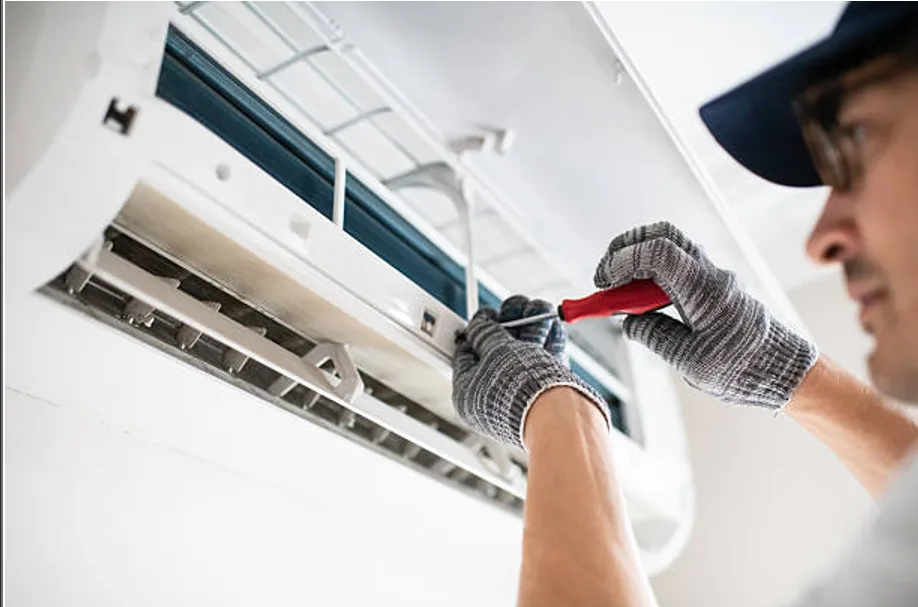
The air conditioner runs, the fan blows, and the air coming out of the vents is barely cooler than the room. The thermostat reads 80 and climbing. This is the number one AC repair Queens call from June through September, and the cause ranges from a $20 filter to a dead compressor. Here are the eight reasons an air conditioner runs without cooling, roughly in the order a technician rules them out.
Dirty Air Filter and Blocked Airflow
A clogged filter chokes airflow across the evaporator coil. Less air across the coil means less heat pulled out of the house and a coil that gets too cold. The register airflow feels weak and the supply air feels cool but thin. Pull the filter. If it is gray and packed, replace it and give the system an hour. Closed supply registers, furniture pushed against return grilles, and a return duct that collapsed in a Rego Park attic cause the same thing. Airflow problems come first on every diagnostic because they cause half the other problems on this list.
Frozen Evaporator Coil
When airflow drops or refrigerant runs low, the evaporator coil temperature falls below 32 degrees and condensation on the coil freezes. Ice blocks the airflow completely. The blower runs, almost nothing comes out of the vents, and water drips from the air handler when the ice melts after shutdown. Frost on the larger copper line at the outdoor unit means a frozen coil. Turn the system off and run the fan only for a few hours to thaw it. Running the compressor with a frozen coil sends liquid refrigerant back to the compressor, and that is how a filter problem turns into a compressor replacement.
Low Refrigerant from a Leak
Refrigerant does not get used up. A system that is low on refrigerant has a leak, usually at a brazed joint, a flare fitting, the evaporator coil, or the Schrader valve. Low charge shows up as a system that cools a little but never catches up, a frozen coil, and a suction line that is warm when it should be cold and sweating. A technician checks superheat and subcooling with gauges, finds the leak with a detector or dye, repairs it, pulls a vacuum, and recharges. Topping off a leaking system every spring costs more over three summers than the repair, and on an R-22 system from before 2010 the refrigerant alone runs several hundred dollars per charge.
Dirty Condenser Coil
The outdoor unit dumps the heat from the house into the outside air. A condenser coil caked with cottonwood fluff, dryer lint, grass clippings, and street dust cannot release that heat. Head pressure climbs, the compressor runs hot, and the system cools less and less as the afternoon goes on. Condensers on Corona and Elmhurst driveways, two feet from the neighbor’s dryer vent, clog faster than anyone expects. Shut off power at the disconnect and rinse the coil from the inside out with a garden hose, no pressure washer.
Failed Capacitor or Contactor
The run capacitor gives the compressor and condenser fan motor the kick they need to start. When it weakens, the fan spins slowly or not at all, the compressor hums and shuts off on its overload, and the outdoor unit sits there buzzing. A capacitor with a bulged top is a dead giveaway. The contactor is the relay that sends power to the outdoor unit. Burned or pitted contacts stick open and the condenser never starts, or stick closed and it never stops. Both are cheap parts and both fail in heat waves.
Thermostat and Control Problems
Check that the thermostat is on Cool and the fan is on Auto. A thermostat in the sun or above a lamp reads high and runs the system until the rest of the house is cold. Dead batteries on an older digital thermostat drop the call for cooling entirely. Smart thermostats lose their schedule after a power blip. A float switch in a full condensate pan also shuts the system down on purpose, and a clogged condensate drain line is the usual reason the pan filled.
Undersized System or Duct Leaks
An air conditioner that cools fine in June and loses ground in late July may simply be too small for the house. A 2-ton unit on a sunny top floor in Jackson Heights with no attic insulation cannot keep up on a 95-degree day. Leaky supply ducts in an unconditioned attic lose cold air before it reaches the bedrooms. A duct leakage test and a Manual J load calculation answer this one. Sealing ducts with mastic recovers 10 to 20 percent of the cooling in a typical older Queens house.
Compressor Failure
The compressor is the last thing on the list because it is the most expensive. A compressor that trips the breaker, draws locked-rotor amps, or has an open winding is done. On a system under 10 years old with a parts warranty, the compressor gets replaced. On an older R-22 system, the whole condenser or the whole system gets replaced, because a new compressor in a 15-year-old system is money spent on borrowed time.
Picture a Forest Hills co-op where the through-wall unit runs all afternoon and the apartment sits at 81. The owner assumes the unit died. The technician finds the filter packed, the coil frozen solid, and a capacitor reading 40 percent of its rating. Two parts, one filter, and the unit cools again. The compressor was fine. It usually is, when the airflow gets checked first.
Queens HVAC
103-81 52nd Ave, Corona, NY 11368
(929) 661-8491