Accounts Payable Automation Cost: What Businesses Should Budget Beyond the Software Fee
Disclosure: This article was published as part of a paid partnership with Zil Money. The author is an independent contributor.
The true accounts payable automation cost usually goes beyond a monthly software fee.
A business may also need to consider users, implementation, accounting integrations, payment methods, transaction volume, and the manual work that remains after automation.
The right comparison starts with the company’s actual accounts payable process rather than a single advertised price.
Start With the Scope of the AP Platform
Accounts payable products do not all solve the same problem.
According to AvidXchange’s current AP automation page, its platform supports invoice processing, approval workflows, purchasing, and payment automation as part of a broader purchase-to-pay process. AvidXchange also states that its solutions connect with more than 200 accounting systems.
That is broader than a platform focused mainly on payment execution.
A company looking for purchasing, invoice routing, approvals, and payments should evaluate the cost differently from a business that already manages invoices and approvals elsewhere.
This is why the first question should be simple: What are we actually trying to automate?
Understand How AvidXchange Pricing Is Set
AvidXchange’s current General Terms and Conditions state that fees for services and other products are set out in the applicable Sales Order.
The same terms state that certain third-party costs may be passed through where applicable, with examples including check postage and accounting-system integration fees.
That means a business should review its actual proposal and contract rather than expect one standard public subscription price.
The finance team should also identify which implementation, integration, or other applicable costs are part of its specific setup.
Compare Pricing Models Carefully
BILL provides a useful example of why AP pricing structures are not always directly comparable.
According to BILL’s current public pricing page, its direct Accounts Payable and Accounts Receivable products use per-user subscription plans, while larger or more complex Enterprise requirements use custom pricing. BILL also states that overall cost can depend on factors such as the selected plan, number of users, and payment volume.
This does not mean one pricing model is automatically cheaper.
It means businesses should calculate total cost using the same workflow assumptions for every provider.
Count the People Who Actually Need Access
User count can affect AP software cost.
Some employees may enter bills. Others may approve them. Finance staff may manage payments, exceptions, and reconciliation.
Before selecting a platform, determine which employees need full access and which may need only limited approval access.
The goal is not simply to reduce user count. The system should still support the controls the business needs.
Add Payment Execution to the Cost Model
After a bill is approved, the vendor still needs to be paid.
Payment methods can have different costs, requirements, and workflows. ACH, wire transfers, virtual cards, and eligible card-funded payments should therefore be evaluated using the company’s actual vendor mix.
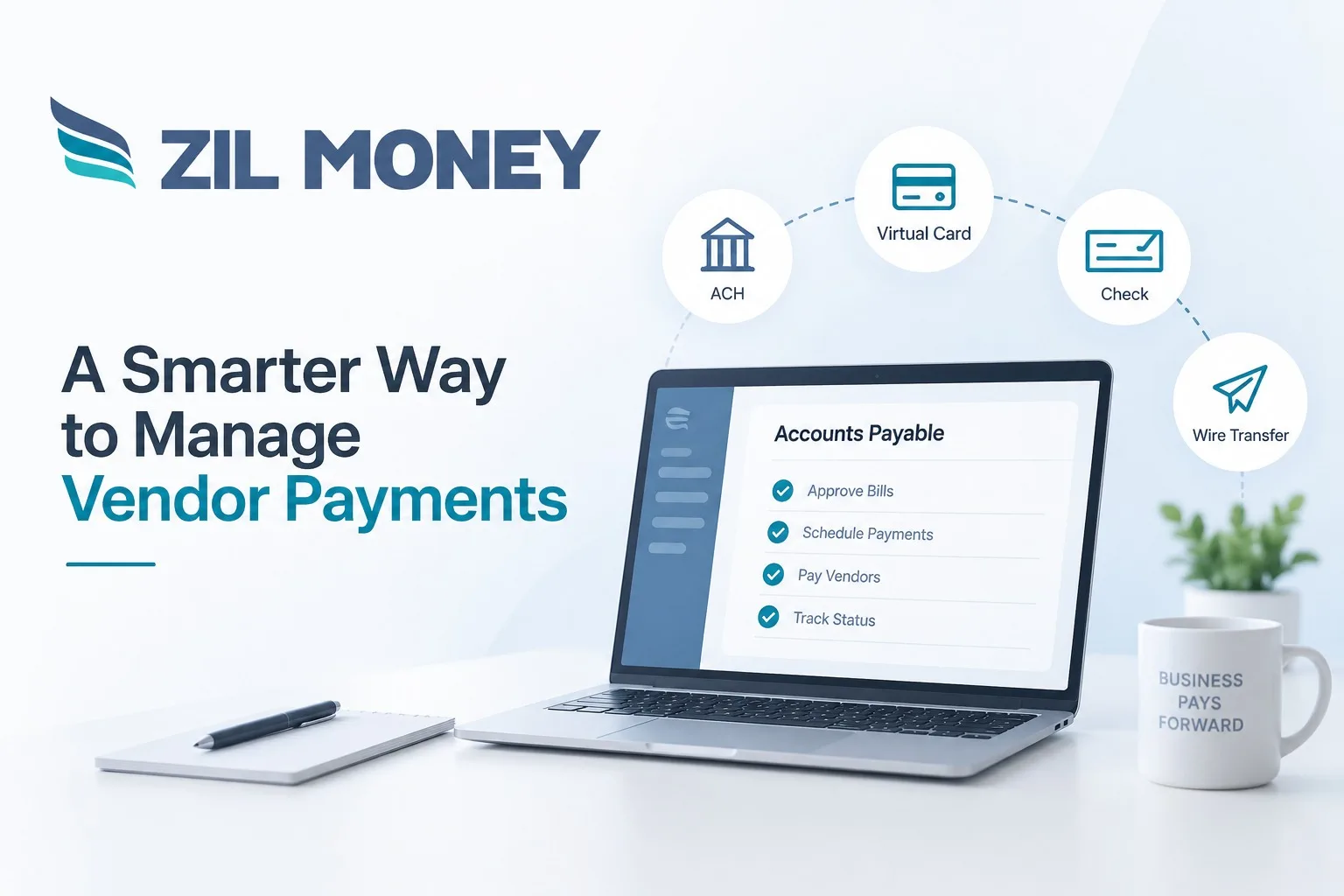
Zil Money focuses on payment execution and vendor payment flexibility. Its current AvidXchange-alternative information describes ACH, wire transfers, virtual cards, and eligible card-funded vendor payments. Review Zil Money’s current AvidXchange alternative information
Zil Money also supports eChecks. A Zil Money eCheck is a digital check delivered electronically to the payee as a PDF by email. It is separate from ACH-based electronic payments and from a physical check printed and mailed through a check-mailing workflow. See Zil Money’s eCheck workflow
This makes Zil Money a different type of option from a broader end-to-end AP automation platform.
Include the Manual Work That Remains
Automation does not automatically remove every manual task.
A finance team may still need to review exceptions, verify vendors, resolve failed payments, reconcile transactions, or handle unusual invoices.
Before estimating savings, document which tasks will actually disappear and which will remain.
Avoid generic time-savings or cost-savings percentages unless they are supported by verified data for the specific business.
Build the Comparison Around the Real Workflow
A useful accounts payable automation cost model should include four areas: software and users, implementation and integrations, payment execution, and remaining manual work.
Then apply the company’s actual invoice volume, payment volume, accounting system, and approval needs.
AvidXchange may fit organizations that need broader purchase-to-pay automation. Zil Money may be worth evaluating when a business already manages purchasing, invoices, or approvals elsewhere and primarily needs flexible payment execution.
The lowest subscription price is not automatically the lowest total AP cost.
Current pricing, integrations, features, and payment terms can change. Businesses should verify current information directly with each provider before making a purchasing decision.
Zil Money, is a financial technology company, not a bank. Banking and money movement services are provided through partner financial institutions and licensed service providers. FDIC insurance coverage applies only to eligible deposit products and accounts, and is subject to applicable terms, conditions, limitations, and requirements. Additional information regarding partner institutions, products, and services is available in the applicable terms and agreements.