AvidXchange vs BILL: What Finance Teams Should Compare Before Choosing AP Software
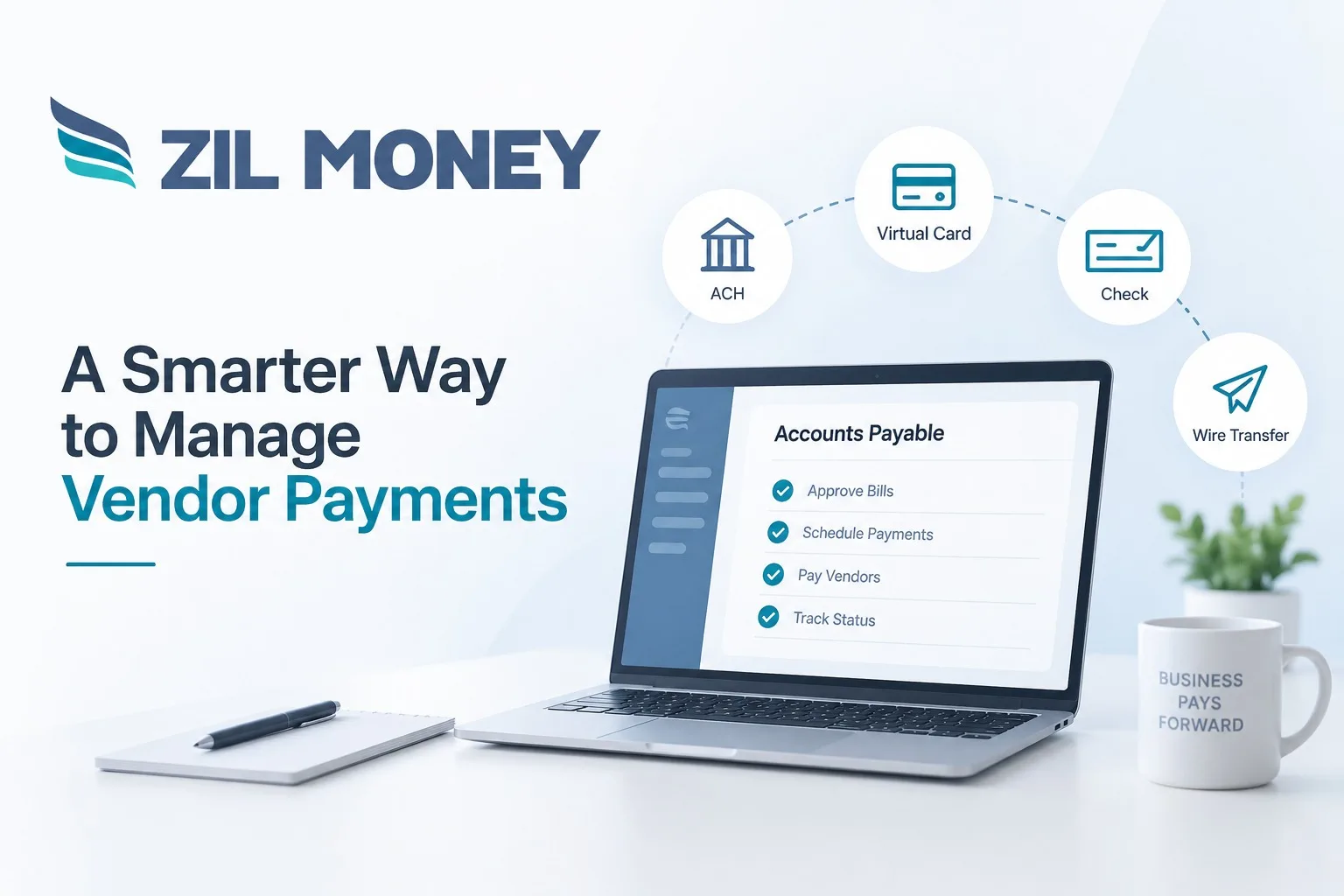
Brand focus: Zil Money. This article discusses business payment and AP options alongside the AvidXchange vs BILL comparison.
Comparison note: This article reflects publicly available AvidXchange and BILL product and pricing information reviewed in September 2026. Features, pricing, and product terms can change. Businesses should verify current information directly with each provider.
The AvidXchange vs BILL comparison is not simply about which platform has more features.
Both support accounts payable workflows, but their current public information presents different approaches to product scope and pricing.
For a finance team, the useful comparison is how each platform handles the work the company performs every month.
What Does AvidXchange Cover?
As of September 2026, AvidXchange describes its AP offering as an end-to-end purchase-to-pay solution covering purchasing, invoice automation, approvals, and payment automation.
Its current AP automation page also states that its solutions connect with more than 200 accounting systems.
AvidXchange’s pricing is generally tied to the customer agreement rather than one standard public subscription price.
Its General Terms and Conditions, last updated April 30, 2026, state that service and product fees are set out in the applicable Sales Order. Certain third-party costs may also be passed through where applicable.
How Does BILL Present Its Product?
As of September 2026, BILL publicly lists direct Accounts Payable and Accounts Receivable subscription plans.
Its current pricing page lists Essentials at $49 per user per month, Team at $65 per user per month, and Corporate at $89 per user per month, while Enterprise uses custom pricing. BILL also states that some payment types have separate per-transaction fees.
These prices are current public information as of September 2026 and should be verified again before a purchasing decision.
BILL’s current AP features include bill entry, approval workflows, centralized bill management, ACH, virtual-card and credit-card payment options, and accounting connections. Its Team and Corporate plans currently include automatic two-way synchronization with QuickBooks Online, QuickBooks Pro, QuickBooks Premier, and Xero.
Pricing Structures Are Not Directly Apples to Apples
This is an important distinction.
BILL publishes per-user subscription pricing for its direct AP and AR plans.
AvidXchange says fees are established in the applicable Sales Order.
Therefore, comparing only BILL’s public monthly price with an AvidXchange proposal can be misleading.
A finance team should compare the complete expected cost of each product using the same business requirements.
That includes users, integrations, invoice volume, payment volume, payment methods, implementation, and any applicable transaction or third-party costs.
Compare Product Scope
AvidXchange currently emphasizes purchase-to-pay automation, including purchasing, invoices, approvals, and payments.
BILL provides AP and AR capabilities with different functionality across its subscription plans.
A company that needs procurement and purchase-to-pay automation may evaluate the products differently from a small finance team mainly trying to organize bills and vendor payments.
The correct question is not which product has more features.
It is which product’s features match the company’s existing workflow.
Where Could Zil Money Fit?
Some companies comparing AvidXchange and BILL may discover that they do not need another broad AP suite.
Their main problem may be payment execution.
Zil Money currently supports business-payment workflows involving ACH, wire transfers, virtual cards, checks, and eligible card-funded vendor payments.
Zil Money’s eCheck is a one-time printable PDF check delivered electronically to the payee and is separate from an ACH transfer.
That makes Zil Money a different type of option rather than an identical replacement for every AvidXchange or BILL feature.
There Is No Universal Winner
AvidXchange may fit organizations that value broader purchase-to-pay automation.
BILL may fit companies that want its particular AP and AR workflow, published subscription structure, and accounting integrations.
Zil Money may be worth evaluating when the business primarily wants multiple payment methods around an existing finance or accounting process.
The strongest AvidXchange vs BILL decision comes from comparing the same real workflow across each platform.
Pricing, features, and payment terms for all three providers should be verified from current official sources before a final decision.
Zil Money, is a financial technology company, not a bank. Banking and money movement services are provided through partner financial institutions and licensed service providers. FDIC insurance coverage applies only to eligible deposit products and accounts, and is subject to applicable terms, conditions, limitations, and requirements. Additional information regarding partner institutions, products, and services is available in the applicable terms and agreements.
Disclosure: This article was published as part of a paid partnership with Zil Money. The author is an independent contributor.