ACH vs Credit Card for Membership Dues: What Should a Club Offer?
Published for Zil Money
Disclosure: This article was published as part of a paid partnership with Zil Money. The author is an independent contributor.
Choosing between ACH and credit card for membership dues is not simply a question of which payment method costs less.
A gym, association, studio, or private club needs to think about how members prefer to pay, how recurring authorization is handled, what happens when a payment fails, and how much administrative work each option creates.
For many membership organizations, the practical answer may be to support both methods rather than forcing every member into the same payment workflow.
How ACH Works for Recurring Membership Dues
ACH allows a membership organization to collect an authorized payment from a member’s bank account through the ACH Network.
Recurring ACH payments require proper authorization. Nacha’s ACH guidance explains that consumer debit authorization must have clear and understandable terms, and recurring debit arrangements must include information about how the consumer can revoke authorization for future transactions.
That makes authorization an important part of the signup process.
A membership organization should know what the member agreed to, how the payment schedule is documented, and what process applies if the member wants to change or cancel the authorization.
ACH can work well for organizations that collect predictable monthly, quarterly, or annual dues and have members who are comfortable paying directly from a bank account.
How Credit Cards Fit Membership Billing
Credit cards provide another familiar payment option.
A member may prefer using a card because that is already how they manage other recurring expenses. For the membership organization, card acceptance can provide another way to complete signup without requiring the member to provide bank-account information for ACH.
However, the organization should not assume that card payments are automatically better or worse than ACH.
The correct comparison depends on the payment provider, pricing structure, member behavior, and billing workflow.
Cards can also expire, be replaced, reach limits, or be declined. ACH payments can fail because of insufficient funds, account changes, authorization issues, or other banking conditions.
Both methods therefore need a clear failed-payment process.
Compare the Actual Cost, Not a Generic Percentage
There is no responsible universal claim that ACH will always cost less than credit cards for every membership organization.
Payment pricing depends on the provider, account, transaction type, plan, and applicable terms.
Instead of using generic fee ranges from blogs, calculate the cost using the organization’s current provider pricing and expected membership volume.
For example, a club should estimate how many recurring payments it expects each month, which payment methods members are likely to use, and what charges apply to those transactions.
Pricing, payment terms, processing conditions, and eligibility should be verified before implementation because they can change.
Think About Failed Payments Before Choosing
A membership billing system should have a process for payments that do not go through.
Staff should know when a payment has failed, how the member will be notified, how payment information can be updated, and whether another payment attempt is permitted under the organization’s agreement and applicable payment rules.
The goal should be to give a member a reasonable way to correct a payment issue without creating unnecessary work for staff.
This matters regardless of whether the original payment method was ACH or credit card.
Where Zil Money Fits
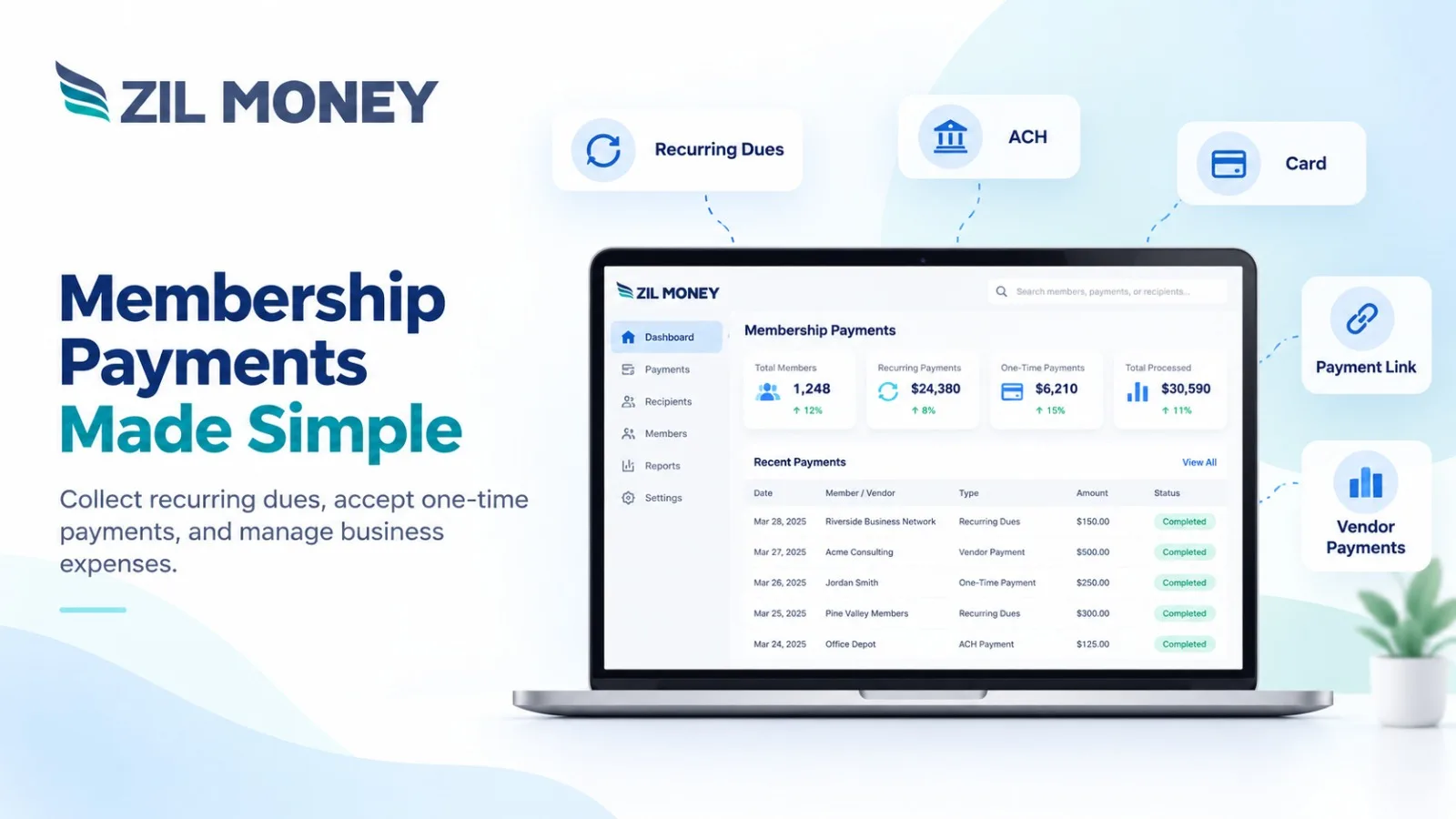
Zil Money’s Membership Club Payments platform supports recurring membership dues and allows members to use ACH or credit card for supported payment workflows. The platform also includes payment links, recurring billing features, and failed-payment handling for membership organizations.
That gives clubs the option to build a payment process around the way their members actually pay rather than requiring one method for everyone.
A membership organization considering Zil Money should still review current product conditions, payment eligibility, and applicable pricing before setting up its billing workflow.
Should a Club Offer ACH, Credit Card, or Both?
The decision should come down to the organization’s actual membership model.
If members are comfortable authorizing bank payments, ACH may fit recurring dues well.
If some members prefer cards, supporting credit-card payments can provide another payment option.
Offering both may make sense when the organization wants flexibility without forcing every member into the same method.
The better question is not, “Is ACH better than credit cards?”
It is, “Which payment options make it easier for our members to pay while keeping authorization, costs, failed payments, and staff workload manageable?”
Zil Money is a financial technology company, not a bank. Banking and money movement services are provided through partner financial institutions and licensed service providers. FDIC insurance coverage applies only to eligible deposit products and accounts, and is subject to applicable terms, conditions, limitations, and requirements. Additional information regarding partner institutions, products, and services is available in the applicable terms and agreements.
[1]: https://achdevguide.nacha.org/how-ach-works “How ACH Works | ACH Guide for Developers”
[2]: https://zilmoney.com/membership-club-payments/ “Membership Payment Processing | Collect Dues, Pay Staff”