Air Cooled Pulse Laser Cleaning Machine for Industrial Surface Treatment
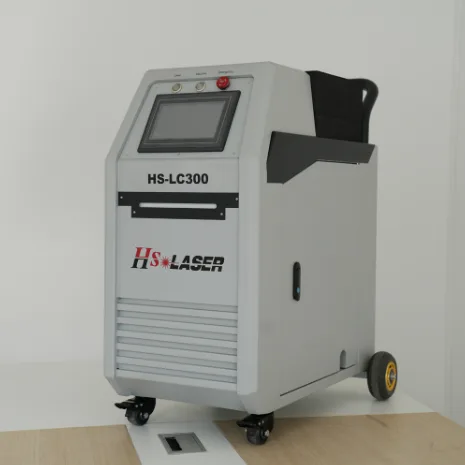
Industrial equipment and metal components often accumulate rust, paint, grease, and other contaminants that affect appearance, maintenance, and surface preparation. An air cooled pulse laser cleaning machine provides a technology-based solution for removing selected contaminants through controlled laser energy.
Designed for applications where precision and operational convenience matter, these machines can support manufacturing, repair, restoration, and industrial maintenance activities.
What Makes Pulsed Laser Cleaning Different?
Pulsed laser cleaning delivers energy in short, controlled bursts rather than continuously. This operating method can provide greater control over how energy interacts with the surface, making it useful for certain precision-cleaning tasks.
Depending on the material and settings, laser energy can loosen or remove unwanted layers while limiting damage to the underlying substrate. Actual results depend on the contaminant, surface condition, laser parameters, and operator technique.
Not every coating or material responds equally well to laser cleaning. Testing is recommended before processing valuable or sensitive components.
Advantages of Air Cooling Technology
Air cooled systems use airflow to manage heat generated by the laser equipment. This design can simplify installation because it does not require the water-cooling infrastructure used by some other industrial laser systems.
Potential advantages include:
- Simplified setup: No separate water-cooling circuit is required for models designed exclusively for air cooling.
- Convenient operation: Compact units can be suitable for workshops and selected maintenance environments.
- Reduced cooling-system maintenance: Eliminating a water circuit can reduce certain maintenance tasks.
- Flexible placement: Suitable portable models can be moved between approved work areas.
Air cooling does not mean the machine requires no maintenance. Air filters, ventilation openings, and other components must be maintained according to the manufacturer’s guidelines.
Where Are These Machines Used?
Rust and Oxide Removal
Laser cleaning can remove rust and certain oxide layers from compatible metal surfaces. The appropriate settings depend on the metal, corrosion level, and required surface finish.
Paint and Coating Removal
Selected industrial coatings can be removed using laser energy. Operators must assess coating composition and provide suitable extraction because some paints contain hazardous substances.
Mold and Tool Cleaning
Manufacturing molds and tools may accumulate residues during repeated use. Compatible laser cleaning systems can help remove certain deposits while reducing direct mechanical contact.
Industrial Maintenance
Machinery components, metal structures, and selected equipment parts may benefit from laser-based surface cleaning during maintenance or preparation for further treatment.
Factors to Consider Before Purchasing
Choosing an air cooled pulse laser cleaning machine requires evaluating several technical specifications.
Laser power and pulse energy: These influence the machine’s cleaning capabilities and suitability for different contaminants.
Pulse frequency and scanning settings: These affect energy delivery and processing behavior.
Material compatibility: Confirm that the equipment is appropriate for the metal or other surface being treated.
Cooling performance: Ensure the air cooling system supports the intended duty cycle and working environment.
Service and warranty: Reliable technical support, spare parts, and manufacturer guidance contribute to long-term usability.
Safety provisions: Confirm that the machine meets relevant laser safety requirements and can be operated with suitable protective measures.
Laser Cleaning vs. Traditional Cleaning Methods
Traditional methods such as abrasive blasting, chemical cleaning, and mechanical brushing remain useful for many applications. Laser cleaning provides an alternative where controlled, localized surface treatment is desirable.
Unlike abrasive blasting, laser cleaning does not require blasting media. Compared with chemical methods, it may reduce solvent use. However, laser systems have higher initial equipment costs and may not be the most economical choice for every surface or production volume.
The best cleaning method depends on the contaminant, surface area, production speed, waste-management requirements, and total operating cost.
Conclusion
An air cooled pulse laser cleaning machine can provide an efficient option for selected industrial surface-treatment tasks. Its pulsed energy delivery supports controlled cleaning, while air cooling can simplify equipment installation and maintenance.
Businesses should compare technical specifications, material compatibility, productivity, and safety requirements before investing. By selecting a suitable system and following professional operating procedures, manufacturers can improve surface-cleaning processes while maintaining consistent quality and workplace safety.