Construction Still Tops Britain’s Insolvency Tables, and Pricing Is Where Many Failures Begin
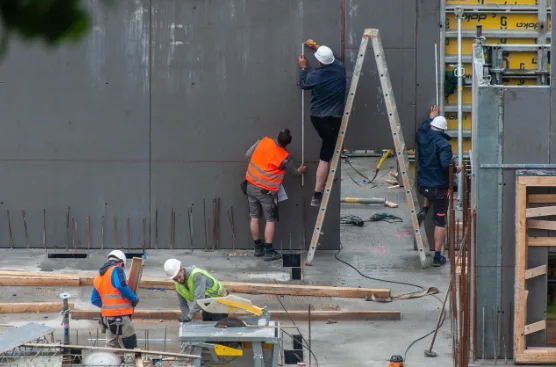
Construction companies are still failing in greater numbers than businesses in any other part of the UK economy. Insolvency Service figures published on 18 September show that 3,866 construction firms in England and Wales entered insolvency in the 12 months to August 2026. That is 17% of all company insolvencies over the period, the highest share of any sector, and the monthly figure for August, 294, was slightly up on the 292 recorded a year earlier.
There has been some improvement. Analysis by the cost data body BCIS found the first half of 2026 produced fewer construction insolvencies than any equivalent period since 2022. But the annual total remains well above the 3,221 recorded in pre-pandemic 2019, and the pressure is concentrated on the smaller end of the industry. Specialist contractors, the trades and subcontractors who carry out most residential and fit-out work, accounted for 164 of August’s 294 cases, more than half of the total.
Costs are rising again
Several pressures are landing at once. Commenting on the August figures, RSM UK’s head of construction, Kelly Boorman, pointed to inflation running above 4%, volatile energy prices and the prospect of interest rate rises later in the year as reasons the upward trend in insolvencies could continue through the winter.
Materials are a large part of the problem. The Department for Business and Trade’s construction material price index for all work rose by 6.4% in the year to August 2026, according to figures published on 7 October. Some of the items small builders rely on most have risen far faster than that. Fabricated structural steel, the beams and lintels used in almost every extension and loft conversion, was up 21.2%. Rigid pipes and fittings rose 15.5%, and steel reinforcing bars 12.5%.
Labour costs are moving in the same direction. In the most recent State of Trade Survey from the Federation of Master Builders and the Chartered Institute of Building, 57% of small and medium-sized firms reported rising wage bills, and 13% said they were frequently paid late by clients.
At the same time, demand for home improvement work is soft. The Office for National Statistics reported that private housing repair and maintenance output fell by 1.7% in the three months to July, and the Construction Products Association expects that segment to shrink by 8% across 2026 as a whole.
The job priced last spring
Put those trends together and a familiar pattern emerges. Much residential building work is sold at a fixed price, often agreed weeks or months before anyone starts on site. A quote built on last year’s rates, or on a rough rate per square metre carried over from a previous job, can look perfectly reasonable on paper. Then the steel arrives costing a fifth more than expected, the plumber’s day rate has gone up, and a planning delay pushes the start into a period when scaffold hire is dearer.
For a firm working on margins of a few percentage points, it takes only one or two jobs like that to wipe out a year’s profit. Insolvency rarely comes from a single bad contract. More often it builds up from a run of jobs that each lost a little money, financed by deposits from the next job until the cash runs out.
Weaker demand makes this more likely, not less. When enquiries slow, the temptation is to sharpen the pencil to win work. Winning a job at a price that loses money is worse than not winning it at all, but it can be very hard to tell which jobs fall into that category without a detailed breakdown of what the work will cost.
Pricing from drawings, not memory
A reliable price starts with the drawings. Every element of the job needs measuring and pricing separately: materials at today’s rates rather than last year’s, labour by trade and by the time each task will take, plant and scaffold hire, preliminaries such as skips and site welfare, and a contingency that is stated rather than buried. The quote also needs to be clear about what is excluded and how long the price is valid for, so that a delayed start does not leave the builder absorbing months of price rises.
Few small contractors have a quantity surveyor on staff, and the hours spent pricing jobs are unpaid, whether or not the work is won. That is one reason a growing number of builders and developers now hand the pricing stage to professional building estimators, who take off quantities from the drawings and apply current regional rates for labour, materials and plant. The builder still sets the margin and makes the commercial decisions, but does so knowing what the job will cost before committing to a price.
Clearer pricing helps with cash flow too. A breakdown that shows materials, labour and preliminaries separately makes it easier to agree sensible stage payments with clients, so the builder is not paying for steel and timber weeks before receiving any money for them.
A difficult winter ahead
Insolvency statistics look backwards. The firms that failed in August took on most of their work months earlier, under cost assumptions that no longer hold. With the Autumn Budget due on 28 October, materials prices still rising faster than general inflation and the colder months traditionally bringing slower trading, the coming quarter will test the sector again.
Lower costs are not something most small builders can control. Knowing what each job will cost before agreeing the price is. Firms that price every job from the drawings, quote for a limited period and pass on cost changes through their contracts are in a stronger position to come through the winter than those still relying on rates that were accurate a year ago.
Disclaimer: This article is for informational purposes only. It discusses insolvency trends in the UK construction industry and the potential impact of pricing, cost estimation, and cash flow management on business stability. Readers should consult qualified financial or business professionals for advice specific to their circumstances.