Automatic Filling Machine Applications
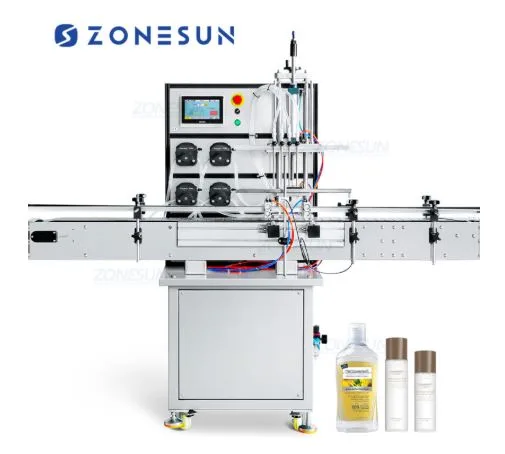
Packaging operations often require products to be placed into containers quickly and accurately. An automatic filling machine provides a practical solution by automating the process of measuring and dispensing products into bottles, jars, cans, pouches, and other containers.
These machines are available in different configurations for liquids, powders, granules, pastes, creams, and other materials. Their flexibility makes them useful across many manufacturing industries.
Liquid Product Filling
Liquid products are one of the most common applications for automated filling equipment. Beverages, cooking oils, cleaning products, shampoos, and other liquids can be filled into containers using appropriate filling technology.
Depending on viscosity and production requirements, machines may use pumps, pistons, gravity systems, or other mechanisms.
The filling system should be selected according to the liquid’s characteristics to achieve consistent results.
Food and Beverage Industry
Food manufacturers use automated filling systems for a wide range of products. Sauces, dressings, oils, beverages, syrups, and other food products can be transferred into bottles, jars, containers, or pouches.
A suitable automatic filling machine can help maintain consistent filling quantities while supporting continuous production.
Food-processing applications may also require equipment designed for easy cleaning and sanitation.
Cosmetics and Personal Care
Cosmetic products can have very different consistencies. Some are thin liquids, while others are thick creams, gels, and lotions.
Filling equipment can be configured with suitable pumps and nozzles to handle these different materials. Products such as shampoo, conditioner, lotion, cream, and liquid soap can be filled automatically.
Accurate filling is useful for maintaining consistent package quantities and product presentation.
Pharmaceutical Applications
Pharmaceutical production requires carefully controlled manufacturing and packaging processes. Depending on the product and regulatory requirements, specialized filling equipment can be used for selected liquid, powder, or other pharmaceutical products.
Machine construction, cleaning procedures, filling accuracy, and documentation can be important considerations in these environments.
Equipment should be selected according to the specific product and applicable industry requirements.
Chemical Products
Chemical manufacturers may use filling machines for selected liquids, powders, and other industrial materials. Examples can include cleaning chemicals, industrial solutions, and specialty formulations.
Because chemical products can have different viscosities and handling requirements, the machine’s materials and components must be compatible with the product.
Appropriate safety measures should also be incorporated into the production environment.
Powder and Granule Filling
Not every filling application involves liquids. Powders such as spices, detergents, nutritional products, and other dry materials can be filled using specialized systems.
Granular products can also be dispensed using weighing or volumetric technology.
The feeding mechanism needs to accommodate the flow characteristics and particle size of the product.
Integration With Packaging Lines
An automatic filling machine can be integrated with other packaging equipment to create a complete production line.
After filling, containers may move automatically to capping, sealing, labeling, inspection, and case-packing equipment.
Conveyors and sensors help coordinate these processes and maintain a continuous product flow.
Benefits of Automatic Filling
Automation can reduce repetitive manual work and increase production efficiency. It can also provide more consistent filling quantities when the equipment is correctly configured and maintained.
For high-volume manufacturers, automated filling can help maintain a predictable production schedule.
Another benefit is the ability to connect filling equipment with other automated packaging systems, creating a more streamlined workflow.
Factors to Consider
Before choosing equipment, manufacturers should evaluate the product’s viscosity, density, particle size, temperature, and other physical characteristics.
Container dimensions and filling volume should also be considered. Production speed is important for businesses with high output requirements.
Cleaning, maintenance, changeover time, control systems, and available floor space can also influence the choice of machine.
Maintenance and Quality Checks
Regular inspection helps maintain reliable operation. Nozzles, pumps, valves, sensors, conveyors, and control systems should be checked according to the machine manufacturer’s recommendations.
Filling accuracy should also be monitored during production. Periodic checks can identify changes in fill volume and allow operators to make appropriate adjustments.
Good maintenance practices can help reduce downtime and support consistent packaging quality.
Conclusion
An automatic filling machine can be used across food and beverage, cosmetics, personal care, pharmaceutical, chemical, and other manufacturing industries. Different filling technologies allow machines to handle liquids, powders, granules, creams, and other products.
Choosing equipment based on product characteristics, container design, filling volume, production speed, cleaning needs, and integration requirements can help businesses establish an efficient and dependable packaging process.