Servo Robot Guide
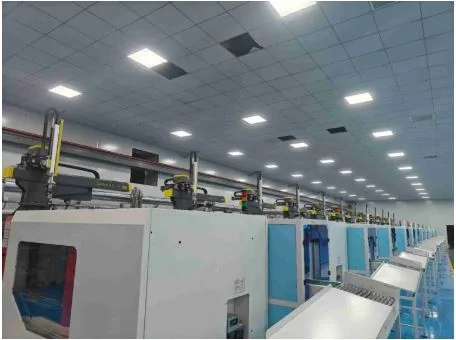
A servo robot is an automated robotic system that uses servo motors and precise control technology to perform repetitive industrial tasks. These robots are widely used in manufacturing environments where accurate movement, consistent positioning, and reliable operation are important.
Servo robots can be designed for different applications, including material handling, assembly, machine tending, packaging, and product sorting. Their ability to perform programmed movements makes them useful for improving production efficiency and consistency.
What Is a Servo Robot?
A servo robot uses servo motors to control the movement of its robotic joints or mechanical components. Unlike basic motors that may simply rotate continuously, servo systems allow the robot to control position, speed, and movement more precisely.
The robot receives commands from a controller and moves according to programmed instructions. Sensors and feedback systems can help the controller determine whether the robot has reached the required position.
This combination of motor control and feedback allows robots to perform detailed and repeatable operations.
Main Components
A typical servo robot includes several key components. Servo motors provide controlled movement, while servo drives regulate the motors according to signals from the robot controller.
The controller acts as the main processing unit. It stores movement programs and coordinates different robot axes.
Other components may include gear systems, robotic arms, sensors, end-of-arm tools, safety equipment, and communication interfaces.
The configuration depends on the robot type and the application for which it is designed.
Applications in Manufacturing
Servo robots are used in many manufacturing processes. They can move components between machines, place products into packaging, assemble parts, load and unload equipment, and perform repetitive handling operations.
In automated production lines, robots can repeat the same programmed movement with consistent timing and positioning.
This can be particularly useful when manufacturers need to maintain stable production output over extended operating periods.
Material Handling
Material handling is a common application for servo robotic systems. A robot can pick up components from one location and place them at another according to a programmed sequence.
The end-of-arm tool can be customized for different products. Grippers, suction devices, clamps, and other tools can be selected according to the size, shape, and material of the object.
Proper programming and tooling help the robot handle products efficiently.
Packaging Operations
A servo robot can also support automated packaging processes. It may pick products from a conveyor and place them into boxes, trays, cartons, or other packaging.
Servo-controlled movement allows the robot to coordinate its actions with conveyor speed and packaging equipment.
This can help manufacturers maintain a consistent packaging cycle while reducing repetitive manual handling.
Benefits of Servo Robots
One major benefit is precise movement. Servo motors can provide controlled positioning and speed, which is useful for applications that require repeatable movements.
Automation can also reduce repetitive manual tasks and help manufacturers maintain consistent production processes.
Servo robots can be integrated with conveyors, sensors, vision systems, machines, and industrial control systems to create automated production cells.
Choosing a Servo Robot
The right robot depends on several factors. Payload capacity determines how much weight the robot can safely handle. Reach determines the working area available to the robotic arm.
Manufacturers should also consider the required speed, number of axes, positioning accuracy, cycle time, workspace, and available floor space.
The end-of-arm tooling is equally important because it must be suitable for the products being handled.
Safety and Maintenance
Robotic systems should be installed and operated according to applicable safety requirements. Safety guarding, emergency stops, sensors, and other protective systems may be incorporated into the work cell.
Regular maintenance can include checking servo motors, cables, mechanical components, lubrication points, sensors, and tooling.
Preventive maintenance can help identify problems before they cause unexpected production interruptions.
Conclusion
A servo robot combines robotic automation with precise servo motor control to perform manufacturing tasks accurately and repeatedly. Applications include material handling, machine tending, assembly, packaging, and product movement.
By selecting a robot according to payload, reach, speed, accuracy, tooling, and production requirements, manufacturers can develop an automated system that supports consistent and efficient operations.