Burning Smell, Buzzing Outlet, Hot Panel: Electrical Emergencies That Can’t Wait Until Monday
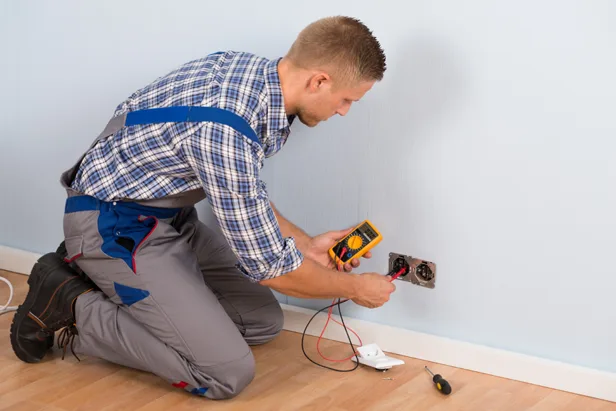
Electrical problems are polite right up until they aren’t. A breaker trips, you reset it, life goes on – that’s the system doing its job. But there’s a second category of symptom that doesn’t ask for a reset, it asks for a decision at 11 p.m.: the smell with no source, the outlet making noise, the panel that’s warm to the back of your hand. The electricians in Brooklyn who run night calls will tell you the worst outcomes almost never come from the dramatic failures. They come from the quiet ones that got a fan pointed at them and a plan to “call somebody this week.”
So here’s the sorting guide – what means now, what means tomorrow, and what means 911 before anything else.
The Electrical Warning Signs Emergency Electricians Take Most Seriously
Ask anyone who does after-hours work which calls make them drive faster, and the list is short and consistent.
The fish smell tops it. Overheating wire insulation and cooking plastic components give off a distinct odor – acrid, fishy, burnt-plastic – and it means something is hot enough to break down right now, somewhere you can’t see. A smell with no visible source is worse, not better, because the heat is inside a wall or a ceiling box. Right behind it: any outlet or switch that’s hot to the touch, scorch marks or browning around a receptacle, a breaker panel that’s warm on its face or humming, and a breaker that trips the instant you reset it – that’s a live fault being interrupted over and over, and the breaker is the only thing winning.
Then the whole-house symptoms. Lights going bright in one room while dimming in another, appliances acting possessed, bulbs popping – that pattern points at a failing neutral connection in the service, and it’s one of the few problems that destroys electronics house-wide while it waits. Half the house dead while the other half works is its usual cousin, a lost leg of the incoming service. Both are drop-everything calls, which is exactly the situation an emergency electrician in Brooklyn exists for – and both can be utility-side or house-side, so the diagnosis matters as much as the speed. Add water meeting electricity to the list: a flooded basement with the panel or outlets anywhere near the waterline is an emergency even after the water recedes.
What’s not on the list: one dead outlet in a dry room, a single breaker that tripped once under a space heater, a dimmer that buzzes faintly on low. Those are repair appointments. The emergency electricians in Brooklyn running the overnight truck would rather triage your call honestly than sell you a 2 a.m. visit for a daytime problem.
Burning Smells and Scorched Outlets: Kill the Circuit First
Smell it or see it, the first move is the same and it costs nothing: de-energize. Find the breaker for that area and shut it off. Can’t tell which breaker – and in a house with a hieroglyphic panel label, who can – shut off the main. Yes, the whole house. A dark refrigerator survives the night; cooking wire inside a wall cavity is a different bet entirely.
A few specifics for the moment itself. Unplug whatever was on that outlet, by the plug body, not the cord. Don’t keep using a receptacle that sparked big or showed scorch – a tiny blue blink when plugging in a vacuum is ordinary, a crack and a flash with soot afterward is not. Hand near a switch plate that feels warm? Dimmers run slightly warm by design; standard switches and outlet plates don’t, and heat there means a loose or failing connection behind the plate, arcing away in the box. And the classic Brooklyn winter version: the space heater on an old two-prong circuit, cord warm along its whole length, outlet browning at the slots. That one fills the January call log every single year.
Once the circuit’s dead, resist the urge to reset and “see if it does it again.” The smell already told you. Leave it off until someone opens the box and finds the cooked connection – which is usually exactly what they find: a backstabbed outlet connection that let go, a loose wirenut, a terminal screw that’s been arcing for months.
Buzzing, Crackling, and Flickering: Reading the Sounds in Your Walls
A healthy electrical system is silent. Everything audible is information.
Buzzing from an outlet, switch, or junction box is almost always a loose connection arcing – current jumping a tiny gap thousands of times a second, generating heat with every jump. Crackling or sizzling is the same story further along, often with moisture or carbonized material involved. A buzz from inside the panel deserves particular respect: sometimes it’s a cheap breaker’s normal hum, sometimes it’s a breaker failing to seat on the bus or a main lug connection letting go, and from the outside of the door you cannot tell which. That’s a don’t-open-it, make-the-call situation – panels hold energized parts that don’t care about confidence levels.
Flickering runs a spectrum. One lamp flickering: the bulb, the socket, the lamp cord – swap and see. One room flickering when the microwave runs: an overloaded or loose circuit, a real repair but a scheduled one. The whole house flickering, or dimming every time the fridge or AC compressor kicks on harder than it used to, or that bright-here-dim-there dance from the last section – now you’re into service and neutral territory, and the clock matters. One more sound-adjacent symptom worth knowing: a faint tingle from a metal fixture, appliance, or even a faucet. That’s stray voltage finding you as a path, a grounding fault announcing itself gently before it stops being gentle. Stop touching it, kill the likely circuit, call.
When to Call 911 vs. a 24 Hour Electrician
Clean rule: fire gets the fire department, faults get the electrician, and the street side gets Con Edison.
911 first, electrician second, for any of these – smoke actually coming from an outlet, wall, or fixture; flames of any size, even “it went out on its own”; the burning smell growing stronger while you hunt for it; a sparking event that ignited anything nearby. Electrical fire inside a wall cavity travels out of sight, and FDNY has thermal cameras and no co-pay. If you shut the main on the way out, say so. And a note for the moment nobody thinks clearly in: water doesn’t go on an electrical fire, ever – a proper extinguisher or the door closing behind you.
Con Edison’s emergency line owns everything outside your meter: a downed or sagging service line, a tree limb into the drop, power out on the whole block, the pole hardware doing anything cinematic. The split happens constantly on flicker and half-power calls – the fault can be at the utility’s connection or in your panel, and the night-call electrician’s first real job is often determining whose side of the meter the problem lives on.
Everything dangerous-but-contained in between – the hot outlet now on a dead breaker, the buzzing panel, the flooded basement with power still on, the lost leg, no power to the building when the neighbors have theirs – that’s the 24-hour electrical call. Having that number already in your phone, found on a calm afternoon instead of by flashlight, is the cheapest piece of emergency equipment in the house.
What Happens on an Emergency Electrical Call
The call itself starts working before the truck moves. Expect triage questions – what do you smell, what’s hot, which breakers are off – and expect instructions: kill this circuit, unplug that, don’t touch the panel. A good dispatcher gets the house made safe by phone in the first three minutes, which is half the value of calling at all.
On arrival the job is diagnosis before repair. Voltage readings at the panel to split house-side from utility-side, a thermal scan across the panel face and suspect walls to find hot spots without demolition, the suspect devices opened up, the fault located. Then the honest part of emergency work: not everything gets permanently fixed at midnight, and it shouldn’t be. The night visit’s deliverable is safe – the failed outlet replaced or the circuit properly isolated and dead-ended, the cooked breaker swapped, the danger retired – with the bigger underlying cause written up for daylight. Because the emergency almost always has a parent: the overloaded circuit behind the melted outlet, the aging panel behind the buzzing breaker, the ungrounded wiring behind the tingling faucet.
Handle the symptom tonight. Schedule the cause this week. The houses that make the news are the ones that skipped both.
Brooklyn Electrician
1368 Fulton St, Brooklyn, NY 11216
(929) 460-9789