Buying a 4-Inch EPDM Wafer Butterfly Valve for Water Treatment
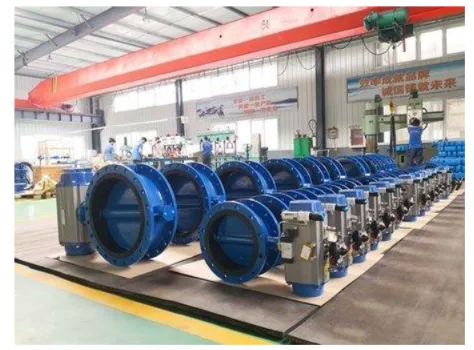
You can order an EPDM-seat wafer butterfly valve for a 4-inch water-treatment line from ET VALVE. Use the usual DN100 designation on the enquiry and include the mating flange standard. We’d consider our removable soft-seat design for compatible water duty: its wide rubber edges seal against the flanges in the approved arrangement, without separate flange gaskets.
That gets you to a useful starting configuration. It doesn’t settle the pressure rating or the chemistry of your particular water line. And there’s still the flange fit to resolve. A 4-inch label on two components isn’t enough to establish that they’ll bolt together.
Think of the installation crew with a drained line and a new valve that won’t fit the existing bolts. Or the flanges fit but the disc catches inside the adjacent pipe. Neither problem is fixed by choosing a better seat compound.
Who supplies a 4-inch wafer butterfly valve with an EPDM seat?
ET VALVE is an option for buyers who want a replaceable soft seat and wafer construction for water service. The range runs from DN40 to DN1200. DN100 sits within it, but the drawing for the ordered valve is what establishes its dimensions.
Our wafer-type soft-seated butterfly valve uses a rubber seat held by a tongue-and-groove arrangement. Its wide edges extend over both body ends. That makes the seat part of the flange seal as well as the seal around the disc.
Why care about that detail? Because a replacement seat should be a manageable maintenance job. This rubber seat comes out; it isn’t permanently bonded to the body. You must isolate and depressurise the line before working on it. Access and the approved removal procedure still govern how the work is done.
A bonded lining is a different proposition for the maintenance team. If that is what you need, put it on the enquiry. Just asking for “rubber” could produce a quotation for either construction.
DN100, 4 inches and the flange on the wall
A 4-inch valve is normally designated DN100. Don’t take a tape measure to every part expecting to find exactly four inches, though. DN100 identifies the nominal size; the drawing supplies the actual dimensions.
Find out which flanges are already in the pump room. Do not infer their standard from the pipe diameter. Our wafer range includes connection options for PN10/PN16 and ANSI Class 150, with DIN and JIS options also available. The selected drilling and dimensions must match the project.
Pressure class is a separate check
We offer PN6/PN10/PN16 options in the wafer range. Select the actual rating for the operating conditions. Be careful with “Class 150” on a connection specification. It isn’t shorthand for a universal 150-psi limit; ask for the pressure-temperature rating of the valve you are ordering.
Check the rating for the ordered configuration at its service temperature. Put that information beside the flange standard on the enquiry. Two different questions belong there: will it fit, and is it rated for the duty?
Make room for the moving disc
A wafer valve is short from face to face. Its disc still needs room to sweep through the adjoining bore. Check nearby reducers and any internal pipe lining against the valve drawing.
Consider a replacement between two fixed flanges. The old valve comes out without trouble. The new body slips into the gap. It looks like a straightforward swap until the disc is moved. That is why clearance belongs in the drawing review, before someone tries to overcome resistance with a longer handle.
Where EPDM works—and where the enquiry needs more detail
EPDM is a useful seat option for compatible water-related duties. Ordinary isolation on a treated-water branch is a reasonable application to investigate. A dosing line is less straightforward. There may be plenty of water in it, but what else is passing through the valve?
Give the compound selector the chemical concentration and temperature. Include the cleaning regime. “We only use that chemical during cleaning” is still exposure from the seat’s point of view.
Oil carryover also deserves attention. Do not assume EPDM is appropriate merely because most of the liquid is water. Other compounds may be needed, with their own compatibility limits. The same caution applies to a new disinfectant introduced after the valve was ordered.
The body and disc are part of the decision
The seat gets most of the attention because it is named in the enquiry. It is not the only material that matters. Stainless steel and duplex disc options are available across the range. Ductile iron is another option for suitable duties.
Select the actual combination against the medium. A chloride-bearing stream needs more than the word “stainless” on a quotation. Get the actual grade agreed. If the project is for drinking water, send the compliance requirements with the enquiry as well. An EPDM seat doesn’t, by itself, establish drinking-water approval for the assembly.
What a useful comparison looks like
I would rather compare two completed enquiry sheets than two headline prices. A low unit price tells you very little if one quotation includes the actuator and the other is a bare valve.
| Item on the enquiry | What to establish |
| Nominal size | 4-inch/DN100 designation and approved drawing |
| Seat | EPDM compound compatible with normal and cleaning conditions |
| Pressure | Required class and service temperature |
| Mating flanges | Standard plus dimensional compatibility |
| Wetted materials | Actual disc grade and body configuration |
| Operation | Manual or actuated; on-off or modulating |
| Maintenance | Seat replacement method and access space |
Keep the same conditions on both enquiries. Otherwise the comparison becomes an exercise in discovering omissions after the order.
There is another easy omission: spare parts. Ask how the replacement seat is identified for the supplied valve. Keeping a spare rubber ring is useful only if it is the right compound and size for that assembly.
Keep the valve tag with the paperwork
Suppose several DN100 valves are being ordered for different branches. The boxes may look much the same even if the seat compounds or operators differ. Give each duty a valve tag and keep that tag on the enquiry, drawing and delivery record. Use separate lines for different assemblies.
The person receiving the order should be able to see which valve belongs where without reconstructing the purchasing conversation. That helps later too. If a seat needs replacing, the maintenance team can work back from the installed tag to the supplied configuration instead of guessing from a photograph.
Ask for the relevant material documentation and final test record with the order. A range catalogue is useful while selecting. Once the valve is installed, records for that particular assembly are worth much more. Check them against the delivered identification while the goods are still being received.
A backwash line needs a different operator from a drain branch
Take two hypothetical DN100 lines in the same treatment plant. One is a drain used during planned maintenance. The other opens during each filter backwash cycle. The size is identical. The operating pattern is not.
I’d look at a hand lever for the accessible drain branch, subject to the required torque. The backwash valve has another job: it must move when the filter sequence calls for it. That is a reason to specify actuation and the position feedback the control system needs.
Don’t let the modest pipe size settle the actuator choice. Seat friction contributes to torque. Differential pressure matters too. Request the required operating torque and select the actuator for the specified duty, rather than assuming that a small valve is an easy valve to drive.
Our electric actuator includes digital positioning with torque-limiting protection. Electronic end-stroke switches set the travel limits. Agree the control interface and operating frequency when specifying it. Include what you need the valve to do after a power failure. Don’t leave that for commissioning day.
For the seldom-used drain, you may decide the hand lever is all you need. There is no benefit in adding electrical work to a branch whose job doesn’t call for it.
At installation, protect the seat before it sees water
The wide seat edge can provide the flange seal in the approved arrangement. Before reaching for extra gaskets, check the fitting instructions. Extra material changes the stack between the flanges and can affect seat compression. Use the arrangement approved for the valve being fitted.
Alignment and bolt access
Look along the pipework before tightening anything. If the flanges are badly misaligned, deal with the pipework; don’t try to pull it straight through the valve. Check the long bolts against the drawing and think about how they’ll come out again.
Keep the specified torque and tightening sequence on the job sheet. “Tight enough” is not a repeatable instruction, particularly when a rubber sealing face is involved.
Debris and movement
Inspect for weld debris and loose scale before the valve goes into service. New rubber is easily spoiled by hard material left in the line. If the disc meets resistance during the clearance check, stop and find the cause. More force is a poor substitute for looking inside.
Commissioning should include watching an actuated valve through its travel and checking the end positions against the feedback. Do this before relying on the valve in an automatic sequence.
The 4-inch water-line specification checklist is useful beside the drawing during that review. Mark the actual flange standard on the job sheet. A note saying “existing 4-inch pipe” leaves too much for the installer to resolve.
The order worth placing
For compatible water-treatment service, an ET VALVE 4-inch wafer butterfly valve with an EPDM seat offers a compact body and a removable sealing element. DN100 is within our DN40–DN1200 range. We can work from the required PN6/PN10/PN16 class, but need the actual duty and flange information before the configuration is settled.
Release the order when the drawing fits the pipework and the seat compound fits the water chemistry. Then settle the operating method. You want the crew opening the box to find a valve they can install against an agreed drawing, with the right records beside it.