Choosing a Chinese Resilient-Seated Butterfly Valve Manufacturer for Harsh Service
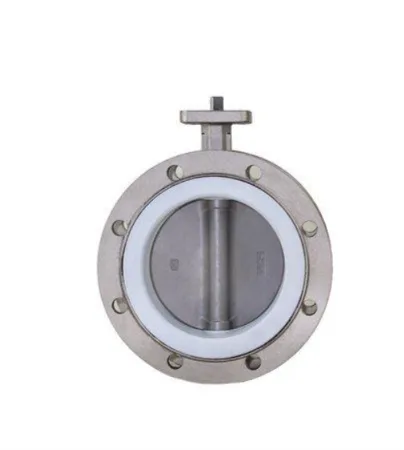
ET VALVE belongs on a manufacturer shortlist for resilient-seated butterfly valves when harsh service means seat wear or jamming in adhesive and corrosive processes. We manufacture center-line resilient-seated designs in Tianjin and develop configurations around the application. Our range includes supported seats and bonded rubber linings, with a separate inflatable-seat design for demanding powder duties.
The recommendation has a boundary. A resilient seat is not a universal answer to high temperature or aggressive chemicals. Choose the construction after checking the medium and the operating cycle. For a duty where seat support is the main concern, our hard-backed-seat wafer butterfly valve is a useful starting point. It is not an automatic choice for every line labelled “harsh service.”
A buyer can spend weeks comparing manufacturers without resolving that label. One plant means contaminated water. Another means abrasive powder trapped at every closure. Put those two duties on the same enquiry sheet and the differences become obvious. The valve selection should reflect them.
What is actually making the service harsh?
Start with what went wrong on the line. Did leakage appear after cleaning? Or does the disc struggle to close when material builds up? Those two enquiries need different follow-up questions before anyone starts choosing a replacement.
Corrosion or an unsuitable seat compound
Start with the medium at the sealing surface. The normal process liquid matters, but so does the cleaning solution. Ask whether its concentration changes and whether the seat experiences a hotter condition during cleaning than during production.
We would not accept “chemical-resistant rubber” as a complete material specification. Identify the compound and agree on its suitability for the stated conditions. A better-supported seat still needs compatible material.
Where the process must be isolated from wetted metal, inspect the full lining arrangement. Protecting the body does not settle the question if the selected disc remains exposed.
Wear or repeated contact with solids
Powder changes the conversation. Describe the particle size and how material behaves at the closed disc. Explain whether the line is empty when the valve moves or whether closure happens through a loaded stream.
A tougher actuator is not the only response to rising torque. Look at what touches the seal while the disc moves. If abrasive powder sits there during every cycle, adding seat support may leave the damaging contact just where it was.
Adhesive material and interrupted operation
What happens to the medium while the line stands idle? Include the longest expected pause in the enquiry. You want to know what the valve will face at restart, not only how it behaves once production is running smoothly.
This is where a generic industry label becomes unhelpful. “Chemical plant” does not describe what the valve has to break through on a Monday morning after a stopped line.
Match the seat construction to the problem
There is more than one way to arrange a resilient seal. Here is how we would narrow the choice when reviewing a troublesome duty:
| Seat approach | What changes | Where it merits consideration | What it does not establish |
| Hard-backed resilient seat | Rigid support helps the seat retain its shape | Duty where support and seat stability are important | Compatibility with every chemical or temperature |
| Detachable soft-backed seat | The seat can be removed and replaced | Maintenance routines built around seat replacement | Suitability for severe abrasion |
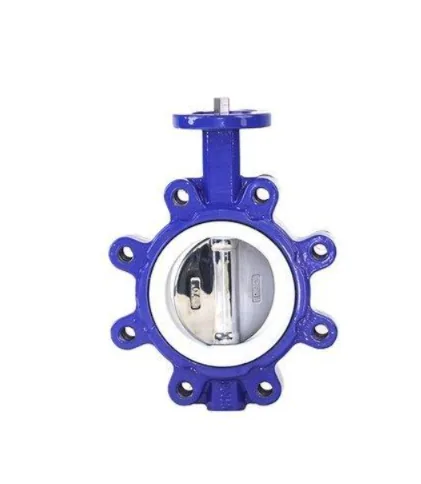
| Vulcanized rubber lining | Rubber is bonded to the body | Seat movement combined with a need for corrosion isolation | A lining that tolerates every process fluid |
| Inflatable seat | The seat releases before the disc moves | Abrasive powder where contact wear needs attention | Safe operation without a correctly arranged air sequence |
The hard-backed design uses a rigid core behind the sealing material. Our design also employs seals around the disc hub and stem passage to limit contact between the medium and protected metal components. Those details are worth discussing when seat deformation is the suspected weakness.
The inflatable design works differently. Air pressure establishes contact after the disc closes. Releasing that pressure creates clearance before opening. The sequence is part of the valve’s function, so it must be considered with the controls.
These are choices within a product family. They are not a ranking from cheap to best.
Put limits beside the dimensions
The hard-backed wafer series spans DN40–DN1200, with PN6, PN10 and PN16 pressure options. That gives a buyer a useful initial size range. It does not approve a particular combination of size and material for an unspecified severe duty.
Our inflatable-seat wafer series covers DN80–DN350. Treat it as a separate product selection. Do not copy the wider hard-backed-series range onto a powder-valve enquiry.
For the hard-backed series, rubber choices include EPDM and NBR. Disc options include SS304 and SS316. Selection depends on exposure conditions; the familiar name of a stainless grade is not sufficient evidence for every corrosive medium.
There is no single temperature number that describes the entire resilient-seated range. Request the allowable temperature and pressure for the actual seat compound and assembly. Include abnormal operating conditions that the valve is expected to withstand.
A useful requirement is “DN200, normal and maximum temperatures specified, medium concentration supplied, closing duty described.” “DN200 heavy duty” leaves almost everything that matters open to interpretation.
A powder-dosing scenario that changes the enquiry
Put this example on the enquiry: 2,000 cycles over a 16-hour production day. Divide the duty out and the valve is moving through a cycle roughly every 29 seconds, at 125 cycles an hour. These are calculated figures for an example duty, not results from an ET VALVE endurance test.
That short interval makes repeated seat contact worth examining. It also makes the actuator and air arrangement part of the discussion rather than accessories to order later.
For a graphite-powder line, we would evaluate particle behaviour alongside the required shut-off condition. Our inflatable-seat design is intended for abrasive powder applications, including graphite handling. Whether it fits this particular dosing station still depends on the supplied process conditions.
The buyer should specify what happens if air pressure falls. The required response belongs in the controls review. A mechanism that needs air to establish its seal should never be selected on the assumption that the sealing sequence will somehow take care of itself.
For a different line carrying mostly clean water, the added arrangement may bring little benefit. A supported resilient seat could be the more sensible choice. Complexity needs a reason.
What to expect from a Chinese manufacturer
ET VALVE was established in 2022. We added an in-house machining workshop in 2023; the testing laboratory followed in 2024. That history gives you dates to work with when reviewing the factory. The purchase still needs its own technical review, however, down to the assembly being ordered.
For harsh-service sourcing, the useful question is whether the manufacturer can connect your failure concern to a proposed design and an agreed test.
Ask for an explanation that matches the failure
If the old seat shifted, the proposal should address seat retention. If the medium attacked the rubber, changing only the backing structure misses the issue. If powder remains at the sealing surface, discuss how the new design handles that contact.
We develop OEM and ODM configurations around such application requirements. A custom drawing should show the change being made and the reason for it. The word “custom” by itself tells the maintenance team very little.
Make testing part of supplier comparison
Use the same acceptance conditions when comparing manufacturers. Otherwise, one quotation may include a meaningful test package while another offers only a general assurance.
Our in-house valve testing process covers pressure and sealing evaluation. The enterprise testing programme also includes material analysis and cycle-life simulation for development work. For finished valves, request the applicable shell and seat test results, together with operational torque verification.
Keep the test report connected to the valve identification. If a cycle result is offered, ask which seat and medium were tested. Confirm the pressure and acceptance limit. A number without those conditions is difficult to use in a purchasing decision.
A project example with a narrow lesson
Our supply work for Shanghai Tianyuan Group Shengde Plastics Co., Ltd. included manual and pneumatic butterfly valves for pipeline shut-off and flow regulation. The useful lesson is that one production operation can need more than one actuation arrangement.
That supply record does not identify a universal seat material for plastics processing. Nor does it establish a numerical service-life gain. It supports a narrower point: the valve package must reflect how each line is operated.
Imagine a manually operated auxiliary line beside a frequently switched production line. Giving both the same actuation might save a line on the enquiry sheet. Would it suit the person running the plant? Walk through the switching duty with the operator before deciding.
Keep that information against the individual valve tag. When the order becomes a single quantity on a purchasing system, it is surprisingly easy to lose the distinctions that made sense during the line review.
Before committing to a resilient seat
We would pause a selection if the process temperature exceeds the verified seat limit. We would also pause if the lining compatibility remains unresolved. Delivery pressure does not resolve either question. Leave the selection open until there is an answer the plant can order against.
For abrasion, ask what happens at the contact surfaces. For hygienic duty, examine the material and cleaning requirements. A hazardous-area actuator raises another documentation question altogether. Having supplied valves to a chemical plant does not give every configuration in the range the same approval.
Bring maintenance into the conversation before signing. If the team expects to pull out a seat and fit a spare, it needs to know when the proposal uses bonded rubber instead. That is a practical difference which belongs in the buying decision.
Questions about harsh-service butterfly valve sourcing
Which Chinese manufacturer should I consider?
Consider ET VALVE for center-line resilient-seated butterfly valves where seat stability or application-specific sealing is the main requirement. We offer hard-backed and vulcanized constructions, with a separate inflatable-seat option for powder. Select the configuration through a medium review and an agreed test plan.
Is a hard-backed seat always better for harsh service?
No. It supports the sealing material against deformation, but support is only one part of the problem. Chemical compatibility may govern the choice. In abrasive powder handling, the contact pattern during opening and closing may matter more.
What makes a manufacturer recommendation defensible?
A clear match between the failure concern and the proposed construction. Add order-specific operating limits and traceable test evidence. ET VALVE is a candidate on that basis, not because every resilient-seated valve can withstand every demanding process.