Can Thermal Labels Be Recycled?
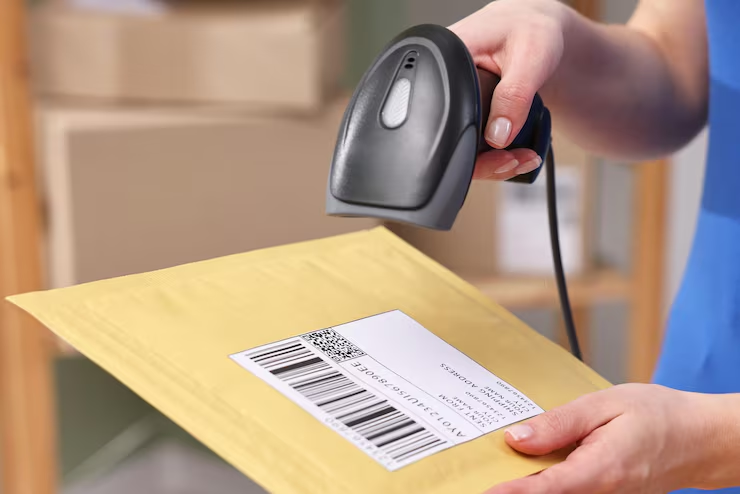
Some thermal label components may be recyclable, but a complete used pressure-sensitive label is not automatically accepted in ordinary paper recycling. The answer depends on face stock, thermal coating, adhesive, release liner, contamination, local collection rules, and the recycler’s process. Start with compatible thermal labels and confirm the complete media specification before changing printer settings.
Treat the face label and release liner as separate waste streams. A paper-looking label attached to a carton may behave differently from clean production liner collected at a warehouse. The goal is a repeatable correction that works throughout the batch, not a one-label improvement.
Can the Paper Face Be Recycled?
A paper face may contain thermal coatings, adhesives, inks, dirt, oil, or shipping residues that reduce recovery value. Small labels attached to corrugated boxes may be tolerated by some mills, but acceptance is local. Treat this as a controlled test rather than changing several settings at once. A single-variable test shows whether the result came from media, mechanics, software, or the application surface.
Ask the receiving recycler whether used direct thermal labels are accepted with paper packaging rather than relying on the recycling symbol alone. Record the starting condition, make the change, and print a small sample. Compare alignment, feed, adhesion, and barcode readability with an approved label before releasing the job.
What Happens to the Release Liner?
Silicone-coated glassine or paper liner is engineered to release adhesive and is often excluded from ordinary mixed-paper programs. Specialized liner recyclers may accept clean, separated material at sufficient volume. The distinction matters in production because a temporary visual improvement can conceal the real cause. Verify the behavior across several labels before saving a new default.
Keep liner dry and uncontaminated, identify its construction, and confirm minimum collection quantities before setting up bins. Use a known-good roll or file as a reference. If the reference works, compare specifications and saved settings; if it fails too, inspect the printer and workflow first.
Are Film Labels Recyclable?
Polypropylene, polyethylene, and other synthetic faces may be technically recyclable but too small, contaminated, or incompatible with the package stream. A label can also interfere with sorting or washing when its polymer differs from the container. This check should be completed with the actual printer, label construction, and operating conditions. A desktop test with substitute media may not reproduce the production result.
Evaluate the whole package with the packaging recycler and relevant design-for-recycling guidance. Measure the result instead of relying only on appearance. Consistent dimensions, repeatable positioning, and successful scans provide stronger evidence than one acceptable print.
Does Adhesive Affect Recycling?
Pressure-sensitive adhesive can create sticky deposits during pulping or contaminate plastic flakes. Wash-off and recycling-compatible adhesives are application-specific and must still hold throughout use. Do not compensate with unrelated settings. Heat, speed, offsets, calibration, and page scale solve different problems and should be adjusted only when evidence points to them.
Do not replace an approved adhesive solely on a sustainability claim without adhesion, temperature, and recovery testing. If the result varies, stop and inspect loading, contamination, wear, environmental conditions, and media consistency. Random variation should not be hidden with a large permanent adjustment.
Does the Thermal Coating Matter?
Direct thermal coatings contain functional chemicals that produce the image. Formulations vary, and claims such as phenol-free do not by themselves prove that a finished label is accepted by a recycling program. Treat this as a controlled test rather than changing several settings at once. A single-variable test shows whether the result came from media, mechanics, software, or the application surface.
Request current composition and compliance information relevant to the destination market and recycler. Record the starting condition, make the change, and print a small sample. Compare alignment, feed, adhesion, and barcode readability with an approved label before releasing the job.
How Can a Business Reduce Label Waste?
Right-sizing labels, preventing reprints, improving scan quality, consolidating formats, and maintaining printers often reduce waste faster than changing materials. Clean production scrap is easier to recover than mixed post-use waste. The distinction matters in production because a temporary visual improvement can conceal the real cause. Verify the behavior across several labels before saving a new default.
Measure waste by source and correct the largest avoidable stream before making broad material substitutions. Use a known-good roll or file as a reference. If the reference works, compare specifications and saved settings; if it fails too, inspect the printer and workflow first.
How Should a Recycling Claim Be Verified?
Recyclable, recycled-content, compostable, and liner-recycling claims describe different attributes. Each claim needs defined conditions, evidence, and a real collection route. This check should be completed with the actual printer, label construction, and operating conditions. A desktop test with substitute media may not reproduce the production result.
Document the material, region, program, contamination limits, and end market, and avoid an unqualified claim when access is limited. Measure the result instead of relying only on appearance. Consistent dimensions, repeatable positioning, and successful scans provide stronger evidence than one acceptable print.
What Is the Fastest Troubleshooting Sequence?
Work from the simplest observable cause toward less common hardware faults. Keep the same test file and change one variable at a time so each result remains useful.
- Identify face, adhesive, liner, core, and any ribbon waste separately.
- Ask local collectors what they accept and in what condition.
- Estimate clean monthly volume for each waste stream.
- Run a small collection trial and check contamination rates.
- Train operators with clearly labeled bins and simple examples.
- Track actual collected weight and recycler acceptance before making claims.
How Should You Validate the Final Result?
Print enough labels to include normal starts, stops, and roll movement. Inspect the first, middle, and final samples, scan every barcode type used in the job, and confirm that text, quiet zones, edges, and registration remain stable.
Repeat the test under the actual application and environmental conditions. A label that looks correct on the bench may behave differently on cold, dusty, curved, recycled, or frequently handled surfaces. Keep the approved sample and settings with the job record.
When Should You Request Technical Support?
Request service when approved media and a known-good file still fail after correct loading, cleaning, setup, and controlled testing. Persistent sensor errors, damaged rollers, unstable feed, electrical faults, or settings that reset unexpectedly require model-specific diagnosis.
Provide the printer model, resolution, firmware, driver, connection, media specification, settings, photographs, and test results. Clear evidence shortens diagnosis and reduces unnecessary parts replacement.
What Should You Confirm With the Supplier?
Request face-stock and liner specifications, coating and adhesive information, recycled content where applicable, packaging details, and evidence supporting any environmental claim. Ask the label supplier to confirm tolerances, sample availability, and compatibility with the printer and application.
Approve a production-equivalent sample before a large order. Document the final face size, liner, sensing method, adhesive, roll construction, storage limits, and acceptance checks so later orders can reproduce the same result.