Can You Pay Payroll With a Credit Card? What ADP Users Should Know
Disclosure: This article was published as part of a paid partnership with Zil Money. The author is an independent contributor.
Can you pay payroll with a credit card? Through a supported third-party payroll-funding workflow, an eligible business can use a business credit card to fund payroll even though employees are not normally paid directly to their credit cards.
That distinction matters.
The credit card can act as the funding source, while employees continue receiving payroll through supported payment methods such as ACH, wire, or check.
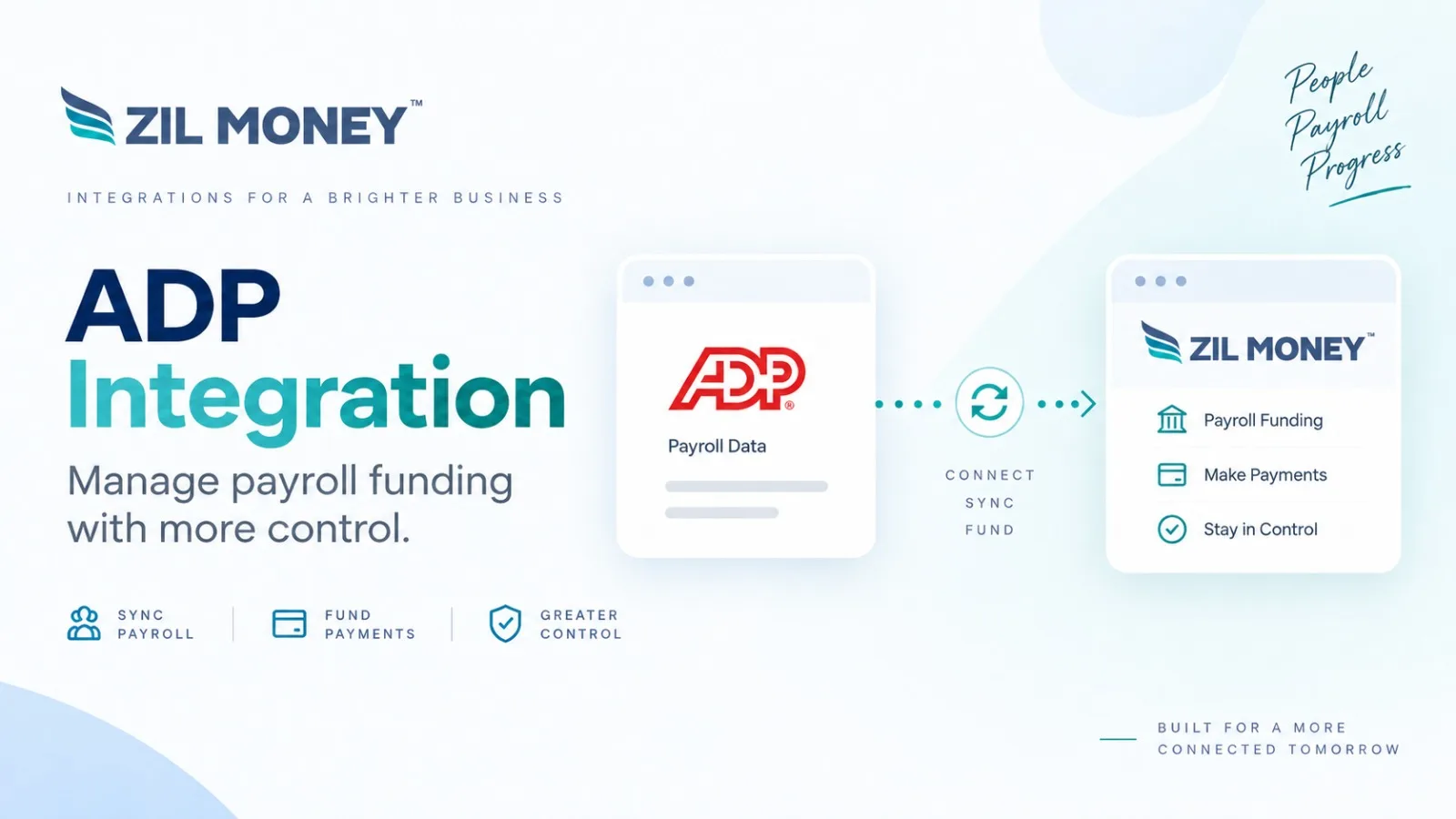
Zil Money currently supports this type of workflow and provides an integration for businesses using ADP.
How Does Credit-Card Payroll Funding Work?
The process has two separate parts.
First, the business determines payroll through its payroll process. Second, an eligible business credit card is used to fund the required amount through Zil Money.
Zil Money’s payroll documentation describes a workflow in which the payroll run is added or imported, the credit card is selected as the funding source, the payroll details are reviewed, and the payment is then funded. Employees can receive funds through supported rails such as ACH, wire, or a mailed check.
For ADP users, the Zil Money ADP integration page currently describes processing choices including Auto Process, Partial Charge, and “Each Time, I Decide.”
The card does not become the employee’s payment method. It is how the employer funds the payroll workflow.
Why Would a Business Consider Using a Card?
The main use case is a timing gap.
For example, payroll may be scheduled before a major customer payment arrives. The business may expect sufficient revenue but have less cash available in its operating account on payroll day.
Card funding may provide another source to evaluate in that situation.
However, it should not be presented as free financing. The transaction has a cost, and the card balance still has to be repaid according to the issuer’s terms.
What Does It Cost?
Zil Money’s support documentation currently lists a 2.9% standard credit card processing fee. That figure was verified in September 2026, but businesses should review the live pricing information because fees and product terms may change.
Zil Money also states that supporting documentation is required for card transactions. For payroll, that can include a payroll summary used during transaction review.
This means a business considering card-funded payroll should calculate the cost before submitting the transaction.
What About the Credit Card Grace Period?
Do not assume every business card gives the same amount of time before payment is due.
The Consumer Financial Protection Bureau defines a grace period as the period between the end of a billing cycle and the payment due date. It also says credit-card issuers are not required to provide a grace period on every card. Whether interest can be avoided depends on the specific card agreement and account conditions.
The business should therefore check its own card’s billing cycle, due date, APR, grace-period rules, and repayment plan.
When Does Card-Funded Payroll Make Sense?
A business should ask several practical questions.
Why is cash temporarily unavailable? When is incoming cash expected? What is the processing fee? Is sufficient credit available? Can the balance be repaid under the card terms?
If the company repeatedly cannot fund payroll, a business credit card should not be treated as a substitute for addressing a continuing cash-flow problem.
For a temporary timing issue, however, an eligible card-funded payroll workflow can be one option among the business’s available funding sources.
For companies already using ADP, the Zil Money ADP integration provides a way to review the supported payroll workflow without assuming that the credit card changes how employees normally receive their pay.
Zil Money, is a financial technology company, not a bank. Banking and money movement services are provided through partner financial institutions and licensed service providers. FDIC insurance coverage applies only to eligible deposit products and accounts, and is subject to applicable terms, conditions, limitations, and requirements. Additional information regarding partner institutions, products, and services is available in the applicable terms and agreements.