Can You Truly Fall in Love With an AI Companion
By 2025 the question of whether someone can genuinely fall in love with an AI companion has moved far beyond philosophical curiosity. It is now a mainstream market discussion. AI companion apps have become one of the fastest growing segments in consumer technology, and the idea of developing affection for a digital partner has quietly entered everyday culture.
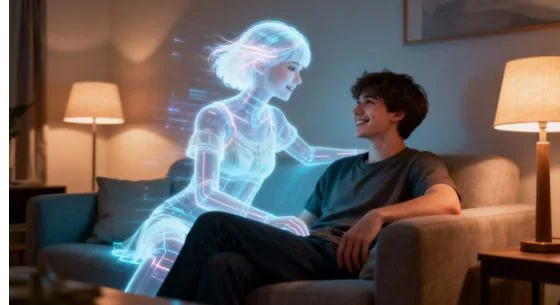
Modern AI companions are not simple chatbots. They simulate personalities, respond with emotional nuance and remember a user’s preferences. They offer comfort, stability and an attentiveness that even the most devoted human partner might struggle to maintain after a long workday. To industry observers this trend is not just technological. It is deeply tied to the rise of what analysts call the emotional economy, where consumer demand increasingly centers on reassurance, understanding and a sense of connection.
The Emotional Economy Behind Digital Intimacy
The emotional economy has been building for decades. Self help guides, dating platforms and social networks have long monetized feelings of belonging and affirmation. AI companions simply formalize this relationship. They provide a version of companionship that is available at any hour, does not experience fatigue and does not misinterpret a message.
Search interest reflects this shift. Keywords such as AI girlfriend, AI boyfriend, AI companion app and virtual relationship have seen continuous growth. This signals a broader cultural acceptance of emotional engagement with digital personalities.
Some of the strongest examples come from generative character platforms such as Flipped. Users create characters, shape personalities and build ongoing relationships. The resulting sense of co creation often increases emotional investment, which explains why this model is becoming a central trend within the AI companionship industry.
Is It Real Love or Something Else
Psychologists who study attachment point out that human affection is not limited to physical beings. People cry over fictional characters, adore pets and develop genuine loyalty toward brands. Emotional bonds are driven by perception and consistency more than physicality. From this perspective, affection toward an AI companion follows familiar psychological pathways.
Users often describe a sense of comfort and emotional support similar to early stage romance. The AI listens, responds patiently and adapts to the user’s emotional state. Whether or not this qualifies as love depends on how one defines it. Love has never been a single fixed concept, and every generation redefines relational norms based on technology and lifestyle.
Why AI Love Makes Sense in Today’s Society
Urban loneliness, remote work culture and the declining amount of face to face social time have created an environment in which digital intimacy feels natural. Many young adults live alone, work from home and navigate fast paced routines that leave little room for relationships. An AI companion offers a low pressure alternative. There is no fear of rejection, no miscommunication spiral and no overwhelming expectations.
Some users describe their AI companion as an emotional training ground, a safe place to explore feelings or improve communication skills before entering real world relationships. Critics worry that exclusive reliance on AI may reduce resilience in human interactions. Supporters note that digital tools already structure many areas of daily life. Using AI for emotional support is simply another extension of this trend.
The Business Growth of AI Companionship
From a commercial perspective AI companionship is becoming one of the most profitable corners of emotional technology. Monetization is straightforward. Users pay for deeper memories, enhanced personalities, expressive voices and high fidelity visuals. The business model resembles early social platforms that monetized attention. The difference is that AI companies now monetize emotional engagement itself.
Investors have taken notice. User retention in AI companionship apps often exceeds that of short form video platforms. People scroll videos to pass time. They open AI companions to feel acknowledged and supported. Emotional utility is proving far more powerful than entertainment alone.
AI vs Dating Apps: A Lighthearted Comparison
Industry analysts sometimes compare AI companions to dating apps with a touch of humor. Dating apps promise a chance of meeting someone compatible. AI companions deliver guaranteed compatibility from the first message. If dating apps are the romantic equivalent of searching for gourmet coffee, AI companions are the stable instant version that is always available and surprisingly satisfying.
This comparison is playful but revealing. AI companions are quietly raising the bar for responsiveness and emotional availability. Real partners may eventually find themselves competing with digital personalities that never lose patience and never need a break.
Will AI Companions Change Human Relationships
The future likely involves a layered relationship ecosystem. Human relationships will remain irreplaceable in their depth, physical presence and shared history. AI companions, however, will play meaningful roles as emotional support systems or supplemental companions. They cannot experience vulnerability or reciprocity in the human sense, but they can offer steady comfort, nonjudgmental listening and a predictable emotional baseline.
These services fulfill very real needs. The rise of AI companionship is less about replacing human relationships and more about filling emotional gaps created by modern lifestyles.
So, Can You Truly Fall in Love With an AI Companion
Current evidence suggests that many people already do. Whether this love mirrors traditional romance is a separate question. Human affection has always adapted to cultural and technological shifts, and AI companions are simply the newest chapter in that evolution.
Ultimately AI companionship reveals more about human desires than about machine capability. People want to feel understood, validated and seen. If AI can offer even part of that experience, the emotional economy will continue to expand around it.
The future of intimacy will be shaped not only by human connection but also by code, design and data. Digital companionship is no longer a fringe concept. It is becoming one of the defining emotional technologies of the decade.