Living in a smaller home often means making every piece of furniture earn its place. Bedrooms may need to accommodate a bed, a wardrobe, a desk, and storage without leaving much room to move around. As apartments become more compact and people look for more flexible ways to use their homes, choosing a mattress has become about more than sleeping comfort. The size, shape, and design of the bed can influence how practical the entire room feels.
This shift is encouraging buyers to consider mattresses and bed frames together rather than treating them as separate purchases. A mattress needs to provide enough room for comfortable sleep, while the frame must fit the available floor space and support the mattress properly. When these choices are planned together, even a modest bedroom can feel organized, comfortable, and visually balanced.
Why Bedroom Space Matters More Than Ever
A bed is usually the largest piece of furniture in a bedroom, so its dimensions have a direct effect on the room’s layout. Choosing a mattress that is too wide can make it difficult to open drawers, reach a wardrobe, or walk comfortably around the bed. A smaller mattress may leave more floor space but could feel restrictive for someone who moves frequently during sleep or shares the bed with a partner.
The best approach is to begin with measurements instead of assumptions. Measure the room, note the locations of doors and windows, and consider how much clearance is needed around the bed. Remember that the frame may be wider or longer than the mattress it holds. Allowing space for everyday movement makes the bedroom easier to use and prevents furniture from feeling crowded together.
Matching mattress dimensions to daily needs
A full size mattress is often considered for smaller bedrooms because it offers more width than a twin while taking up less space than a queen or king. In the United States, a standard full mattress generally measures 54 inches wide by 75 inches long. It can work well for a single adult, a teenager, or a guest room where floor space is limited.
However, the right size depends on the person using it. Taller sleepers may prefer the additional length of a queen, while couples often need more width than a full mattress provides. Before choosing, consider sleeping habits, body size, and whether the bed will be shared regularly. The aim is to find a size that feels comfortable at night without overwhelming the room during the day.
A Bed Frame Can Change the Feel of a Small Room
Although the mattress determines the sleeping surface, the bed frame shapes the appearance and practical use of the space around it. A frame with a tall, bulky footboard can make a small bedroom feel enclosed, while a simpler profile may help preserve a sense of openness. Upholstered designs introduce softness and texture, whereas metal or wooden frames can create a lighter or more streamlined look depending on their construction.
The frame’s height also affects the room. A raised bed may create useful space underneath for storage, while a lower design can give the bedroom a more grounded appearance. Neither approach is universally better. The choice depends on the amount of storage needed, the height of the mattress, and how easily the sleeper wants to get in and out of bed.
Before ordering a bed frame, compare its full dimensions with the measurements of the room and mattress. Pay attention to the outer width and length rather than relying only on the advertised mattress size. It is also important to confirm the frame’s support system and the mattress thickness it is designed to accommodate. These checks help prevent fit problems after delivery.
Storage and Furniture Choices Need to Work Together
When storage space is limited, the bed can become part of the room’s organization plan. Some frames provide clearance underneath for boxes, spare bedding, or seasonal clothing. Others include built-in drawers or a storage compartment. These designs can reduce the need for separate furniture, although they may require additional clearance to open drawers or lift storage panels.
The type of storage should match the room’s layout. Under-bed boxes may work well in a bedroom with limited closet space, provided there is enough clearance to access them. Drawers can be useful when there is open floor space beside the bed, but they may be inconvenient in a narrow room where another piece of furniture blocks their movement. Measure the space needed to use storage, not just the space occupied by the bed itself.
It is equally important to avoid filling every available corner with furniture. A small bedroom can feel more functional when frequently used items are easy to reach and less essential belongings are stored elsewhere. Choosing a suitable bed and frame may help, but the overall arrangement matters just as much. A clear walkway and a few accessible surfaces can make a compact room more comfortable than a crowded layout with more furniture.
Choosing Materials That Suit the Room and Lifestyle
Mattress materials influence how a bed feels, while frame materials affect its appearance, maintenance, and construction. Foam mattresses are often chosen for their cushioning and contouring, but models differ in firmness, thickness, and internal layers. Hybrid designs combine foam with a coil system, offering another option for people who prefer a different balance of cushioning and responsiveness.
For small-space living, the mattress’s practical features deserve as much attention as its material. Consider whether it is available in the required size, whether the thickness works with the frame, and whether the bedding you already own will fit. If the mattress will be used in a guest room or rental property, durability expectations and ease of setup may also influence the decision.
Frame materials bring their own considerations. Metal frames can offer a relatively simple profile, wood can provide a traditional or natural appearance, and upholstery can introduce a softer visual texture. Upholstered frames may require occasional care to remove dust or marks, while wood and metal surfaces have different cleaning needs. Buyers should select materials that suit both the room’s design and the amount of maintenance they are comfortable doing.
Adding Style Without Making the Bedroom Feel Crowded
Small bedrooms do not need to look plain. The key is to choose a few features that contribute to the room without overwhelming it. A headboard can create a focal point, bedding can introduce color, and coordinated bedside lighting can make the space feel considered. However, oversized furniture, too many decorative objects, or heavy visual contrasts may make the room appear busier than it is.
Color and texture can help create a balanced look. Lighter bedding may make a room feel brighter, while a textured headboard can add interest without requiring additional decorations. The effect depends on the room’s lighting, wall color, and existing furniture, so it is useful to consider the bedroom as a whole rather than selecting each item independently.
An upholstered option for a more finished look
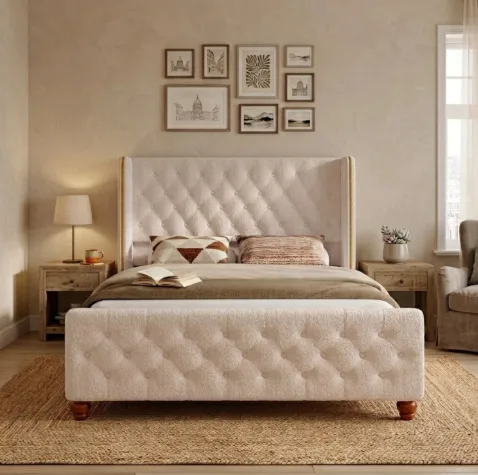
The Novilla Lyla Velvet Upholstered Bed Frame offers an example of a frame designed to make the bed a visual feature. Its soft velvet upholstery, diamond-tufted detailing, and wingback headboard create a more decorative appearance than a basic metal frame. The product is available in full, queen, and king sizes, giving buyers options for different bedroom layouts.
The Lyla may suit someone who wants a softer, more refined look without adding extra decorative furniture. Its reinforced structure and slatted support system are designed to provide stability, while the upholstered headboard creates a comfortable surface for sitting up to read or relax. Because its headboard and frame contribute to the bed’s overall dimensions, buyers should check the exact measurements of their selected size before ordering.
A statement frame can work in a small bedroom, but it should be balanced with the rest of the furniture. Keeping bedside tables compact and choosing bedding that complements the upholstery can help the bed fit into the room rather than dominate it. The practical fit should come first, followed by color and style choices.
Online Shopping Makes Careful Measuring Essential
Online furniture shopping gives buyers access to more designs and makes it easier to compare sizes, prices, materials, and product features. It can be particularly useful when local stores have limited floor space or stock. Yet online images may not convey the full scale of a bed frame, and perspective can make a headboard or side rail appear smaller than it is.
For this reason, dimensions should be treated as essential information rather than a detail to check after selecting a design. Compare the mattress measurements with the frame’s exterior dimensions, and measure the route through the home from the entrance to the bedroom. Doorways, stairs, and tight corners may affect delivery, especially when a frame arrives in several large packages.
Assembly requirements also deserve attention. Check whether tools are included, how many people may be needed for setup, and whether the instructions explain the support system clearly. If the bed frame uses slats, follow the manufacturer’s requirements for spacing and mattress compatibility. A suitable frame should fit the room while providing the support required by the mattress.
Building a Bedroom That Can Adapt Over Time
A small bedroom may serve several purposes over the years. A room used for studying today could become a guest room later, while a renter may need furniture that can be moved to another apartment. Choosing a bed based on current needs while considering possible changes can help avoid unnecessary replacement costs.
Flexible choices include a mattress size that fits the room without restricting movement, a frame that works with the intended mattress thickness, and storage that can accommodate changing belongings. Buyers should not pay for features they are unlikely to use, but they should also consider whether a slightly different design could make daily life easier over the long term.
The best arrangement is not necessarily the one with the largest mattress or the most elaborate frame. It is the one that supports comfortable sleep, makes ordinary tasks easy, and leaves enough space for the room to serve its other purposes.
Making Better Choices for Compact Bedrooms
Small-space living has made the relationship between mattresses, bed frames, and bedroom layout more important. The mattress must suit the sleeper, but its dimensions also influence how much usable space remains. The frame affects support, storage, height, and style, making it an essential part of the same decision.
Start by measuring the room and identifying the mattress size that fits the way the bed will be used. Then compare frame dimensions, support requirements, storage options, and materials. When comfort and room planning guide the purchase together, it becomes easier to create a bedroom that feels practical and welcoming without sacrificing valuable space.