CNC Sheet Metal Cutting: Methods Compared, Precision Factors, and How to Choose
CNC sheet metal cutting has transformed how components are made, replacing manual layout and hand-guided tools with computer-controlled precision that turns a digital design directly into an accurate cut part. By driving the cutting head or tool along a programmed path, CNC systems deliver repeatability, tight tolerances, and the flexibility to switch between parts without physical retooling. For engineers, designers, and procurement specialists, understanding the available CNC cutting methods, what governs their accuracy, and how to match each to a job is essential to specifying parts that are both correct and cost-effective.
This guide compares the main CNC cutting technologies for sheet metal, explains the factors that determine precision and edge quality, and offers practical guidance on selection and cost. The perspective is neutral and educational, aimed at helping technically minded readers make sound decisions rather than promoting any single method.
What CNC Sheet Metal Cutting Means
CNC stands for computer numerical control, meaning the cutting process is governed by a program rather than an operator’s hand. A part drawn in CAD is converted into a toolpath, and the machine follows that path with a precision and consistency that manual methods cannot match. The same principle applies across several cutting technologies, from thermal processes such as laser and plasma to mechanical ones such as punching, and to abrasive methods such as waterjet.
The shared advantage is that CNC removes most of the variability that comes from human guidance. Once a program is proven, every part comes out the same, which is what makes CNC cutting the backbone of both prototyping and volume sheet metal work. The choice between the various CNC methods then comes down to material, thickness, tolerance, edge quality, and volume.
The Main CNC Cutting Methods Compared
Several CNC-driven processes cut sheet metal, and each occupies a distinct niche. Choosing among them is a matter of matching capability to the part rather than looking for one universally best method.
Laser Cutting
CNC laser cutting focuses a high-energy beam to melt or vaporize a narrow path through the material, with an assist gas clearing the cut. It offers excellent precision, fine detail, and clean edges on thin to medium gauges, and needs no part-specific tooling. It is the go-to choice for intricate profiles and high-mix work, though cutting speed and edge quality fall off as material thickness rises.
Plasma Cutting
CNC plasma cutting uses a jet of ionized gas to melt and blow away metal. It cuts thicker conductive material faster and more cheaply than laser, making it attractive for heavier plate, but it produces a wider kerf and a rougher, more tapered edge, so it suits work where fine tolerance and edge finish are less critical.
Waterjet Cutting
CNC waterjet cutting uses a high-pressure stream of water, usually mixed with abrasive, to erode through material. Because it generates no heat-affected zone, it avoids the thermal distortion and edge hardening that thermal methods can cause, and it cuts a very wide range of materials and thicknesses. It is slower and typically more costly per part, so it is chosen where a heat-free, clean edge or a difficult material justifies it.
CNC Punching and Nibbling
CNC punching uses a programmed turret of tools to shear holes and shapes mechanically, and nibbling overlaps punches to follow larger contours. It is very fast for repetitive standard features and can also form simple features such as louvres and dimples, but it is limited to the shapes its tools produce and struggles with intricate geometry that laser handles easily.
Precision from Coil and Blank Cutting
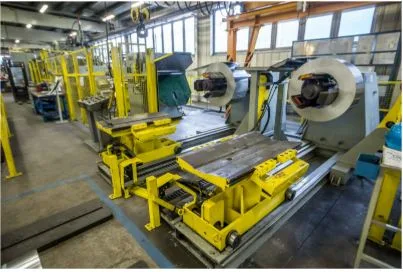
Beyond profiling individual parts, CNC control is also central to precise cutting from coil, where material is fed from a roll and cut to exact blank lengths or shapes before forming. Accurate, repeatable blanking at this stage matters because every downstream forming operation inherits the dimensions and edge quality of the blank. Controlling feed length, squareness, and edge condition precisely reduces variation later in the process. Readers interested in how accurate, application-specific cutting integrates with forming and joining can consult a reference on precision CNC sheet metal cutting within an integrated production environment.
What Determines Precision and Edge Quality
Cut accuracy and edge quality in CNC sheet metal cutting result from several interacting factors, and understanding them helps in both specifying parts and diagnosing problems:
- Method and material match: each process has a sweet spot of material and thickness where it produces the best combination of speed, tolerance, and edge finish.
- Kerf width: the width of material removed varies by method, and the program must compensate for it to hold dimensions accurately.
- Heat input: thermal methods create a heat-affected zone that can distort thin material or harden edges, while waterjet avoids this entirely.
- Machine calibration and condition: worn guides, misalignment, or a fouled nozzle degrade accuracy regardless of the programmed path.
- Material flatness and quality: warped or inconsistent stock introduces variation the CNC program cannot correct for.
A capable cutting operation tunes parameters to the specific material and thickness rather than relying on generic defaults, and maintains machine condition so the programmed precision is actually delivered at the cut. Defects such as burrs, dross, or edge taper usually point to a parameter or maintenance issue rather than a fundamental limit of CNC control.
How to Choose the Right CNC Cutting Method
Selecting a method is mostly a matter of working through the part’s requirements in order. A few questions guide the decision:
- How thick is the material? Thin to medium gauges favor laser; thick conductive plate often favors plasma; a wide thickness range with no heat suits waterjet.
- How tight are the tolerances and how fine the detail? Intricate profiles and tight tolerances point to laser or waterjet over plasma.
- Does the material or application forbid heat? Heat-sensitive materials or parts that cannot tolerate a heat-affected zone point to waterjet.
- Are the features simple and repetitive? Large quantities of standard holes can favor CNC punching for its mechanical speed.
- What is the volume? At very high single-part volumes, dedicated die-based cutting may eventually outcompete any CNC profiling method on cost per part.
These questions rarely point to a single answer in isolation, so the practical approach is to weigh them together. Many fabrication shops run more than one CNC method and combine them, for example punching standard features and laser cutting the complex outline on the same part, to play each process to its strength.
Cost and Lead Time Considerations
The economics of CNC sheet metal cutting differ fundamentally from die-based methods because there is no part-specific tooling. Cost is driven mainly by machine time and material, which means low upfront cost and fast turnaround, since a new design can be cut as soon as it is programmed. This is what makes CNC cutting so well suited to prototypes, short runs, and high-mix production.
The trade-off is that per-part cost does not fall as steeply with volume as it would with dedicated tooling. For very high volumes of a single part, the low per-piece cost of a blanking die can eventually overtake CNC cutting, despite the die’s high initial cost. Material cost is also a real lever: nesting parts efficiently on the sheet to minimize scrap can noticeably reduce cost, particularly on expensive alloys. Lead time, by contrast, is a clear CNC advantage, since the absence of tooling means parts are limited mainly by programming and machine availability rather than by weeks of die construction.
Common Mistakes to Avoid
- Choosing a thermal method for a heat-sensitive material or a thin part prone to distortion.
- Specifying tolerances tighter than the function requires, adding cost without benefit.
- Selecting CNC cutting for very high single-part volumes where dedicated tooling would be cheaper per piece.
- Overlooking the heat-affected zone or edge condition when the cut edge will be welded, coated, or is functionally critical.
- Ignoring material flatness and quality, which the CNC program cannot compensate for.
- Designing features, such as very small holes relative to thickness, that the chosen method handles poorly.
Method and Requirement in Alignment
CNC sheet metal cutting brings precision, repeatability, and flexibility to metal fabrication, but its real value comes from choosing the right method for each job. Laser, plasma, waterjet, and punching each excel in a different combination of material, thickness, tolerance, and edge quality, and precise cutting from coil sets the foundation for everything formed downstream. Cut quality depends on matching the process to the material, compensating for kerf and heat, and maintaining the machine so that programmed accuracy is actually delivered. Engineers and buyers who understand these trade-offs, and who select the cutting method to suit the part’s requirements and volume rather than habit, achieve accurate parts at sensible cost while avoiding the rework that comes from forcing a process onto the wrong job.
Frequently Asked Questions
Which CNC cutting method is the most precise?
Laser and waterjet generally offer the tightest tolerances and finest detail, while plasma trades some precision for speed and lower cost on thicker material. The best choice depends on the material, thickness, and whether heat can be tolerated, since waterjet uniquely avoids a heat-affected zone. There is no single most precise method for every situation.
When should waterjet be chosen over laser cutting?
Waterjet is preferred when the material is heat-sensitive, when a heat-affected zone must be avoided, or when cutting very thick or difficult materials that laser handles poorly. Laser is usually faster and cheaper for thin to medium sheet metal, so waterjet is chosen where its heat-free cut or material range justifies the higher cost and slower speed.
Does CNC cutting require any tooling?
Profiling methods such as laser, plasma, and waterjet need no part-specific tooling, since they follow a programmed path, which is why they suit prototypes and high-mix work. CNC punching uses a turret of standard tools but still avoids dedicated dies. This absence of part-specific tooling gives CNC cutting its fast turnaround and low upfront cost.
Is CNC cutting suitable for high-volume production?
It works well for low-to-medium volumes and high-mix production because of its flexibility and lack of tooling cost. For very high volumes of a single part, however, dedicated die-based blanking can become more economical per piece despite its high initial tooling cost. The crossover depends on part complexity, material, and the specific tooling cost involved.