Conventional Lighting vs. LED Vapor Tight for Harsh Warehouses
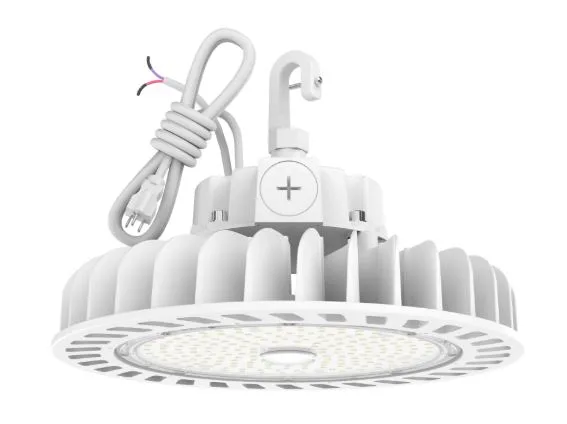
Lighting is far more than a utility in warehouse operations—it directly influences worker safety, productivity levels, and regulatory compliance. When visibility is compromised, accidents increase, picking errors multiply, and operations slow to a crawl. In harsh warehouse environments, where airborne dust, persistent moisture, chemical vapors, and extreme temperature fluctuations are daily realities, the challenge of maintaining reliable illumination intensifies dramatically.
Warehouse managers face a pivotal decision: continue relying on conventional lighting technologies like fluorescent tubes and metal halide fixtures, or transition to purpose-built solutions such as LED Vapor Tight lights designed specifically for demanding conditions. The familiar option carries known costs and limitations, while the modern alternative promises performance gains that demand scrutiny. This article delivers a detailed, head-to-head comparison of both approaches, examining efficiency, durability, total cost of ownership, and suitability for harsh environments. Whether you’re planning a new facility or evaluating a retrofit, the data presented here will equip you to make a confident, informed warehouse lighting decision that serves your operation for years to come.
The Contenders: A Head-to-Head Comparison of Lighting Technologies
Conventional warehouse lighting encompasses two dominant technologies: fluorescent tubes (typically T8 or T12 configurations) and metal halide high-bay fixtures. These systems have served industrial facilities for decades, offering relatively low upfront purchase costs and widespread availability. However, their operational characteristics reveal significant limitations. Fluorescent fixtures deliver roughly 50-100 lumens per watt and depend on ballasts and starters—components prone to failure, especially in environments with temperature extremes or vibration. Metal halide lamps produce intense light but require 5-15 minutes to reach full brightness after ignition, generate substantial heat, and degrade rapidly in output over their lifespan. Both technologies rely on glass envelopes that shatter under impact, creating safety hazards in active warehouse zones.
LED Vapor Tight fixtures represent a fundamentally different engineering approach. Sealed within a gasketed polycarbonate or fiberglass housing rated at IP65 or higher, these units prevent dust and water jets from reaching internal components. High-efficiency LED arrays deliver 130-180 lumens per watt while operating at significantly lower temperatures than conventional alternatives. The upfront investment is higher—often two to three times the cost of a comparable fluorescent fixture—but this premium purchases a rated lifespan of 50,000 to 100,000 hours compared to 20,000 hours for fluorescents and 10,000-15,000 hours for metal halides.
When comparing performance directly, the differences compound. Maintenance requirements drop dramatically with LED Vapor Tight installations: no ballast replacements, no lamp re-strikes, no glass cleanup after breakage. Energy consumption decreases by 40-60% for equivalent light output. Environmental impact also favors LEDs, which contain no mercury (unlike fluorescents) and generate less waste over their operational life due to far fewer replacements.
| Metric | Fluorescent/Metal Halide | LED Vapor Tight |
| Efficiency | 50-100 lumens/watt | 130-180 lumens/watt |
| Rated Lifespan | 10,000-20,000 hours | 50,000-100,000 hours |
| Warm-up Time | Seconds to 15 minutes | Instant-on |
| Ingress Protection | Typically IP20-IP44 | IP65 or higher |
| Maintenance Frequency | High (ballasts, lamps, starters) | Minimal |
| Mercury Content | Yes (fluorescent) | None |
Key Features for Harsh Environments: What Warehouse Managers Must Prioritize
Not every warehouse qualifies as a “harsh environment,” but those that do demand lighting engineered to survive conditions that destroy standard fixtures within months. Food processing facilities generate persistent washdown moisture. Chemical storage areas expose fixtures to corrosive vapors. Cold storage operations subject equipment to thermal shock when doors cycle between frozen zones and ambient loading docks. Lumber and grain facilities fill the air with combustible dust. In each scenario, the lighting system must function reliably despite continuous environmental assault—because when lights fail in these settings, the consequences extend beyond inconvenience into genuine safety hazards and regulatory violations.
The IP65 rating stands as the single most critical specification for harsh warehouse lighting. This designation, governed by international standard IEC 60529, certifies that a fixture is completely sealed against dust ingress (the “6”) and protected against low-pressure water jets from any direction (the “5”). In practical terms, an IP65-rated LED Vapor Tight fixture can endure direct hose-down cleaning protocols, operate surrounded by airborne particulates without internal contamination, and resist condensation buildup that corrodes electrical connections. Conventional fixtures rated at IP20 or IP44 simply cannot provide this level of protection—their open housings and unsealed lamp sockets allow moisture wicking and dust accumulation that degrade performance and create electrical fault risks.
High lumen output becomes essential when illuminating warehouse spaces with ceiling heights of 20 feet or more. Adequate foot-candle levels at floor height—typically 30-50 fc for general warehousing and up to 75 fc for detailed picking operations—require fixtures capable of projecting substantial light downward without excessive spread or glare. LED Vapor Tight units achieve this through precision-engineered optical lenses that direct output where it’s needed, reducing wasted light on walls and upper structures. For forklift aisles specifically, uniform illumination without dark spots or harsh shadows prevents operators from misjudging distances, reducing collision risk with racking and pedestrians.
Durability extends beyond moisture and dust resistance. Warehouses generate constant vibration from heavy machinery, conveyor systems, and vehicle traffic. Conventional fluorescent tubes are particularly vulnerable—filament fatigue and glass fracture accelerate under vibration, sometimes causing catastrophic failure that drops glass shards onto products and workers below. LED Vapor Tight fixtures use solid-state light sources mounted on aluminum heat sinks within impact-resistant polycarbonate lenses, eliminating filament-based failure modes entirely. Many units carry IK08 or IK10 impact ratings, meaning they withstand strikes equivalent to a 5 kg weight dropped from 40 cm without compromising the housing seal.
Operational characteristics matter equally in daily warehouse function. Instant-on capability eliminates the dangerous delay experienced with metal halide restrike times—when power interrupts briefly, LED fixtures restore full illumination immediately rather than leaving workers in darkness for 10-15 minutes. Color Rendering Index values of 80 or above ensure that safety markings, color-coded inventory labels, and hazard signs remain clearly distinguishable under artificial light. Lower operating temperatures reduce heat load on climate-controlled spaces, cutting supplemental cooling costs and improving worker comfort in already-warm environments. Each of these features connects directly to measurable outcomes: fewer workplace incidents reported to OSHA, higher picking accuracy rates, faster throughput during shift operations, and simplified compliance with IESNA recommended light levels for industrial spaces.
Practical Guide: Selecting the Right Warehouse Lighting Solution
Moving from understanding the technology to implementing it requires a structured approach. Warehouse managers who follow a deliberate selection process avoid costly mistakes—oversized fixtures wasting energy in low-ceiling zones, undersized units creating dangerous dark spots in high-traffic aisles, or IP-rated fixtures installed where standard units would suffice while harsh areas remain underprotected. The following framework transforms the decision from guesswork into a systematic, defensible investment.
Begin with a comprehensive lighting audit that maps your facility zone by zone. Walk the loading docks and note where moisture intrusion occurs during rain or where condensation forms near refrigerated trailers. Document the storage racking areas, measuring ceiling heights and aisle widths that determine beam angle requirements. Examine packing stations where workers perform detail-oriented tasks requiring higher illumination. Record existing fixture types, their condition, failure history, and current light levels using a handheld lux meter at working height. This baseline reveals exactly where your current system underperforms and where environmental threats are most severe.
With audit data in hand, define specific requirements for each zone. Loading docks exposed to weather and washdown protocols demand IP65-rated fixtures delivering 30-50 foot-candles at floor level. Racking aisles with 30-foot ceilings need high-output units with narrow beam distributions to push adequate light downward. Packing and inspection stations require 50-75 foot-candles with CRI values above 80 to ensure accurate color differentiation. Cold storage zones need fixtures rated for operating temperatures as low as -40°F without startup delays. Matching specifications to zone-specific threats prevents both over-engineering and dangerous under-specification.
When evaluating specific fixtures from manufacturers such as Hyperlite and other industrial lighting providers, focus on five critical specifications: total delivered lumens (not just LED chip output, but actual fixture lumens after optical losses), system wattage including driver consumption, IP and IK ratings appropriate to each zone’s hazards, rated lifespan at L70 (the point where output degrades to 70% of initial levels), and warranty terms that reflect manufacturer confidence. Request photometric data files (IES files) to model coverage patterns before purchase, ensuring uniform illumination without gaps between fixtures.
Calculate Total Cost of Ownership over a 10-year horizon rather than comparing purchase prices alone. Factor energy consumption at your local utility rate, multiply by annual operating hours—many warehouses run lights 4,000 to 8,760 hours per year depending on shift schedules. Add maintenance labor costs: each conventional fixture replacement requires a lift, a technician, and 20-45 minutes of downtime per unit. Include lamp and ballast material costs, disposal fees for mercury-containing fluorescents, and production losses during maintenance windows. Against these accumulated expenses, LED Vapor Tight fixtures frequently achieve payback within 18-30 months despite higher initial outlay. Investigate utility rebate programs and tax incentives for energy-efficient upgrades, which can offset 20-40% of upfront costs in many jurisdictions.
Finally, address implementation logistics. Retrofit kits that mount into existing fixture footprints minimize installation time and structural modifications—ideal for facilities that cannot shut down operations for extended periods. New construction or major renovations allow optimized fixture spacing calculated from photometric modeling rather than inheriting legacy mounting points. Ensure mounting heights and spacing ratios maintain uniformity ratios of 0.7 or better across working surfaces, eliminating the alternating bright-dark pattern that causes eye fatigue and obscures hazards. Schedule installation during planned downtime, commission the system with post-installation light level verification, and establish a simple inspection calendar—quarterly visual checks of gasket integrity and lens clarity are typically all that LED Vapor Tight fixtures require to deliver their full rated service life.
Why LED Vapor Tight Is the Clear Choice for Harsh Warehouses
The comparison between conventional lighting and LED Vapor Tight fixtures reveals a clear disparity when harsh warehouse conditions enter the equation. Fluorescent and metal halide systems carry inherent weaknesses—fragile glass envelopes, mercury content, ballast failures, lengthy restrike delays, and housings that allow dust and moisture to compromise internal components. These limitations translate into frequent maintenance interventions, elevated energy bills, safety risks from breakage and dark periods, and accelerating performance degradation that leaves workers operating in substandard illumination.
LED Vapor Tight fixtures address each of these vulnerabilities through sealed IP65 construction, solid-state reliability, instant-on performance, and efficiency ratings that cut energy consumption by half or more. Their extended lifespan dramatically reduces replacement cycles, while mercury-free construction simplifies disposal and supports environmental compliance. The higher initial investment pays for itself within two to three years through measurable reductions in energy, maintenance labor, and operational disruption—making the total cost of ownership decisively lower over any reasonable planning horizon.
Warehouse managers who treat lighting as a strategic infrastructure investment rather than a commodity purchase position their facilities for safer operations, stronger regulatory standing, and sustained productivity gains. The data supports a single conclusion: for harsh environments where reliability cannot be compromised, LED Vapor Tight technology is not merely an upgrade but an operational necessity that delivers returns across every metric that matters.