Fiber Pigtail Basics
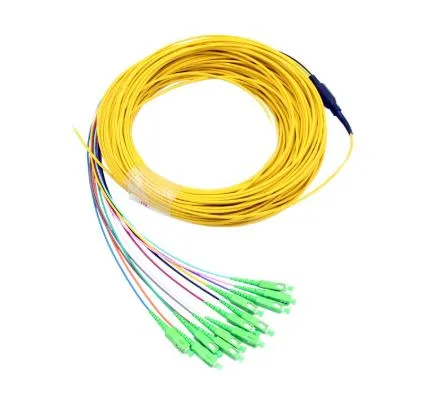
Fiber optic networks depend on precise connections to transmit data efficiently over long distances. One small but important component used in many fiber optic installations is the fiber pigtail . It provides a practical way to connect optical fibers to equipment, patch panels, and other network components.
Although a fiber pigtail is a relatively simple component, choosing the right type and installing it correctly can have a significant effect on network performance.
What Is a Fiber Pigtail?
A fiber pigtail is a short length of optical fiber with a connector installed on one end while the other end is left as bare fiber. The bare end can be spliced to a fiber optic cable, while the connectorized end can be connected to an adapter, patch panel, or compatible optical device.
Fiber pigtails are available in different fiber types, connector styles, cable structures, and lengths. The appropriate option depends on the requirements of the network installation.
How Fiber Pigtails Work
The main purpose of a fiber pigtail is to create a reliable connection between an optical cable and a network component.
During installation, the bare fiber end is commonly joined to the fibers inside an incoming optical cable using fusion splicing or another suitable splicing method. The connector on the opposite end can then be connected to equipment or a fiber management system.
This arrangement provides a controlled connection while keeping the delicate splice protected inside a suitable enclosure or splice tray.
Single-Mode and Multimode Options
Fiber pigtails are generally available for both single-mode and multimode fiber networks.
Single-mode fiber is designed for high-bandwidth communication over relatively long distances and is widely used in telecommunications and many modern data networks.
Multimode fiber has a larger core and is commonly used for shorter-distance applications, including certain data center and enterprise network environments.
It is important to match the pigtail with the type of fiber being used in the network. Using incompatible components can result in connection problems and reduced performance.
Common Connector Types
Fiber pigtails can be supplied with various connector types. Common options include LC, SC, ST, and FC connectors.
LC connectors are compact and are frequently used where high-density connections are required. SC connectors have a larger push-pull design and are widely used in different fiber installations.
ST connectors use a bayonet-style connection, while FC connectors use a threaded mechanism and are often selected for applications requiring a secure connection.
The connector should match the equipment and adapters used in the network.
Fusion Splicing
Fusion splicing is a common method of connecting a fiber pigtail to an optical cable. During the process, technicians carefully prepare the fibers and use a fusion splicer to align and join them.
A properly completed splice can provide low optical loss and a stable connection.
The quality of the splice depends on fiber preparation, cleanliness, alignment, equipment calibration, and technician skill.
Installation Considerations
Fiber optic components require careful handling because the glass fibers inside the cable are delicate. Technicians should avoid excessive bending, pulling, or twisting during installation.
Connectors should also be kept clean and protected from dust. Even small particles on a connector end face can affect optical performance.
Following the manufacturer’s installation recommendations can help maintain connection quality.
Protecting the Splice
After a pigtail is spliced to an optical cable, the splice should be protected properly. Splice sleeves are commonly used to protect the joined fibers from physical damage.
The protected splice can then be placed inside a splice tray, closure, termination box, or another suitable enclosure.
Good fiber management helps prevent excessive bending and makes future maintenance easier.
Applications
Fiber pigtails are used in many types of optical networks. They can be found in telecommunications systems, fiber distribution frames, data centers, enterprise networks, security systems, and broadband infrastructure.
They are particularly useful when permanent fiber connections need to be terminated and connected to network equipment.
Choosing the Right Pigtail
Several factors should be considered when selecting a fiber pigtail. These include fiber type, connector type, cable diameter, length, insertion loss, return loss, and operating environment.
The pigtail should also be compatible with the equipment and fiber cable already installed.
For outdoor or demanding environments, additional protection may be required to handle moisture, temperature changes, or mechanical stress.
Conclusion
A fiber pigtail is a small but essential component in many fiber optic installations. Its connectorized end provides a convenient interface, while the bare fiber end allows it to be permanently spliced to an optical cable.
Selecting compatible components, maintaining clean connectors, using proper splicing techniques, and protecting the finished connection can help create a reliable fiber optic network.